If you’ve scrolled past the viral “real estate listings from hell” thread this week, you’ve seen it: chaotic rooms, baffling layouts, and—almost always—windows that make a bad situation worse. The Bored Panda feature on disastrous listings isn’t just entertaining; it’s an accidental masterclass in how profoundly window types shape a home’s elegance, resale value, and day‑to‑day comfort.
Buried beneath the meme-worthy photos is a timely reminder for discerning homeowners: in a market where first impressions are shared, screenshotted, and judged instantly, the wrong windows can make even a high-end property feel cheap. Conversely, refined, well-chosen window types quietly signal quality before a buyer even notices the finishes.
Below, we translate the week’s most infamous “listings from hell” into five exclusive insights on window types—so your next upgrade trends for all the right reasons.
1. Viral Curb Appeal: Why Window Proportions Decide a Home’s First Impression
One recurring theme in the latest “listings from hell” compilation is visual chaos from the street: windows at odd heights, mismatched shapes, or tiny builder-grade units lost in oversized walls. Real estate agents know this is where buyers swipe left—mentally—before they even cross the threshold.
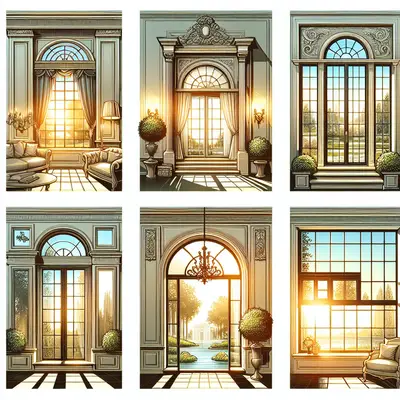
For sophisticated homes, the first decision is not “vinyl vs. wood” but proportion and rhythm. Tall, narrow casement windows in repeated bays create a refined, European sensibility for contemporary facades. Larger picture windows flanked by operable awnings or casements deliver a balanced, gallery-like aesthetic on modern builds. On traditional homes, double-hung windows paired symmetrically—and kept consistent across elevations—preserve architectural integrity that savvy buyers immediately recognize. The lesson from those viral disasters: never let window placement be an afterthought patched into a floor plan. When window proportions echo the home’s architectural language, the entire property reads as intentional, elevated, and timeless—exactly what today’s luxury buyers expect in an age of social-media scrutiny.
2. The Transparency Test: How Window Types Signal (or Sabotage) Privacy
Many of the notorious “listings from hell” photos go viral precisely because of awkward sightlines: toilets fully visible from street-facing windows, showers with no privacy glass, or bedroom windows opening directly onto a neighbor’s deck. In the age of constantly shared real estate screenshots, privacy failures are reputation-damaging.
Thoughtful window selection allows for both light and discretion. For primary suites and street-adjacent baths, high clerestory windows or narrow vertical casements above eye level admit daylight while eliminating direct views from outside. In urban environments, tilt-and-turn windows offer controlled ventilation without broadcasting the entire room to the street. For front-facing rooms, pairing large fixed picture windows with integrated, ultra-slim interior shading or laminated privacy glass allows for dramatic glazing without sacrificing seclusion. The sophisticated approach is layered: a harmonious mix of fixed, operable, and privacy-focused window types tuned to how each room is actually lived in—so nothing in your listing becomes a meme.
3. Light as a Luxury Asset: Curating Daylight with the Right Window Operations
If there’s a villain in many disastrous property photos, it’s bad light: dim interiors with tiny windows, or overexposed rooms where harsh sun washes out every finish. High-end buyers, particularly in today’s design-conscious market, equate perfectly modulated natural light with luxury—much like acoustics in a concert hall.
Different window types shape daylight in distinct ways. Large fixed picture windows deliver unobstructed views and bring the landscape in, but depend on architectural shading, deep overhangs, or exterior louvers to control glare. Casement windows, hinged at the side, can be angled to “scoop” light and breezes into a space, ideal for coastal or wooded sites. Awning windows, hinged at the top, introduce softer, upward-directed light and can remain open comfortably even in light rain—perfect for spa-like bathrooms and tranquil reading nooks. For stairwells and circulation spaces that frequently photograph poorly in listings, a vertical sequence of slim windows or a composition of differently sized fixed and operable units can turn a previously dark void into a luminous architectural statement. Done correctly, your interior photos look intentionally lit—even when they’re not.
4. Acoustic and Thermal Poise: The Hidden Performance Difference Between Window Types
Among the most unsettling details in some of the “listings from hell” are their locations: properties positioned on busy roads, near rail lines, or overlooking commercial zones—yet fitted with the cheapest, noisiest windows imaginable. In a premium listing, buyers expect sanctuary, not intrusion.
Window type and configuration determine whether your home feels like a private retreat or a glass-fronted loudspeaker. Fixed windows in large sizes offer superior air and sound sealing, making them ideal for view-centric, noise-exposed elevations when paired with discreet ventilation strategies elsewhere in the room. Tilt-and-turn systems, popular in high-end European developments, provide a dual function: a secure, top-tilt position for gentle ventilation and a full inward swing for deep cleaning and maximal air exchange, all within a robust, compression-sealed frame that significantly outperforms standard sliders acoustically. In quieter zones of the house, traditional double-hung or sliding windows can still play a role, but upgrading to triple-pane or laminated glass and thermally broken frames is increasingly seen as baseline luxury, especially in markets where energy performance influences valuation. When prospective buyers close a casement and hear a soft, confident seal—and the street noise disappears—the impression of quality is instant and visceral.
5. Architectural Integrity: Matching Window Types to Style So Your Listing Never Looks “Off”
Many of the most jarring images in the viral real estate thread feature a kind of architectural dissonance: ultra-modern sliders on a historic cottage, random porthole windows on a traditional façade, or tiny, misplaced openings in homes that beg for gracious glazing. These are not just aesthetic missteps; they actively reduce perceived value.
For heritage or classically inspired homes, divided-light casement or double-hung windows with slender, well-proportioned muntins preserve the building’s original character while enabling modern performance. In mid-century and contemporary architecture, expansive sliders, floor-to-ceiling picture windows, and corner glazing emphasize horizontal lines and blur the boundary between interior and exterior. On more transitional properties—currently dominant in many affluent suburbs—a hybrid strategy works best: larger, clean-lined windows with minimal grilles, paired with a few signature elements such as a dramatic stairwell window or overscaled patio doors. The discerning homeowner treats window types as part of a cohesive architectural philosophy, not a catalog of random options. This is what separates a home that photographs as curated and intentional from one that ends up on the next “listings from hell” compilation.
Conclusion
The latest wave of viral “real estate listings from hell” is amusing—but it also quietly validates what astute homeowners already know: misjudged windows can undermine the entire perception of a property, regardless of its square footage or finishes. In a market where every listing, every showing, and every snapshot can circulate widely online, your choice of window types is no longer a purely functional decision; it’s a reputational one.
By curating proportions from the street, protecting privacy with intelligent typology, choreographing daylight, prioritizing acoustic and thermal comfort, and preserving architectural integrity, you transform your windows from anonymous openings into a signature of refinement. The homes that command attention—and premium offers—in today’s image-driven era are not just well located and well finished; they are impeccably framed.
Key Takeaway
The most important thing to remember from this article is that this information can change how you think about Window Types.