Window upgrades are often discussed in the language of rebates, R-values, and square-foot pricing. Yet for the discerning homeowner, the more interesting conversation begins where the basic math ends. When approached with a refined cost analysis, window upgrades shift from a line item in a renovation budget to a quiet form of capital—reshaping comfort, value, and even the way a property is perceived in the market. This is not about chasing the lowest bid; it is about understanding where each dollar placed in glass, frame, and installation returns value over time.
Looking Beyond Price Per Window: The Architecture of Total Ownership Cost
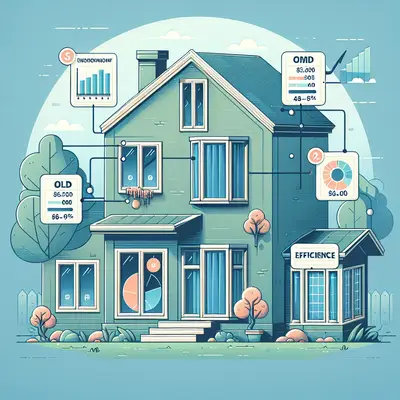
The sticker price is the least sophisticated way to compare window options. A more elevated approach is to examine total ownership cost—a composite of initial investment, operating costs, maintenance profile, and projected lifespan. Two windows with similar upfront prices can diverge dramatically over 20–30 years when energy performance, durability, and service needs are properly quantified.
High-performance glazing, robust framing materials (such as fiberglass or well-engineered composites), and meticulous installation often carry a premium. However, they can reduce energy consumption, minimize air and water infiltration, and extend replacement intervals. When you factor in fewer service calls, reduced draft-related discomfort, and lower heating and cooling loads, the cost narrative changes. Framing the decision this way allows you to select windows not as commodities, but as long-horizon components that interact with your home’s mechanical systems and envelope integrity. The key is to evaluate not “What does this window cost?” but “What does this window cost to live with over its lifetime?”
Exclusive Insight #1: Thermal Comfort Has a Monetary Shadow
Most cost analyses stop at energy bills; refined analysis acknowledges that thermal comfort itself has an implicit economic value. Poorly performing windows create cold zones, hot spots, and drafts that often drive homeowners to adopt compensating behaviors—raising thermostat settings, overusing supplemental heaters, or relying heavily on air conditioning. Each of these adjustments quietly erodes your operating budget.
High-quality, energy-efficient windows with low-emissivity (low-E) coatings, appropriate gas fills, and insulated frames cultivate a more even interior temperature and reduce radiant chill near glass surfaces. The “payback” is not only the measurable reduction in utility statements, but also the reduction in wasted heating and cooling capacity that previously leaked through underperforming openings. Over time, this can influence decisions about HVAC sizing and replacement, further extending the cost benefits. In sophisticated homes, comfort is an expectation; a mature cost analysis recognizes that achieving it more efficiently has real financial consequences.
Exclusive Insight #2: Resale Value Is Not Just About Appraisal Numbers
Upgraded windows are often cited as a positive factor in resale, but the nuance lies in how they influence buyer perception and offer behavior. Energy-efficient, acoustically refined, and aesthetically coherent windows can help a property stand out in competitive markets, particularly where buyers are attuned to long-term ownership costs and environmental performance. While appraisers may assign only a modest specific value to new windows, they frequently contribute to a broader impression of a well-maintained, thoughtfully updated residence.
This perception translates into softer yet powerful financial outcomes: shorter time on market, stronger offers, and fewer concessions requested after inspection. High-performance windows—especially when coordinated with the architectural language of the home—signal that the previous owner invested in structural quality rather than superficial upgrades. For discerning buyers, that signal can justify paying closer to asking price or choosing your property over a similar but less considered alternative. In other words, the cost of premium windows is partly recovered in the subtle psychological economies of buyer confidence.
Exclusive Insight #3: The Acoustics Dividend Is Rarely Priced, Yet Deeply Valued
Acoustic performance is one of the most underpriced aspects of window upgrades. Traditional cost analysis rarely assigns explicit monetary value to sound attenuation, yet noise exposure has well-documented impacts on stress levels, sleep quality, and overall well-being. For homes near traffic corridors, flight paths, transit lines, or vibrant urban neighborhoods, the difference between standard glazing and acoustically enhanced assemblies can be transformative.
From a refined economic perspective, reduced noise can be seen as a quality-of-life yield. It may allow for more productive work-from-home arrangements, deeper rest, and a generally more serene environment—outcomes with very real, if indirect, financial implications. Properties that offer an unexpectedly quiet interior in lively or dense locations often enjoy premium desirability. For homeowners considering window upgrades, explicitly factoring in the cost of achieving “acoustic sanctuary” can reframe the value proposition: you are not merely paying for glass; you are investing in the character of your interior soundscape.
Exclusive Insight #4: Material Choices Shape Your Future Maintenance Budget
Frame material selection is often framed as an aesthetic or durability choice, but it also defines your long-term maintenance curve. Wood, aluminum, vinyl, and composite systems each come with distinct cost trajectories. A refined analysis looks not only at initial material premiums but at the cadence and intensity of upkeep over decades.
High-quality clad wood or fiberglass windows, for example, may command a higher initial price than basic vinyl, yet offer superior dimensional stability, weather resistance, and finish longevity. That can mean fewer repainting intervals, less warping or sticking, and reduced need for early replacement or frequent repairs. In climates with extreme temperature shifts, salt exposure, or heavy UV, the added resilience can be especially meaningful. When you convert painting, refinishing, and repair cycles into projected cash flows—whether you outsource the work or invest your own time—the “cheaper” option often reveals itself as a more expensive companion over the long term. For a sophisticated home, selecting frame materials is as much about curating a maintenance profile as it is about design.
Exclusive Insight #5: Strategic Phasing Can Enhance Return Without Diluting Quality
Many homeowners assume that upgrading windows must be an all-or-nothing endeavor. A more nuanced approach uses strategic phasing—prioritizing openings with the greatest impact on performance and comfort—allowing you to preserve quality while managing cash flow. This approach views the home as a system and allocates budget where the return is most pronounced.
For example, you might begin with the most thermally exposed façades, rooms with significant solar gain, or spaces plagued by drafts and condensation. Alternatively, you may target street-facing or entertainment areas first to achieve an immediate acoustic or aesthetic transformation. By sequencing upgrades over two or three well-planned stages, you avoid compromising on materials or installation quality in pursuit of a one-time, full-home replacement. This staged strategy can align with bonus cycles, planned refinancing, or other financial milestones, effectively smoothing expenditure without sacrificing performance or design integrity.
Integrating Intangibles Into a Sophisticated Cost Framework
Truly elevated cost analysis blends quantifiable metrics—energy savings, projected maintenance, and resale influence—with more nuanced dimensions: comfort, acoustics, architectural coherence, and even daily enjoyment of natural light. For the refined homeowner, windows are not merely apertures; they are curated interfaces between interior life and the world beyond the glass. Evaluating upgrades through this broader lens turns the decision into a form of capital allocation—placing resources where they quietly compound in comfort, desirability, and enduring value.
Approach your next window project not as a necessary expense, but as a deliberate investment in how your home functions, feels, and is ultimately perceived. When glass becomes capital, cost analysis is no longer about minimizing what you spend—it is about maximizing what your windows return.
Sources
- [U.S. Department of Energy – Windows, Doors and Skylights](https://www.energy.gov/energysaver/design/windows-doors-and-skylights) - Overview of how window choices affect energy use, comfort, and building performance
- [Efficient Windows Collaborative (National Fenestration Rating Council)](https://www.efficientwindows.org/) - Detailed guidance on window performance metrics, climate considerations, and cost-effectiveness
- [U.S. Environmental Protection Agency – ENERGY STAR Windows](https://www.energystar.gov/products/residential_windows_doors_and_skylights) - Information on certified high-performance windows, savings estimates, and product criteria
- [Harvard T.H. Chan School of Public Health – Noise Pollution](https://www.hsph.harvard.edu/news/magazine/noise-pollution/) - Discussion of the health and well-being impacts of noise exposure, relevant to acoustic benefits of window upgrades
- [National Association of Realtors – 2023 Remodeling Impact Report](https://www.nar.realtor/research-and-statistics/research-reports/remodeling-impact) - Data on how various home improvements, including energy-related upgrades, influence resale value and buyer perception
Key Takeaway
The most important thing to remember from this article is that this information can change how you think about Cost Analysis.