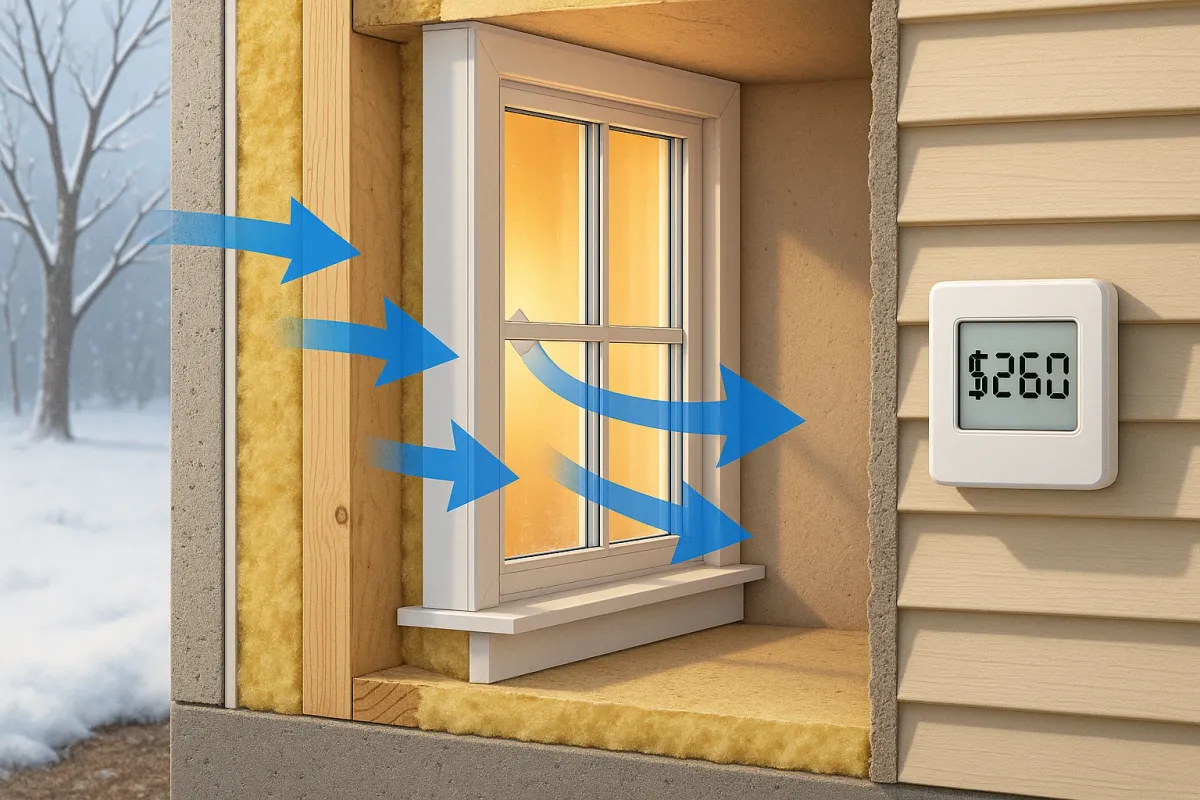
Tiny details are having a very big moment. Today’s viral design post—“People Are Sharing Design Examples That Show How Important Proper Spacing Really Is”—is being shared everywhere as a hilarious reminder that small misalignments can completely change the message. But beyond the comedy, there is a serious, timely parallel for homeowners: in high‑performance homes, micro‑mistakes in design and installation don’t just look awkward—they quietly drain energy, comfort, and long‑term value.
Just as poor kerning can ruin an otherwise beautiful logo, a hairline gap in a window seal, a misaligned frame, or the wrong glazing specification can undermine an entire efficiency strategy. In an era of rising energy prices, tightening building codes, and growing interest in passive‑house standards, affluent homeowners are looking beyond surface aesthetics to a new benchmark: windows that are as precise in performance as they are in appearance.
Below are five exclusive, detail‑driven insights—very much in the spirit of that “proper spacing” conversation—that discerning homeowners should consider before committing to their next window upgrade.
Precision Over Promises: Why Installation Is the New Luxury
The social media buzz around those poorly spaced signs underscores an uncomfortable truth: even the best design fails if the execution is careless. In the window world, that translates directly to installation. You can specify top‑tier brands—Marvin, Pella Reserve, Andersen Architectural Collection, or bespoke European systems with triple glazing and warm‑edge spacers—but if the frame is even slightly out of square or the insulation around the opening is inconsistent, you’re effectively paying for performance you’ll never receive.
Energy efficiency is now measured with ruthless clarity: blower‑door tests, infrared thermography, and HERS or PHIUS metrics reveal the invisible “leaks” in your building envelope. High‑end builders and architects increasingly treat window installation like millwork, not mere “fitting.” Expect laser‑leveled frames, carefully packed and taped insulation layers, and air‑sealing strategies that align with the whole‑house envelope plan. When interviewing contractors, ask how they manage air and water barriers around the window—not just which brand they recommend. In 2025’s luxury market, true refinement is found where the frame meets the wall.
Climate‑Aligned Glazing: Matching Glass to Where (and How) You Live
Those viral design flubs show what happens when context is ignored—letters crushed together, words split awkwardly, and completely new meanings created by accident. Glazing choices work the same way: glass that is perfect for a Denver modernist home might be a costly mistake on a shaded coastal property in Maine. The industry is moving away from one‑size‑fits‑all low‑E coatings toward climate‑ and orientation‑specific glass packages, a shift accelerated by new U.S. energy code updates and utility‑backed efficiency programs.
South‑ and west‑facing façades in hot climates are now frequently specified with solar‑control low‑E coatings and lower solar heat gain coefficients (SHGC), while north elevations in colder regions might use higher SHGC glass to passively harvest winter sunlight. Leading manufacturers are offering region‑targeted product lines that quietly reflect this nuance. As you plan, insist on a glazing schedule that differentiates by orientation instead of blanket specifications. The result is a home that feels tuned—cooler when it should be, warmer when it must be—with lower mechanical loads and a tangible sense of curated comfort.
The Silent Luxury of Thermal Breaks and Warm Edges
In those shared design disasters, the eye is immediately drawn to the weakest link—the one mis‑spaced word that ruins the entire layout. On a high‑end façade, that same principle applies to thermal weak spots. Sleek aluminum frames, for instance, can look exquisite but behave like radiators if they lack robust thermal breaks. Similarly, conventional metal spacers in insulated glass units can create cold perimeters that invite condensation, even when the center of the glass performs beautifully.
Today’s premium window systems respond with multi‑chambered composite or fiberglass frames, advanced thermally broken aluminum profiles, and “warm‑edge” spacers that dramatically reduce conductive heat loss at the glass edge. In practice, this means fewer cold drafts near the window line, less interior condensation on chilly mornings, and a more even, enveloping warmth throughout the room. When reviewing specifications, look beyond U‑factor headlines and ask specifically about frame materials, thermal breaks, and spacer technologies. The most sophisticated comfort is often invisible—but unmistakable once you live with it.
Acoustic Calm as an Energy Indicator
The online appetite for subtle design mishaps highlights how deeply people respond to sensory disruptions. A badly spaced word is visually jarring; likewise, intrusive noise is the acoustic equivalent of a draft. Interestingly, windows that are carefully engineered for energy efficiency often deliver exceptional sound control as a by‑product of their design: thicker glass, insulated frames, multi‑pane configurations, and precision gaskets.
In dense urban markets—New York, London, Toronto, Paris—demand is rising for window packages that provide both thermal and acoustic insulation, especially as more professionals work from home and expect studio‑grade quiet in their living spaces. Laminated glass, mixed pane thicknesses, and triple glazing all add mass and separation that blunt outside noise while keeping conditioned air inside. As you evaluate upgrades, treat acoustic performance as a proxy for build quality. Windows that silence the city tend, almost invariably, to excel in energy efficiency as well. True luxury is not just a view—it is a view framed by tranquil stillness.
Smart Shading and the New Role of Daylight Control
The design world’s obsession with spacing is, at its core, about control: the precise relationship between elements. In high‑performance homes, that same level of control is now being applied to daylight and solar gain. With energy codes tightening and grid instability a recurring news item, more architects and luxury homeowners are pairing high‑efficiency glazing with intelligent shading systems—automated blinds, exterior louvers, and electrochromic glass—to actively manage heat and glare throughout the day.
Top‑tier window and shade integrations now sync with whole‑home automation platforms, weather forecasts, and even dynamic utility pricing. Shades can drop preemptively before an afternoon heat spike or retract on winter mornings to welcome passive solar gain, trimming the load on HVAC systems without sacrificing comfort or aesthetics. For new builds and substantial renovations, consider wiring for integrated shading as standard, not an afterthought. The combination of high‑performance windows and responsive shading turns your glass from a static surface into a finely tuned environmental instrument.
Conclusion
The viral fascination with bad spacing may be lighthearted, but its lesson is unmistakable: details define outcomes. In the realm of window upgrades, those details show up in air seals, glass coatings, thermal breaks, frame composition, and the choreography of light and shade across your interiors.
As energy efficiency becomes a quiet status symbol—measured in comfort, stillness, and effortless temperature stability—discerning homeowners are rethinking what “luxury windows” truly mean. It is no longer just about the view; it is about the precision with which that view is framed, insulated, and controlled. In a world where small errors go instantly viral, a perfectly executed window upgrade remains one of the most understated, enduring expressions of refined living.
Key Takeaway
The most important thing to remember from this article is that this information can change how you think about Energy Efficiency.