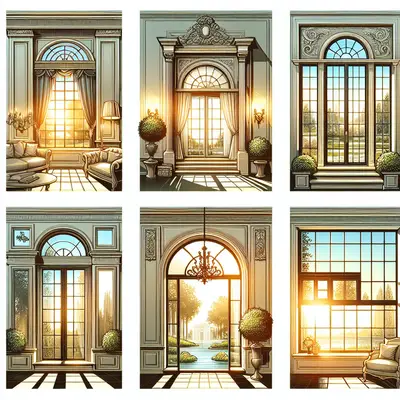
Sunlight spilling across original hardwood floors, impossibly tall sash windows framing a tree-lined street, leaded glass catching the late-afternoon light—there’s a reason “50 Beautiful Old Houses That Show How Craftsmanship Has Stood The Test Of Time” is trending right now. Home enthusiasts are sharing images of pre-war townhouses, Victorian villas, and Arts & Crafts estates, and one pattern is unmistakable: it’s the windows that quietly carry the soul of these homes.
As that Bored Panda feature circulates across social media, it has become a masterclass in why window types matter. These houses are not merely “old and charming”; they are meticulously framed by window design decisions made a century ago—decisions that today’s premium homeowners can reinterpret with modern performance, comfort, and efficiency.
Below, we unpack five exclusive, design-forward insights inspired by those much-shared historic façades—and translate them into smart, sophisticated choices for your next window upgrade.
1. Tall, Narrow, and Elegant: Reimagining the Classic Sash for Modern Living
The trending photos of century-old homes show a consistent theme: tall, vertically oriented windows that elongate proportions and visually “lift” the architecture. Many of these are traditional double-hung sash windows, a staple in Georgian, Victorian, and early 20th‑century design. That vertical rhythm is a large part of why these homes photograph so beautifully—and why they feel so serene in person.
For today’s homeowner, you do not need a historic property to borrow this signature look. Modern double-hung and single-hung windows from premium manufacturers can replicate the refined sightlines—slim frames, graceful meeting rails—while delivering advanced features like low‑E coatings, argon gas fills, and tilt‑in sashes for discreet cleaning. Consider upgrading from short, wide windows to taller units within the same opening by adjusting sill and header heights where structure allows; this subtly transforms both curb appeal and interior ambiance. The effect is immediate: ceilings feel higher, rooms feel grander, and your home gains the timeless posture seen in those heritage exteriors—without the drafts and rattles of the originals.
2. The Power of Grilles and Muntins: From Structural Necessity to Curated Detail
In many of the viral “beautiful old houses” images, the charm is in the grid: small panes, delicate muntins, and finely proportioned divided lights that sculpt the light coming into a room. Historically, those grids were a structural necessity when large glass sheets were impossible or prohibitively expensive. Today, they are a purely aesthetic choice—and one that can either elevate or cheapen a façade.
Modern window lines offer three main approaches: true divided lights (rare and ultra-premium), simulated divided lights with exterior and interior bars, and internal grilles between glass. For a refined, architectural look, discerning homeowners increasingly favor simulated divided lights with spacer bars that visually carry the grid through the glass layer—closer in spirit to what you see in those heritage properties circulating online. The key is restraint: choose grille patterns that align with your home’s architecture (simple two-over-two or six-over-six for classic colonials, more minimal layouts for transitional designs). Avoid overly busy patterns that feel more “themed” than timeless. Done well, grilles become what they were in those shared photos: a subtle, jewelry-like detail that reads as craftsmanship rather than decoration.
3. Fixed, Casement, or Tilt-Turn? Matching Window Type to View, Not Habit
The houses trending across social media often feature a sophisticated blend of window types—fixed picture windows, operable casements, transoms, and sometimes French or tilt-turn units—each chosen with intention. In contrast, many contemporary homes default to a single type throughout, often double-hung, simply because “that’s what’s always used.”
A more curated, premium approach starts with the view and function of each elevation. For panoramic garden or city views, consider large fixed picture windows flanked by slim casements; the fixed unit maximizes uninterrupted glass, while the casements provide discreet ventilation. In bedrooms or quiet reading corners, European-style tilt-turn windows deliver both secure top ventilation and full opening when desired, echoing the elegance of large historic casements seen in pre-war European homes. Over kitchen sinks or in bathrooms, awning windows offer privacy and weather-shedding ventilation in a compact footprint. Think of your home like the properties in that viral article: not a grid of identical rectangles, but a carefully orchestrated composition of window types, each selected to enhance a particular moment, view, or activity.
4. Heritage Proportions, High-Performance Glass: The New Luxury Standard
One lesson from “50 Beautiful Old Houses” is that charm without comfort is no longer considered truly luxurious. Those tall, single-glazed windows may look exquisite, but they leak heat, transmit noise, and often compromise security—issues modern high-end homeowners will not accept. The good news is that advances in glazing technology now allow you to maintain heritage proportions while quietly upgrading performance to a standard that would have been unimaginable when those homes were built.
Look for double- or triple-pane units with spectrally selective low‑E coatings tailored to your climate—different coatings for sun-drenched façades versus shaded or north-facing elevations. Consider laminated glass where acoustic control is paramount (home offices, city-facing facades) to achieve the serenity associated with top-tier hospitality suites. Warm-edge spacers, inert gas fills, and thermally broken frames further refine performance without altering visible aesthetics. The result is the best of both worlds: the refinement and visual poetry echoed in those widely shared historic houses, paired with modern-day thermal comfort, quietness, and energy savings that align with contemporary expectations of luxury.
5. Framing the Interior: How Window Types Shape Your Rooms, Not Just Your Façade
Scrolling through today’s viral images of old houses, it's easy to focus exclusively on the façades. But the real magic of those windows is felt inside: tall mullioned bays creating intimate seating nooks, grouped casements washing a dining room in natural light, or a stairwell transformed into a luminous vertical gallery. Window type, size, and placement drive not only how a home looks from the street, but also how every room feels throughout the day.
When planning your upgrade, think beyond simple “replacement” and consider how different types could re-script your interior experience. Replacing a standard flat bank of windows with a shallow bay or bow window can create a built-in bench or display ledge, echoing the alcoves seen in older mansions. Transforming a small horizontal slider into a floor-to-near-ceiling casement pair can visually extend a room into the landscape, turning everyday light into an architectural feature. Even within the same opening size, shifting from heavier-framed sliders to elegant casements or tilt-turns can dramatically increase the sense of openness and connection. Seen through this lens, your window upgrade becomes less about hardware—and more about curating the way light, view, and architecture interact in your home.
Conclusion
The renewed fascination with century-old houses and their beautifully crafted windows is more than nostalgia; it is a subtle referendum on what feels enduringly luxurious in residential design. As those images continue to circulate—each tall sash and gridded pane quietly stealing the spotlight—they offer a roadmap for the modern homeowner: honor classic proportions, specify window types with purpose, and pair heritage aesthetics with state-of-the-art performance.
A sophisticated window upgrade is not about chasing trends; it is about making decisions that will still feel considered and graceful when today’s feeds are long forgotten. When you select the right window types, you are not just renovating openings in a wall—you are curating the way your home will be experienced, photographed, and cherished for decades to come.
Key Takeaway
The most important thing to remember from this article is that this information can change how you think about Window Types.