Energy-efficient windows are no longer a quiet technical upgrade; they are a central design decision that shapes comfort, acoustics, and the long-term financial profile of a home. For discerning homeowners, the question is not simply “How much will I save?” but “What kind of daily experience am I investing in?” When approached with intention, a window upgrade can transform the way a home feels, sounds, and performs—season after season—with a level of refinement that goes far beyond a basic U-factor.
Below, you’ll find five exclusive, often-overlooked insights that help reframe energy-efficient windows as a holistic performance system rather than a line item in a renovation budget.
Beyond U-Factor: Curating the Right Glass Package for Each Elevation
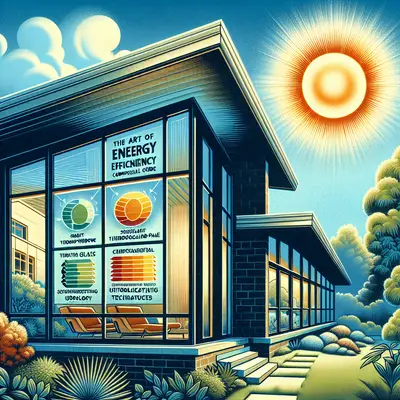
Most window conversations stall at U-factor, yet the most sophisticated solutions treat every façade as its own microclimate. North-, south-, east-, and west-facing windows work under very different solar conditions, and a single, uniform glass specification across the entire home is often a compromise masquerading as simplicity.
The refined approach is to specify glass packages by elevation. For sun-soaked southern or western exposures, a lower Solar Heat Gain Coefficient (SHGC) can tame glare and summer heat, while slightly higher SHGC on colder northern elevations can capture beneficial winter gain. High-performance low-E coatings can be “tuned” to the home’s orientation and climate, creating a subtle but powerful thermal choreography. This curated strategy can reduce mechanical cooling loads, stabilize room temperatures throughout the day, and enhance interior comfort without resorting to heavy shades or dark tints that dull natural light.
Invisible Comfort: How Thermal Dynamics Shape the Feel of a Room
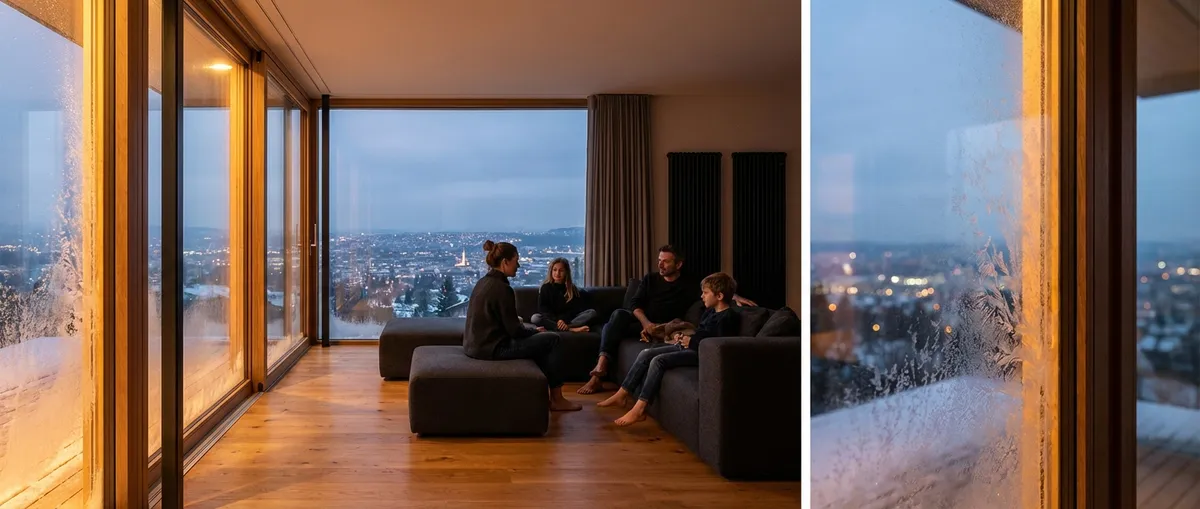
Truly efficient windows do more than change utility bills—they alter how a room feels on the skin. Older, poorly insulated glass often creates cold downdrafts in winter and radiant heat in summer, prompting homeowners to overcompensate with thermostat settings. What feels like a “drafty” room is frequently a symptom of temperature imbalance at the glass, not an actual air leak.
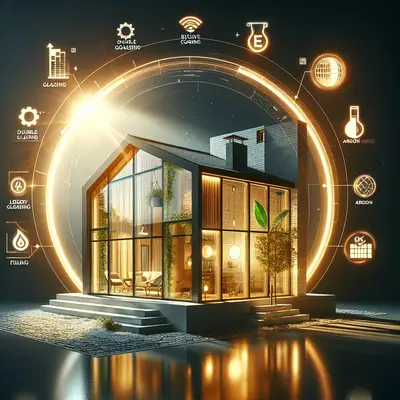
High-quality, insulated glazing units—especially those using argon or krypton gas fills and warm-edge spacers—elevate the interior glass temperature closer to the room temperature. The result is a quiet, almost imperceptible comfort: no cold band near the floor, no hot “halo” radiating from oversized windows, and far less stratification between seating areas and circulation paths. This is comfort you notice when you stop needing a throw blanket near the bay window or no longer avoid a favorite chair at 3 p.m. sun. Energy efficiency, in this sense, becomes a tactile, daily luxury.
The Frame as a Thermal Instrument, Not a Mere Border
While glass attracts most of the attention, the frame is the structural instrument that conducts—or resists—heat. For high-performance homes, the frame material and its internal design are as critical as the glazing itself. Aluminum frames, for instance, can be exquisitely slim and architectural, but without proper thermal breaks they can transmit heat and cold with unsettling efficiency.
Premium fiberglass, composite, or thermally-broken aluminum systems offer a more nuanced balance of structure, aesthetics, and thermal control. Multi-chambered vinyl and composite frames can create pockets of still air that act as additional insulation layers, while well-designed thermal breaks in metal frames interrupt heat flow. The most refined solutions look beyond catalog labels and scrutinize frame cross-sections, spacer technology, and thermal bridging at corners and mullions. In a high-performing envelope, the frame is not an afterthought; it is a calibrated component in the home’s energy symphony.
Daylight as an Energy Resource, Not Just a Visual Luxury
Thoughtful window upgrades exploit daylight not only for beauty but as a direct substitute for artificial lighting and, in some climates, as a secondary heat source. The key is to differentiate between luminous efficiency (how much useful daylight enters) and thermal penalty (how much unwanted heat arrives with it). A sophisticated design seeks bright, balanced interiors without creating sunrooms that are uninhabitable in July.
Optimized window-to-wall ratios, strategic placement of taller rather than wider windows, and advanced low-E coatings can deliver generous daylight while managing glare and excess heat. This can reduce dependence on electric lighting during peak rate hours and soften the contrast between interior and exterior light levels—a subtle relief for the eyes. The most elegant solutions layer in high-performance glazing with architectural elements—overhangs, fins, louvers—to shape sunlight over the course of the day. In this way, windows become active participants in the home’s energy strategy, not passive openings in an insulated wall.
Longevity, Future Energy Codes, and the Quiet Value of Over-Specifying
Energy efficiency is not static; codes and standards evolve, fuel prices fluctuate, and expectations for comfort and performance rise over time. Selecting windows that merely satisfy today’s minimum requirements can quickly feel dated, both technically and experientially. Homeowners with a long view increasingly treat windows as 30-year performance assets rather than 10- to 15-year components.
Over-specifying—choosing windows that exceed current local code baselines—can provide a quiet but meaningful hedge against future energy costs, stricter regulations, and changing market expectations. Features such as triple-pane glazing in colder climates, advanced air sealing systems around the frame, and higher-performance spacers extend the relevance of the upgrade well into the future. Over time, this can influence resale appeal in a market that is growing more energy-literate, with buyers who recognize and value high-performance fenestration. In that context, paying for a higher tier of efficiency today is not indulgence; it is strategic positioning of the home for the next era of energy-conscious living.
Conclusion
A refined window upgrade is not simply about replacing glass; it is about orchestrating thermal comfort, daylight, acoustics, and long-term resilience into a cohesive whole. By moving past generic specifications and approaching each façade, frame, and glass package as part of a curated energy ecosystem, homeowners can achieve a level of comfort and quiet efficiency that feels effortlessly luxurious.
When windows are selected with this level of intention, the payoff is more than a lower utility statement. It is a home that holds its temperature with grace, welcomes light without punishment, and remains competitively modern in an energy-aware future—an investment in daily comfort as much as in long-term value.
Sources
- [ENERGY STAR – Windows, Doors, and Skylights](https://www.energystar.gov/products/building_products/residential_windows_doors_and_skylights) – U-factor, SHGC, and performance criteria for efficient windows
- [U.S. Department of Energy – Energy-Efficient Windows](https://www.energy.gov/energysaver/design/energy-efficient-windows) – In-depth guidance on glazing, frames, and orientation strategies
- [Efficient Windows Collaborative (National Fenestration Rating Council)](https://www.efficientwindows.org/) – Technical information and comparison tools for window performance metrics
- [Lawrence Berkeley National Laboratory – Windows & Daylighting](https://windows.lbl.gov/) – Research on window technologies, daylighting, and energy performance
- [U.S. Environmental Protection Agency – Climate-Specific Window Recommendations](https://www.epa.gov/indoor-air-quality-iaq/improving-indoor-air-quality-and-energy-efficiency-windows-and-doors) – Regional considerations for choosing high-performance windows
Key Takeaway
The most important thing to remember from this article is that this information can change how you think about Energy Efficiency.