Energy efficiency is no longer a discreet line item in a renovation budget; it is a design philosophy that quietly governs comfort, cost, and architectural grace. For homeowners considering window upgrades, the right choices can transform a property from merely insulated to exquisitely calibrated—where temperature, light, and acoustics exist in measured harmony. This is not about chasing trends; it is about curating a building envelope that performs as elegantly as it looks.
Below are five exclusive, often overlooked insights that discerning homeowners use to move beyond standard “energy-efficient windows” and toward a truly refined thermal strategy.
1. Reading the Glass: Interpreting Performance Labels Like a Connoisseur
Most windows wear their performance credentials on a small, easily ignored label. For the attentive homeowner, that label is closer to a provenance certificate than a sticker—it reveals how the window will behave in real life, season after season.
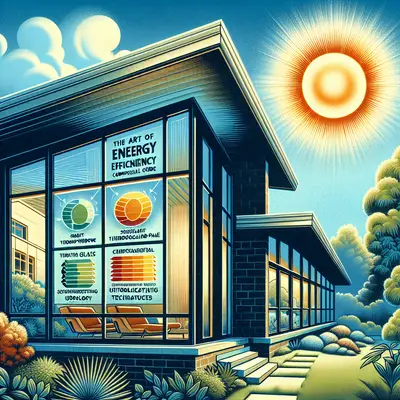
The two primary metrics, U-factor and Solar Heat Gain Coefficient (SHGC), deserve more than a cursory glance. A low U-factor signals how well the window resists heat transfer; it is the foundation of winter comfort and summer composure. SHGC, by contrast, describes how much solar radiation passes through the glass. A beautifully tuned home does not default to the lowest SHGC everywhere; in cooler climates, strategically choosing a slightly higher SHGC on south-facing façades can harness passive solar warmth without compromising refinement.
Equally nuanced is visible transmittance (VT)—how much natural light the glass admits. Many high-performance windows can be simultaneously thermally efficient and visually generous, avoiding the dreary interiors that older “energy upgrades” once produced. The sophisticated approach is not to chase a single “best” number, but to orchestrate U-factor, SHGC, and VT by orientation, climate, and lifestyle, much like commissioning custom lighting for each room rather than relying on a single overhead fixture.
2. Beyond Double-Pane: Curating Glazing Compositions for Your Climate
Double glazing is now a baseline expectation, not a luxury. The true opportunity for refinement lies in how you specify the layers, coatings, and gas fills that sit between those panes of glass—or, in some cases, three panes.
Low-emissivity (low‑E) coatings, nearly invisible to the eye, are where science and subtlety converge. A well-chosen low‑E coating reflects interior heat back into the room during winter while reducing unwanted solar gain in summer. This is where regional nuance matters: a coastal home in a temperate climate has a very different glazing requirement than a high-altitude mountain retreat or a sun-exposed urban penthouse.
Gas fills—typically argon and, at the ultra-premium end, krypton—quietly increase the insulating value between panes. Argon offers substantial gains at a relatively approachable cost, while krypton is the choice for those pursuing maximal performance in slender profiles, such as historic homes where frame dimensions cannot be dramatically altered.
Triple-pane units, when thoughtfully specified, can create an enveloping sense of stillness—thermal, visual, and acoustic. Yet they are not universally appropriate. A sophisticated strategy weighs frame depth, architectural style, regional energy costs, and the home’s overall envelope performance before defaulting to more glass layers. The objective is not “more,” but “precisely enough.”
3. Frame Architecture: The Silent Partner in Energy Performance
Glass earns most of the attention, but the frame is where many window upgrades either quietly excel or silently underperform. The choice of frame material influences not only energy efficiency but also durability, tactile quality, and visual presence.
High-quality fiberglass frames offer an elegant balance: they are dimensionally stable, thermally efficient, and can be crafted with slim, architectural sightlines that enhance glazing rather than compete with it. Well-designed vinyl frames can be effective, particularly in moderate climates, though discerning homeowners often lean toward fiberglass, aluminum-clad wood, or advanced composites for superior longevity and aesthetics.
Thermally broken aluminum—where insulating material separates the interior and exterior metal components—allows for minimalist, contemporary profiles without surrendering the perimeter to heat transfer. In cold or hot climates, this thermal break can be the difference between a sculptural frame that performs and one that condenses and chills.
Within the frame, look for multi-chambered profiles and integrated thermal breaks that interrupt conductive pathways. Even the choice of warm-edge spacers between panes (rather than conventional aluminum spacers) can mitigate edge-of-glass cooling and interior condensation. These are not cosmetic details; they are the refined engineering decisions that distinguish a merely adequate window from a quietly exceptional one.
4. Microclimate by Orientation: Designing Windows as Thermal Instruments
Truly elevated energy efficiency is not uniform; it is tailored. Every façade of your home experiences a different microclimate, and your window strategy should respond accordingly.
South-facing windows in many North American climates can be tuned to invite winter sunlight while resisting summer overheat—often in concert with architectural shading such as overhangs, pergolas, or deep reveals. East- and west-facing windows, by contrast, wrestle with low-angle sun that can overpower even high‑performance glazing. Here, slightly lower SHGC glass and thoughtfully integrated shading devices—external louvers, side fins, or exterior shades—work in tandem to preserve comfort.
North-facing windows typically admit soft, stable daylight with minimal solar gain, which can justify higher VT glass to create luminous, gallery-like spaces without penalty. The refined approach is to specify different glazing packages by orientation rather than adopting a single, generic “energy glass” throughout.
This orientation-led thinking also affects operability: in climates where cross‑ventilation is practical, strategically placed operable windows can reduce mechanical cooling needs on shoulder seasons. When windows are treated as instruments within the home’s broader climatic composition, energy efficiency becomes a designed experience, not just a metric.
5. Installation as Craft: Sealing the Thermal Envelope with Precision
Even the most advanced glazing and frames will underperform if they are not installed with a level of precision that honors the investment. Energy efficiency does not end at the edge of the sash; it continues deep into the wall assembly.
A premium installation treats the window as part of a continuous air and water barrier. This includes properly integrated flashing with the existing weather-resistive barrier, airtight perimeter sealing using high-quality tapes or sealants, and carefully chosen insulating materials around the frame—often minimally expanding foam or dense-pack insulation that fills voids without distorting the unit.
Attention to sill design is particularly critical. A well-executed sloped or pan sill allows any incidental water to drain harmlessly, protecting both structure and performance. At the same time, thermally broken sills and properly aligned insulation planes ensure that the interior finish remains free of cold spots that can compromise comfort and encourage condensation.
The most discerning homeowners often request blower-door testing before and after major window projects to quantify air leakage improvements. This data-driven approach confirms that the new windows are not only visually refined but measurably superior in performance, integrating them seamlessly into a high-performing, airtight envelope.
Conclusion
Energy-efficient windows, at their most sophisticated, are not simply “better glass.” They are a convergence of physics, craftsmanship, and architectural intent. By reading performance labels with discernment, curating glazing for climate and orientation, elevating frame selection, and insisting on meticulous installation, homeowners can achieve a level of thermal poise that feels less like a feature and more like a quiet, persistent comfort.
In this elevated tier of window solutions, efficiency is not an add‑on—it is the underlying logic, expressed through every joint, coating, and frame profile. The result is a home that looks composed, feels effortlessly stable in all seasons, and performs with the kind of understated excellence that endures.
Sources
- U.S. Department of Energy – Energy-Efficient Windows - Authoritative overview of window performance metrics, frame types, and climate considerations
- National Fenestration Rating Council (NFRC) - Detailed explanation of window labels and ratings such as U-factor, SHGC, and visible transmittance
- Efficient Windows Collaborative – Window Selection Guidance - In-depth resources on choosing windows by climate, orientation, and performance goals
- Lawrence Berkeley National Laboratory – Windows & Daylighting - Research-based insights into advanced glazing, low‑E coatings, and thermal modeling
- ENERGY STAR – Residential Windows, Doors and Skylights - Criteria and guidelines for high-performance products recognized for energy efficiency
Key Takeaway
The most important thing to remember from this article is that this information can change how you think about Energy Efficiency.