For the discerning homeowner, energy efficiency is no longer a purely functional metric—it is an expression of craft, comfort, and quiet luxury. Windows, once treated as static openings to the outdoors, have become calibrated instruments that define how a home feels, performs, and endures. When approached with intention, a window upgrade is less about “saving on bills” and more about orchestrating thermal harmony: a home that is serene, temperate, and visibly refined in every season.
Below are five exclusive, underappreciated insights that elevate window selection from a basic upgrade to an architectural statement in energy performance.
Insight 1: Thermal Comfort Is More Than a Number on Your Thermostat
Most homeowners focus on the thermostat setting—68°F versus 72°F—as the measure of comfort. In a premium residence, what you actually perceive is radiant comfort: the way windows interact with your body temperature, air movement, and surfaces around you.
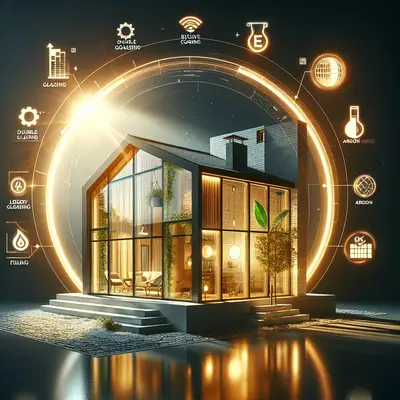
Poorly performing glass subtly “steals” warmth in winter and radiates heat inward in summer, even when the air temperature is nominally ideal. You feel this as drafts, cold spots near large panes, or that unmistakable afternoon “glare heat” across stone floors and furnishings. High-performance glazing with carefully selected low-E coatings, insulated spacers, and gas fills does more than lower energy usage; it stabilizes the microclimate near the window wall.
The result is a home where you can sit beside expansive glass with a book in January, or enjoy a sunlit breakfast in August, without compensating with layers or constantly adjusting the thermostat. When evaluating window options, request performance metrics that speak directly to comfort—U-factor, solar heat gain coefficient (SHGC), and air leakage—rather than relying on generic “energy efficient” labels.
Insight 2: Orientation-Specific Glazing Is the New Standard of Refinement
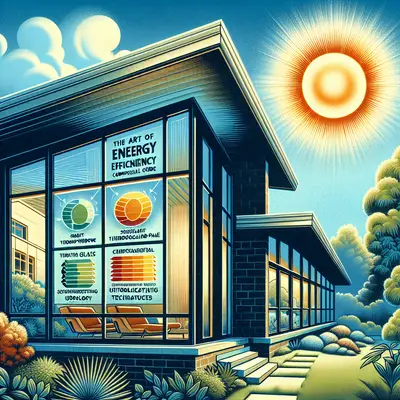
A truly refined window plan does not treat every exposure identically. The glass that is optimal for a south-facing façade drenched in winter sun is rarely ideal for a shaded north elevation or western exposure that catches punishing late-afternoon heat.
Energy-conscious architects have long practiced orientation-driven design, but homeowners now have access to glazing packages sophisticated enough to match. For example, you may specify:
- Higher SHGC glass on south-facing windows to gently “harvest” winter solar warmth in colder climates
- Lower SHGC, more aggressive solar-control coatings on west-facing windows to tame harsh afternoon heat and protect textiles and artwork
- Balanced, neutral coatings on east and north elevations to preserve a consistent aesthetic while fine-tuning performance
This tailored approach allows you to expand glass area without unrestrained energy penalties. Rather than compromising on view or scale, you choreograph each façade to respond intelligently to sun, shade, and season. The effect: a home that looks visually unified yet behaves like a meticulously tuned instrument.
Insight 3: The Frame Is Quietly Doing as Much Work as the Glass
Most energy discussions center on glass performance, but the frame—often only a fraction of the visible area—can make or break the window’s overall efficiency. In premium applications, the frame is treated as a thermal component, not just a structural one.
Materials such as fiberglass, high-quality composites, and thermally broken aluminum mitigate heat transfer far better than basic, hollow-metal or low-grade vinyl frames. Multi-chambered designs and insulated frame cavities further reduce conductive heat loss while improving rigidity and longevity. Even the frame color matters: darker exteriors in sun-intense climates may warrant particular attention to thermal stability and expansion control.
This is where discerning selection matters. Two windows may have similar glass specifications but dramatically different whole-unit performance because of the frame system. Ask for the whole-unit U-factor and condensation resistance ratings—not just center-of-glass numbers—to see how the entire assembly will behave in real conditions. Premium efficiency is always holistic, never piecemeal.
Insight 4: Airtightness Is an Invisible Luxury You Will Feel Every Day
Most homeowners associate window efficiency with glass and coatings, but air leakage is often the silent saboteur of comfort. Even a technically efficient window underperforms if it allows subtle drafts around the sash, frame, or installation interface.
In refined homes, airtightness becomes an invisible luxury: the absence of whistling on windy nights, the elimination of cold streaks along floors, the quiet stability of room temperatures across the day. Achieving this is a combination of:
- Window engineering that prioritizes compression seals and robust weatherstripping
- Precision manufacturing tolerances that reduce unintended gaps
- Meticulous installation practices, including properly integrated flashing, sealants, and insulation around the rough opening
When comparing products, scrutinize the air leakage rating as carefully as you would the U-factor. A premium, energy-focused design aspires to create a continuous thermal and air barrier. With the right windows, weather becomes something you observe through glass—not something you feel creeping into the room.
Insight 5: Visual Clarity and UV Control Are Core to Energy-Aware Elegance
Energy efficiency is commonly associated with what you save, but in high-end homes it is also about what you preserve: art, textiles, flooring, and finishes that represent significant aesthetic and financial investments. Sunlight, while desirable, carries ultraviolet and infrared energy that can bleach fabrics, dry out wood, and fade pigments over time.
Modern high-performance glazing can be engineered to deliver remarkable clarity and color neutrality while filtering harmful UV and modulating solar gain. The key is to avoid the trade-off of older-generation “tinted” or heavily reflective glass that distorts the view. Instead, advanced low-E coatings are layered microscopically within the glass, subtly filtering energy spectra that cause fading and overheating while leaving the view crisp and nuanced.
This selective filtering accomplishes three things simultaneously:
Protects interior finishes and collections from premature aging
Reduces cooling loads, especially in rooms with generous glazing
Preserves a refined, natural daylight quality that feels luxurious rather than clinical
For art-forward or design-driven homes, UV and visible light transmittance data should sit alongside U-factor and SHGC in your decision criteria. Energy efficiency, at its most elevated, is about safeguarding both your comfort and your curation.
Conclusion
An energy-efficient window upgrade, when conceived with sophistication, is not an exercise in austerity; it is an upgrade in lived experience. It tempers extremes, softens seasonal transitions, and quietly protects the home you have so carefully composed. By considering radiant comfort, orientation-specific glazing, frame performance, airtightness, and UV-conscious clarity, you transform windows from mere openings into high-performance design elements.
The most successful projects are those in which efficiency is never at odds with elegance. Instead, the two are interwoven—creating interiors that are tranquil, temperate, and enduringly beautiful, season after season.
Sources
- U.S. Department of Energy – Energy-Efficient Windows - Overview of window performance metrics such as U-factor, SHGC, and air leakage
- Efficient Windows Collaborative – Window Selection Guidance - Detailed guidance on climate- and orientation-specific window choices
- National Fenestration Rating Council (NFRC) - Explains standardized window ratings and whole-unit performance labeling
- Lawrence Berkeley National Laboratory – Windows and Daylighting - Research on advanced glazing, comfort, and building energy performance
- National Park Service – Preservation Brief on Ultraviolet and Light Damage - Explains how UV and light exposure affect interior materials and finishes
Key Takeaway
The most important thing to remember from this article is that this information can change how you think about Energy Efficiency.