For the discerning homeowner, energy efficiency is no longer a purely technical metric—it is an expression of comfort, quiet, and understated luxury. The right windows transform a residence from merely insulated to exquisitely calibrated, where light, temperature, and silence are carefully orchestrated. Upgrading your glazing is not simply an exercise in cutting utility bills; it is an opportunity to refine the performance, feel, and long‑term resilience of your home’s envelope.
Below are five exclusive, often overlooked insights that elevate a window project from “upgrade” to “investment‑grade refinement.”
Reframing Performance: Reading Beyond the Label
Most homeowners are familiar with terms like double‑pane, triple‑pane, or “energy‑efficient glass,” but the true sophistication lies in understanding how performance metrics interact with your climate, architecture, and lifestyle.
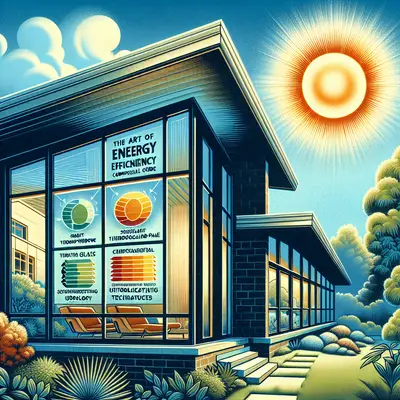
Energy performance labels—typically listing U‑factor, Solar Heat Gain Coefficient (SHGC), Visible Transmittance (VT), and air leakage—are more nuanced than they appear. U‑factor measures how well a window resists heat flow; lower is better for retaining warmth in colder climates. SHGC indicates how much solar heat passes through; in a sun‑drenched climate, a lower SHGC preserves interior comfort and reduces cooling load, while in colder regions, strategic use of higher‑SHGC glass can capture passive solar gain.
Where the refined approach differs is in treating these values not as “good” or “bad,” but as tuning knobs. A north‑facing elevation may call for a different SHGC than a south‑facing glass wall. A media room might merit lower VT and tighter air leakage than a sunroom designed as a luminous retreat. True optimization comes when performance metrics are tailored room‑by‑room, façade‑by‑façade—design, not default, should dictate the glazing choices.
Invisible Architecture: How Frames Quietly Shape Efficiency
Glass commands attention, but frames quietly determine a surprising portion of thermal performance and longevity. In high‑end projects, the frame is not just a border; it is a piece of invisible architecture that governs comfort at the perimeter of every room.
Aluminum, prized for its sleek sightlines, can be thermally compromised without a proper thermal break—a non‑conductive barrier that interrupts heat flow. Premium thermally broken aluminum or aluminum‑clad systems preserve the minimalist aesthetic while dramatically improving performance. Fiberglass, with its low thermal expansion, offers dimensional stability that keeps seals tighter and performance consistent over time. High‑end vinyl and composite frames can also deliver excellent insulation when engineered with multi‑chambered profiles and reinforced structures.
The refined insight: frame quality is not just about look and feel; it is about precision over decades. Well‑engineered frames resist warping, maintain alignment, and sustain airtightness, safeguarding both energy performance and the crisp, gallery‑like finish of your interiors. When evaluating options, ask not only about U‑factor for the glass, but the whole‑window U‑factor, including the frame. That is where true efficiency—and enduring elegance—reside.
Comfort as a Quiet Luxury: Surface Temperatures and Radiant Balance
Energy savings are measurable; comfort is experiential. High‑performance windows excel at both, but their most luxurious quality is often invisible: the stability of interior surface temperatures.
Poorly insulated windows create cold “radiant zones” near glass, even if the thermostat reads a comfortable temperature. You feel this as a subtle draftiness or chill, prompting you to avoid sitting too close to windows in winter. In summer, the reverse happens—glass can become a heat source, radiating warmth into otherwise cool rooms. This dynamic undermines comfort and drives constant thermostat adjustments.
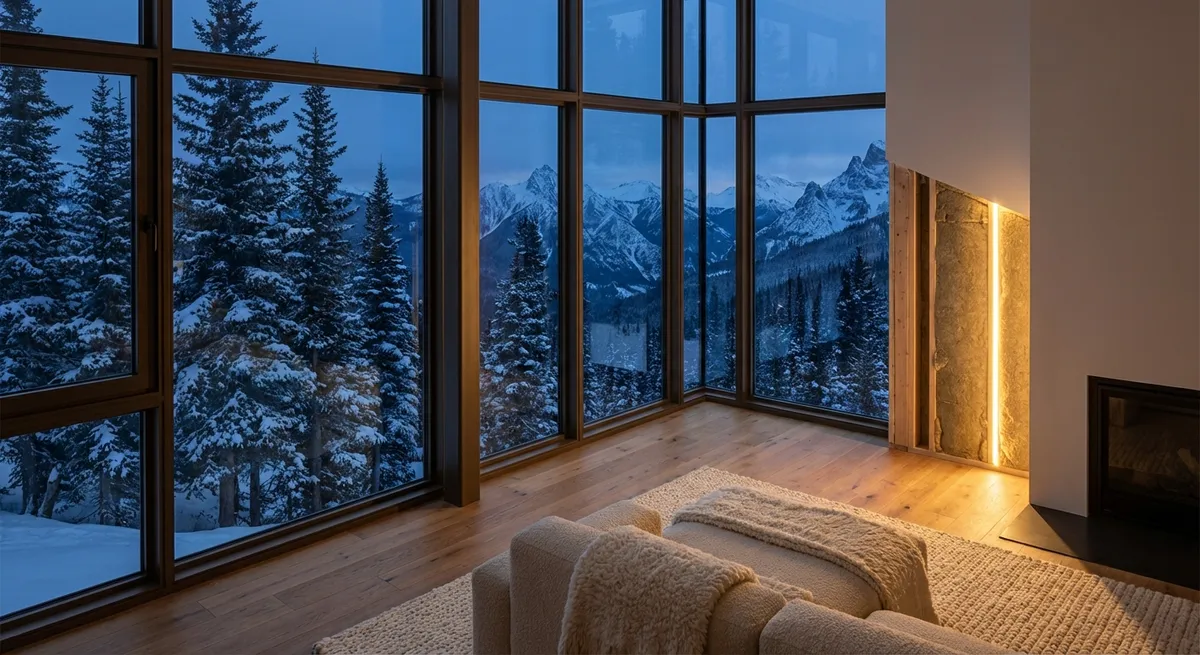
Advanced glazing and insulated frames dramatically narrow the temperature gap between interior air and glass surfaces. The result is radiant balance: you can sit beside expansive glazing in January without a chill, or enjoy a west‑facing view in July without feeling baked by the afternoon sun. For larger residences with soaring ceilings or substantial glass façades, this radiant stability becomes a defining element of livability. It is not simply about efficiency—it is about reclaiming every inch of square footage as truly usable space, in every season.
Solar Management as a Design Tool, Not a Constraint
For many luxury homes, the aspiration is clear: generous glass, dramatic views, and sculpted natural light. The perceived trade‑off is increased heat gain and higher cooling loads. Sophisticated solar management technologies dismantle that compromise.
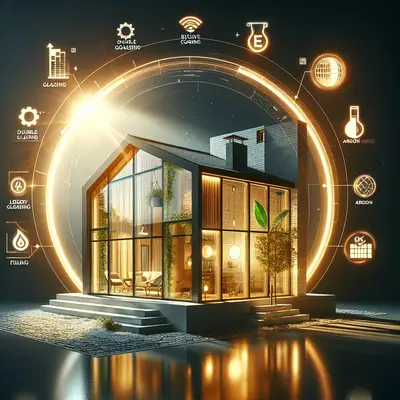
Low‑emissivity (low‑E) coatings now come in spectrally selective formulations that allow abundant visible light while filtering much of the infrared heat. This means you can invite daylight without importing the corresponding thermal penalty. In climates with strong sun, pairing low‑E glass with architectural shading—deep overhangs, fins, or exterior shades—creates a layered defense that is as aesthetic as it is functional.
High‑performance windows also play a quiet role in protecting interiors. By reducing UV transmission, they preserve wood flooring, fine textiles, artwork, and furnishings from fading, protecting both the visual harmony and the long‑term value of your interiors. Energy efficiency, in this sense, becomes a curator of your home’s materials, maintaining their color, texture, and integrity over time.
The elevated approach is to view solar control as a design ally: a tool that enables generous apertures, dramatic vistas, and luminous spaces without sacrificing composure, privacy, or thermal calm.
Strategic Replacement: Phased Upgrades That Behave Like a System
Energy‑efficient windows deliver maximum value when they are understood as part of a broader building system, not a standalone component. For larger or architecturally complex homes, a phased, strategic approach can be more intelligent than a wholesale, one‑time replacement.
Begin with façades and spaces that exert the greatest influence on comfort and consumption: expansive west‑ or south‑facing glass in warm climates, or draft‑prone, wind‑exposed elevations in colder regions. Upgrading these areas first often yields outsized gains in both comfort and energy savings, while allowing time to refine aesthetic and performance preferences for the remainder of the home.
Attention to integration is crucial. High‑performance windows should be paired with properly detailed flashing, continuous air barriers, and appropriate insulation transitions at adjacent walls and headers. When these interfaces are executed thoughtfully, the upgraded windows function as part of a coherent envelope, reducing air leakage, managing moisture, and stabilizing interior conditions.
The exclusive advantage of this systems‑oriented mindset is resilience. Your home becomes less vulnerable to energy price volatility, more comfortable across weather extremes, and quieter in the face of external noise—all while preserving architectural intent. Done well, the result is an energy‑efficient envelope that feels less like “added technology” and more like an inherent quality of the home itself.
Conclusion
An energy‑efficient window upgrade is not merely a technical retrofit; it is a refinement of how your home mediates light, temperature, and sound. By reading beyond the label, prioritizing frame engineering, seeking radiant comfort, leveraging advanced solar control, and treating each upgrade as part of a larger system, you transform glazing from a commodity into a cornerstone of architectural performance.
For the homeowner who values both aesthetic purity and quiet, enduring comfort, exceptional windows are not an accessory—they are the subtle infrastructure that allows every room, every view, and every season to feel precisely as it should.
Sources
- [U.S. Department of Energy – Energy-Efficient Windows](https://www.energy.gov/energysaver/energy-efficient-windows) – Overview of window performance metrics, frame materials, and efficiency strategies
- [Efficient Windows Collaborative – Window Selection Guidance](https://www.efficientwindows.org) – Detailed guidance on U-factor, SHGC, climate-appropriate choices, and whole-window performance
- [Lawrence Berkeley National Laboratory – Windows and Building Envelope Research](https://windows.lbl.gov) – Research on advanced glazing, spectrally selective coatings, and thermal performance
- [NFRC (National Fenestration Rating Council)](https://www.nfrc.org/energy-performance-labels) – Explanation of standardized energy performance labels and what each rating means for homeowners
Key Takeaway
The most important thing to remember from this article is that this information can change how you think about Energy Efficiency.