Energy efficiency, at its most refined, is less about frugality and more about composure—maintaining a home that feels precisely right in every season with minimal effort and quiet technical brilliance. For homeowners contemplating a window upgrade, the conversation extends far beyond “double-pane or triple-pane” and into a realm where glass, frame, hardware, and installation behave as a single, curated system. This is where comfort becomes calibrated, not improvised.
Below are five exclusive, often-overlooked insights that sophisticated homeowners appreciate when orchestrating a truly energy-elegant window strategy.
1. Comfort Is a Temperature Gradient, Not a Thermostat Setting
True thermal luxury is not simply achieving 70°F on the thermostat; it is the consistency of that temperature as you move through the room. Energy-efficient windows significantly reduce “temperature gradients”—the drop you feel when stepping from the center of a room toward the glass.
High-performance glazing and thermally broken frames can raise the interior surface temperature of the glass in winter by several degrees, dramatically changing perceived comfort. This matters more than many realize: even if the air in the room is warm, a cold glass surface radiates coolness, making you instinctively avoid the window wall.
By specifying windows with low U-factor ratings (indicating slower heat loss) and appropriate low-e coatings suited to your climate, you minimize radiant chill and drafts at the perimeter. The psychological effect is profound: areas once considered “seasonal” or “for summer only” become fully habitable, allowing furniture, artwork, and textiles to extend right up to the view without compromise.
2. Daylight as an Energy Asset, Not Just an Aesthetic Perk
Daylight is a form of passive energy that, when properly harnessed, reduces both lighting and heating loads while enhancing wellbeing. Thoughtful window upgrades can turn daylight into a functional asset rather than a glare-prone nuisance.
High-end glazing can be tuned to your facade orientation:
- South and west exposures may favor spectrally selective low-e coatings that admit generous visible light while limiting solar heat gain.
- North exposures can prioritize maximal visible light transmittance, where unwanted heat gain is minimal.
This tailoring avoids the common trap of over-tinting the entire home in the name of “efficiency,” which can leave interiors feeling perpetually dim and dependent on artificial lighting. Instead, you curate glass as you would lighting fixtures—by purpose and mood.
The result is nuanced: a brighter interior with fewer artificial light hours, reduced eye strain from balanced illumination, and a subtler transition between indoors and out. It is energy efficiency expressed as luminous clarity rather than austerity.
3. Frame and Spacer Materials: The Quiet Architecture of Performance
When homeowners think “better windows,” they often focus exclusively on glass. Yet the frame and spacer system at the edge of the glass frequently determine whether that premium glazing actually performs to its potential.
Subtle decisions here have disproportionate impact:
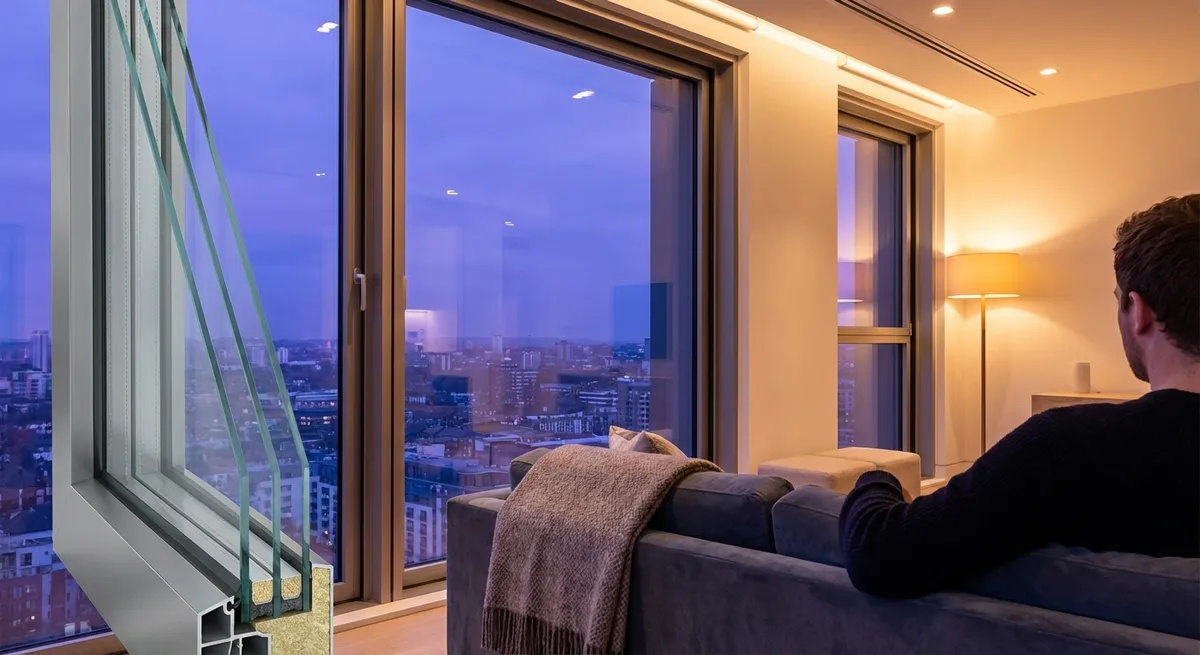
- Frame composition: Fiberglass, engineered wood-clad, and high-quality composite frames typically offer superior thermal stability versus standard aluminum, which is highly conductive unless thermally broken.
- Thermal breaks: In metal frames, internal insulating barriers dramatically reduce heat transfer, keeping interior frame surfaces warmer in winter and cooler in summer.
- Warm-edge spacers: The narrow material that separates double or triple panes can be a weak point. Modern warm-edge spacers made from stainless steel, silicone foam, or other low-conductivity materials limit condensation and edge heat loss compared with older aluminum spacers.
These components form a discreet thermal architecture around your glass. Up close, you gain less condensation, fewer cold edges, and a more “finished” comfort near the frames. From a distance, you experience a more stable interior environment with reduced load on your HVAC system—all without overtly visible technology.
4. Precision Air Management: Beyond “Draft-Free”
Energy-efficient windows are often described as “airtight,” but the art is more nuanced than simply eliminating drafts. High-end systems manage air movement with precision, working in concert with the home’s envelope and mechanical systems rather than in isolation.
Look for:
- Advanced sealing systems: Multi-layer gaskets, compression seals, and carefully engineered sash-to-frame interfaces that maintain performance over years of operation, not just when the windows are new.
- Installation as a system: Foam alone is not a strategy. Proper integration with flashing, tapes, membranes, and the wall’s weather-resistive barrier ensures that the installed window is as airtight as the lab-tested unit.
- Controlled ventilation philosophy: As windows and building envelopes improve, it becomes possible—and often desirable—to combine high-performance windows with balanced mechanical ventilation (such as ERVs or HRVs). This ensures you achieve both exceptional efficiency and continuous fresh air, without relying on leaky frames for “ventilation by accident.”
Rather than a binary “draft” versus “no draft,” you achieve a considered air profile: a home that feels still and serene, yet distinctly fresh, with stable humidity levels and less temperature stratification between floors.
5. Long-Horizon Value: Energy Efficiency as a Design Asset, Not a Line Item
From a premium standpoint, energy efficiency is best considered as an investment in long-horizon livability and resilience rather than a short-term payback exercise. High-caliber window upgrades contribute to a deeper kind of value that extends beyond the monthly utility statement.
Several dimensions of long-horizon value emerge:
- Resilience to energy volatility: As energy markets fluctuate, a home with low baseline demand is inherently more predictable and easier to operate.
- Market distinction: Increasingly, buyers recognize and seek documented performance—ENERGY STAR–rated windows, third-party certifications, and verifiable efficiency upgrades that differentiate one property from another.
- Acoustic and thermal synergy: Triple glazing, laminated glass, and robust frames often improve both energy and sound performance. The result is a quieter, more composed interior, which is difficult to quantify but immediately recognizable.
- Material durability: Premium, thermally stable frames and modern sealants tend to age more gracefully, maintaining alignment, operability, and performance over time. This protects both energy performance and aesthetic integrity.
Seen this way, energy-efficient windows become part of a broader architectural narrative: a home that is visually elevated, functionally composed, and operationally intelligent, designed to age gracefully in a changing climate and evolving market.
Conclusion
Energy efficiency in window design is no longer a matter of simply “upgrading to double-pane.” It is an orchestration of comfort gradients, daylight strategy, discreet thermal components, meticulous air management, and long-horizon value. For the discerning homeowner, the most compelling benefit is not just reduced consumption, but a home that feels consistently poised—warm without heaviness, cool without sterility, bright without glare.
By approaching window upgrades as a curated performance system rather than a commodity purchase, you transform glass from a vulnerability into a quiet, enduring strength of the modern residence.
Sources
- [U.S. Department of Energy – Energy-Efficient Windows](https://www.energy.gov/energysaver/energy-efficient-windows) - Overview of window efficiency concepts, including U-factor, SHGC, and frame considerations
- [Efficient Windows Collaborative (National Fenestration Rating Council)](https://www.efficientwindows.org/) - Detailed guidance on window performance metrics, climate-appropriate choices, and design strategies
- [ENERGY STAR – Windows, Doors, and Skylights](https://www.energystar.gov/products/building_products/residential_windows_doors_and_skylights) - Criteria and performance requirements for high-efficiency window products
- [Lawrence Berkeley National Laboratory – Windows and Daylighting](https://windows.lbl.gov/) - Research on thermal performance, daylighting, glazing technologies, and whole-building impact
- [Harvard T.H. Chan School of Public Health – Healthy Buildings: Indoor Air Quality](https://www.hsph.harvard.edu/healthybuildings/about-us/healthy-buildings/iaq/) - Context on the importance of controlled ventilation and airtight envelopes for comfort and health
Key Takeaway
The most important thing to remember from this article is that this information can change how you think about Energy Efficiency.