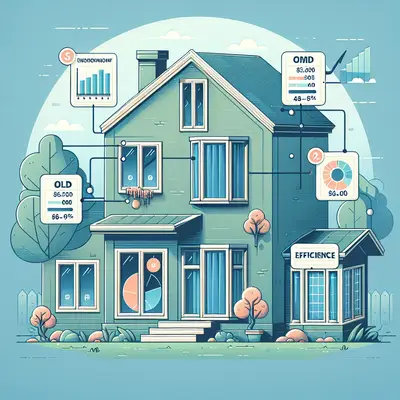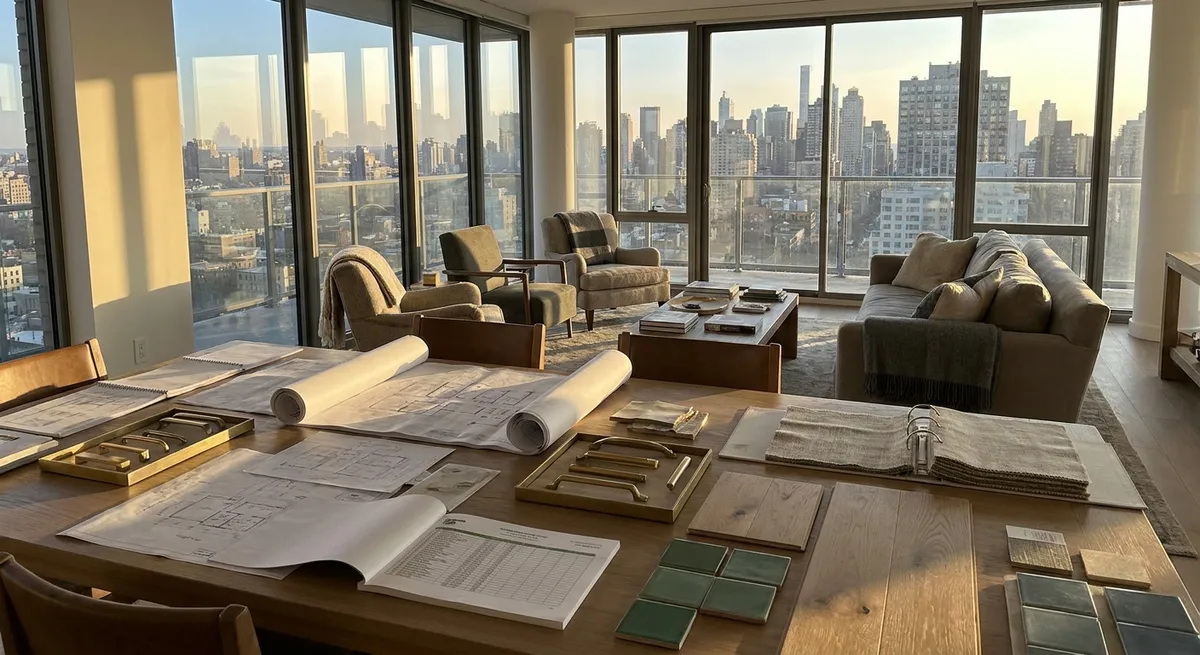
The most refined window projects are rarely about glass alone; they are about orchestrating comfort, silence, light, and long-term value with financial precision. Yet when homeowners begin requesting quotes, costs often appear opaque—line items that feel more like guesswork than strategy. A sophisticated upgrade deserves a more discerning lens: not “How much do new windows cost?” but “How does each design, material, and performance decision shape what I pay—and what I gain?”
Below, we unpack the cost landscape of premium window upgrades and reveal five exclusive insights that help you invest with intention, not impulse.
Reading the True Cost Landscape of Premium Windows
Most homeowners encounter window pricing as a blunt figure: a per-window estimate or a total project bid. In reality, each number is a composite of intertwined elements—frame material, glazing technology, hardware quality, installation complexity, and even local code requirements. For refined projects, this blend is rarely “standard.” Slimmer sightlines, architecturally consistent profiles, and custom dimensions all shift the cost profile in ways that a generic online calculator cannot capture.
Premium windows also live on a dual timeline: the upfront capital outlay and the downstream financial consequences. Energy performance, maintenance demands, acoustic control, and even resale perception quietly re-shape your balance sheet over 10–30 years. A discerning cost analysis therefore moves beyond “cheap vs expensive” and into “short-lived vs enduring,” “noisy vs serene,” “draft-prone vs thermally composed.” The most cost-effective choice is often not the lowest bid, but the one whose long-term benefits are calibrated to your home’s climate, your lifestyle, and your aesthetic standard.
Exclusive Insight 1: Frame Material Costs Are Less About Price Tags Than Lifespan
The first instinct is to rank frame materials by price—vinyl at the lower end, fiberglass and wood-clad at the higher. But a refined cost analysis looks instead at cost per year of performance, not just cost at purchase.
High-grade vinyl can be attractively priced, but may be more vulnerable to warping or discoloration under intense sun over decades. Fiberglass typically carries a higher initial cost but offers exceptional dimensional stability, meaning less risk of performance drift, air leakage, or failure that would demand early replacement. Wood and wood-clad systems often sit at the top of the spectrum; however, their financial logic depends heavily on climate exposure and the homeowner’s appetite for maintenance. In coastal or high-humidity environments, unprotected wood frames can quietly accumulate maintenance costs that eclipse their initial elegance.
When comparing materials, sophisticated homeowners increasingly request not just a price per unit, but a projected service life range and maintenance profile. Spreading the total installed cost over a realistic lifespan—factoring repainting, refinishing, or likely seal failures—often reveals that a seemingly “premium” material can, on a per-year basis, be the more economical and resilient choice.
Exclusive Insight 2: Performance Glass Upgrades Often Pay Twice—On Bills and on Comfort
Glazing choices are where cost and experience intertwine most tightly. Low-E coatings, double or triple panes, gas fills, and warm-edge spacers are usually priced as upgrades, yet their returns are multi-dimensional.
Energy-efficient glazing can reduce heat loss in colder climates and limit solar gain in warmer ones, trimming utility bills in measurable ways. But the hidden dividend lies in thermal comfort and space usability. A room with high-performance glazing near a large window wall often feels consistent enough to be enjoyed year-round—turning what might have been a “seasonal showpiece” into a fully viable living, dining, or working space. The financial value of a reclaimed room is not simply an energy calculation; it’s square footage that genuinely performs.
There is also a strategic nuance: not every window in a home must receive the same glazing treatment. A refined cost analysis often layers performance—prioritizing advanced coatings and possibly triple glazing on north-facing (cold-climate) or west-facing (hot-climate) exposures where thermal swings are most extreme, while using a more measured specification for less demanding orientations. This tailored approach helps balance cost with performance, avoiding the blanket “all-or-nothing” upgrades that can inflate budgets without proportional comfort gain.
Exclusive Insight 3: Custom Dimensions Can Save Money When Aligned With Structure
Custom windows are often assumed to be categorically more expensive. Yet the relationship between size, shape, and cost is more nuanced—especially when structural modifications become part of the conversation.
Altering openings—widening a window into a door, raising sill heights, or expanding a view into a panoramic configuration—intrudes into framing, headers, and sometimes even load-bearing elements. These changes can trigger engineering fees, additional inspections, and longer installation hours. Ironically, a made-to-order window designed to fit the existing structural opening precisely can be more financially elegant than a “standard size” unit that demands structural alteration to accommodate it.
A refined cost strategy considers the building envelope as a constraint to be respected rather than indiscriminately reshaped. By measuring the cost of structural intervention against the incremental cost of non-standard windows, homeowners often find that true customization occurs in glass and frame design, not in reframing half the façade. In heritage or architecturally significant homes, this approach not only saves money but preserves the structural rhythm and visual integrity of the original design.
Exclusive Insight 4: Operational Style Quietly Influences Long-Term Cost of Ownership
How a window opens is not merely an aesthetic preference; it is a cost lever in multiple dimensions—hardware complexity, air tightness, maintenance demands, and even cleaning logistics.
Casement and awning windows, for example, typically achieve better air seals than many basic double-hung styles because the sash presses firmly into the frame when locked. That improved seal can subtly reduce drafts and energy use over time, particularly in windy or exposed sites. Their more intricate hardware, however, may be costlier to replace decades later than the simpler balances and latches of traditional double-hung windows.
Tilt-turn or large-format sliding systems, popular in more contemporary designs, can command significant hardware and installation premiums. Their true cost advantage emerges when they are carefully located: large sliders that connect interior living spaces to outdoor terraces, or tilt-turn units that double as both ventilation and egress, can consolidate multiple functional needs into a single opening. When operational style is thoughtfully aligned with use patterns—ventilation, cleaning access, outdoor connection—the result is fewer compromises, fewer retrofits, and fewer “regret upgrades” in later years.
A sophisticated homeowner evaluates operational cost not just as “style vs price,” but as function vs frequency: how often will this window be opened, cleaned, leaned against, or used as a primary passage? The more integral its role, the more rational a higher upfront investment in robust hardware and precision seals becomes.
Exclusive Insight 5: Installation Tier May Be the Most Underrated Cost Variable
Two identical window units can perform very differently in the field—simply based on how they are installed. Yet many quotes treat installation as a uniform, commoditized line item. For refined projects, that simplification is misleading.
Higher-tier installation often includes more meticulous air and water barrier integration, attention to sill pan detailing, comprehensive flashing systems, and careful insulation around the frame perimeter. These nuances are rarely the cheapest way to set a window, but they are frequently the least expensive way to own a window over decades. Poor installation can introduce water intrusion, condensation issues, and frame movement that shortens the life of even the most premium product.
Additionally, the logistical choreography—staging, protection of interior finishes, and coordination with other trades—carries a cost that is directly tied to risk mitigation. In high-end homes with delicate flooring, bespoke millwork, or complex exterior cladding, the premium for a seasoned installation team is effectively an insurance policy against collateral damage and future remediation. A more sophisticated budgeting approach separates “product cost” from “installation craftsmanship,” recognizing that a modest increase in the latter can unlock the full value of the former.
Conclusion
A truly elevated window upgrade is never just a shopping exercise; it is a financial design process. The most discerning homeowners look beyond generic per-window pricing and instead examine how material choices, glazing strategies, opening configurations, and installation standards interact with the structure and the way they live in it.
When analyzed through this refined lens, cost stops being a blunt constraint and becomes a tool for prioritization. Certain windows, exposures, and rooms emerge as worthy of heightened investment, while others can remain restrained without compromise. The result is a portfolio of openings that feel coherent—not only in their visual rhythm and tactile quality, but in the quiet confidence that each cost decision has been made with both elegance and endurance in mind.
Sources
- U.S. Department of Energy – Energy-efficient Window Attachments - Explains how different window and glazing technologies influence energy performance and costs
- Efficient Windows Collaborative – Window Selection Guidance - Offers detailed insight into frame materials, glazing options, and climate-specific performance considerations
- U.S. Environmental Protection Agency – ENERGY STAR Windows, Doors, and Skylights - Outlines efficiency criteria and potential energy savings from high-performance windows
- National Association of Realtors – 2023 Remodeling Impact Report - Provides data on cost recovery and perceived value of window replacement projects
- Lawrence Berkeley National Laboratory – Windows and Building Envelope Research - Offers research-based insights into window performance, thermal comfort, and long-term energy impacts
Key Takeaway
The most important thing to remember from this article is that this information can change how you think about Cost Analysis.