For discerning homeowners, window upgrades are rarely about simple replacement. They are about orchestrating comfort, quiet, and architectural poise—while ensuring that every dollar entrusted to the project works with quiet efficiency. A sophisticated cost analysis is less about chasing the lowest bid and more about understanding where investment genuinely transforms the living experience and the property’s long-term value.
This guide explores how to read the true economics of elevated window solutions, with five exclusive insights that matter when “good” is not good enough.
Seeing Beyond the Quote: The Architecture of Total Window Cost
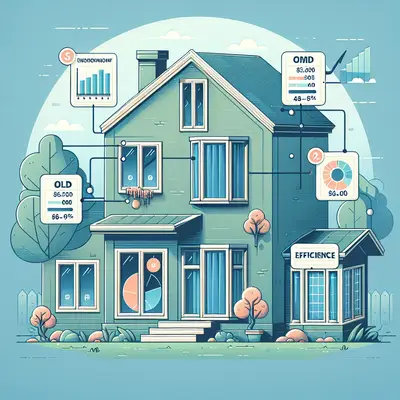
A window quote is only the overture; the real cost composition unfolds over decades. The initial figure you receive typically captures frames, glass, basic hardware, and standard installation. What it rarely makes explicit are the nuanced layers that shape the long-term financial profile: maintenance cycles, energy performance, noise control, UV protection, and even future design flexibility.
High-caliber windows can appear more expensive at first glance, but when you factor in repainting schedules, seal failures, condensation issues, and premature replacement, entry-level options often reveal a far higher lifetime cost. Premium units with robust frames, superior glazing, and engineered hardware typically stretch their useful life, flattening the cost curve across 25 to 40 years instead of 10 to 15. The result is not only fewer disruptions and less visual fatigue, but also a slower erosion of value—financial and aesthetic—over time.
Sophisticated homeowners treat the quote as a starting point for a deeper conversation: How long is the performance expected to last? What happens at year 10, year 20? What would it cost—in dollars and in inconvenience—to correct lesser choices five or ten years down the road? Only when these questions are answered does the quote evolve into a meaningful cost picture.
Exclusive Insight 1: The “Comfort Dividend” Outweighs Pure Energy Math
Conventional window cost analysis often fixates on utility bill savings. While reduced heating and cooling costs are important, energy math alone undersells what high-performance windows actually deliver. The true dividend is comfort, and that comfort has tangible financial and lifestyle implications that never appear on a utility statement.
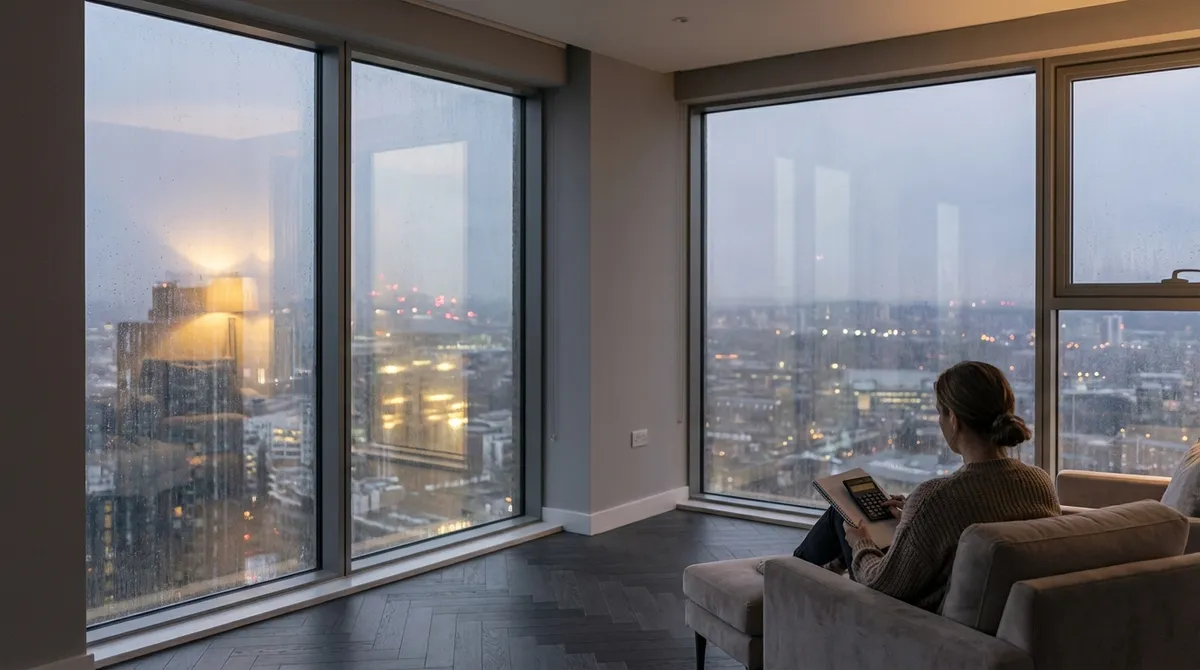
Premium windows reduce radiant chill near glass in winter and minimize solar heat gain in summer, shrinking those “avoid the window” zones and transforming them into livable, desirable spaces. This often allows for more flexible furniture layouts and more efficient use of square footage—particularly valuable in urban settings where every square foot commands a premium. When viewed through this lens, the ability to meaningfully use an additional area of a room becomes part of the return on investment.
Quiet is another dimension of the comfort dividend. Enhanced glazing and frame design can mute traffic, aircraft, and neighborhood noise to a subdued background hum. The result is better sleep, more focused work-from-home environments, and a more restorative interior ambiance. None of this appears in an HVAC payback chart, yet for many homeowners, it is precisely this transformation that justifies moving up to a higher tier of window solution.
Exclusive Insight 2: Material Pairing, Not Material Alone, Drives Value
Debates about vinyl vs. wood vs. aluminum vs. fiberglass tend to flatten a nuanced decision into a simplistic contest. For a refined cost analysis, the more telling question is how the frame material, glazing, and finish system work together—to support both performance and design intent across decades.
Wood offers warmth and traditional elegance but demands careful attention to cladding, finish quality, and exposure conditions. When thoughtfully protected with high-grade exterior cladding and factory-applied finishes, its maintenance profile can be dramatically improved, often justifying the elevated cost in architecturally significant homes. Fiberglass frames, with their dimensional stability and low thermal expansion, can carry large expanses of glass with less risk of warping, which becomes crucial in contemporary designs with expansive openings.
Aluminum, when thermally broken and paired with advanced glazing, delivers slender sightlines in modern homes where visual minimalism is paramount. Vinyl, at the premium end of the spectrum, can offer impressive performance at a more approachable cost, provided you choose manufacturers with proven track records in structural integrity and colorfastness.
The essential insight: the most cost-effective solution is rarely the cheapest material, but rather the best-orchestrated system of frame, glass, and finish that aligns with your architectural vision, climate, and maintenance appetite.
Exclusive Insight 3: Time Horizon Is the Hidden Multiplier in Cost Decisions
The appropriate investment level for windows depends less on today’s budget and more on how long you expect the home to serve as your residence, asset, or legacy. A short, medium, or long time horizon can radically reshape what constitutes a “smart” window expenditure.
If you anticipate a move within five to seven years, the priority may shift toward upgrades that maximize perceived value: curb appeal, sound reduction, and clear performance labels (such as ENERGY STAR certification) that resonate with future buyers. In this scenario, you might strategically elevate windows in prominent areas—front façades, entertaining spaces—while choosing more balanced solutions elsewhere.
For those intending to remain in place for 15 to 30 years, the calculus changes. Here, the maintenance profile, hardware longevity, and resistance to fading, warping, or seal failure become central. You are not simply buying windows; you are buying fewer future decisions, fewer repairs, and less visual and functional fatigue. The long horizon multiplies the impact of superior materials, finishes, and installation.
In legacy or multi-generational homes, investing in exemplary windows that have the potential to be serviceable, repairable, and aesthetically timeless across decades becomes not a luxury, but a strategic preservation choice. In such cases, attempting to economize at the outset often proves the most expensive option of all.
Exclusive Insight 4: Installation Quality Is a Financial Lever, Not a Footnote
While many homeowners conceptually understand that installation matters, its financial impact is often underestimated. Even the most advanced window underperforms when paired with mediocre installation; air leakage, water intrusion, and premature seal failure can erode energy savings and accelerate deterioration, quietly inflating long-term costs.
A premium installation typically includes detailed assessment of existing openings, moisture management strategies, proper flashing and sealing, and careful integration with existing or new insulation and exterior cladding. This attention to detail minimizes the risk of rot, mold, and structural damage around the window frame—issues that can cost far more than the original upgrade to correct.
In cost terms, paying more for elite installation is often analogous to buying an insurance policy on your entire window investment and surrounding structure. It also helps ensure the manufacturer’s performance claims are realized in the real world, making your energy and comfort projections more trustworthy. Over 15 to 25 years, the differential between competent and exceptional installation can quietly add up to thousands of dollars saved in avoided repairs and preserved performance.
Exclusive Insight 5: Curated Customization Often Outperforms Blanket Upgrades
Sophisticated cost analysis recognizes that not every window deserves the same specification. Strategic differentiation—investing more where performance and perception matter most, and calibrating elsewhere—can produce a more elegant result within a defined budget.
Consider prioritizing advanced glazing (such as triple-pane or laminated glass) where it delivers maximum benefit: street-facing bedrooms for sound control, large south- or west-facing openings for solar management, or spaces with art, textiles, or finishes that are sensitive to UV exposure. Meanwhile, secondary rooms with more modest exposure may perform beautifully with high-quality double-pane units and standard configurations.
Hardware and aesthetic details can be curated with similar precision. Architecturally prominent windows may merit upgraded hardware finishes, divided lite patterns, or custom colors that harmonize with an interior design palette, while less visible elevations remain more restrained. This targeted approach preserves a sense of cohesion and luxury without defaulting to the highest specification for every opening.
The result is a project that feels fully bespoke yet remains financially disciplined—where every upgrade is intentional, visible, and experientially meaningful rather than uniformly applied and only partially appreciated.
Conclusion
Window upgrades, when considered with a refined cost lens, become less about replacement and more about curation—of comfort, quiet, longevity, and architectural character. The true economics reside not just in the price per unit, but in how long the solution endures, how it reshapes the experience of each room, and how gracefully it preserves its beauty and function over time.
By looking beyond the initial quote, embracing the comfort dividend, pairing materials intelligently, aligning choices with your time horizon, insisting on meticulous installation, and curating customization with intent, you transform windows from a routine expense into a silent, enduring asset. In a well-composed home, the most successful window investments are often the ones you no longer notice—because they simply perform, year after year, with quiet sophistication.
Sources
- U.S. Department of Energy – Energy-Efficient Window Attachments - Explains how window technologies and treatments impact energy performance and comfort
- ENERGY STAR – Residential Windows, Doors, and Skylights - Provides performance criteria, labeling guidance, and efficiency information for homeowners
- Efficient Windows Collaborative – Window Selection Guidance - Offers detailed insight into window materials, glazing options, and climate-specific recommendations
- International Association of Certified Home Inspectors – Window and Door Installation - Discusses best practices and common installation issues affecting long-term performance
- U.S. Environmental Protection Agency – The Benefits of Energy Efficiency - Outlines the broader economic and comfort benefits of energy-efficient home improvements, including windows
Key Takeaway
The most important thing to remember from this article is that this information can change how you think about Cost Analysis.