Windows are the quiet arbitrators of how a home feels—thermally, acoustically, and emotionally. When chosen well, they dissolve the tension between performance and beauty, creating interiors that are calm, luminous, and astonishingly efficient. For homeowners contemplating an upgrade, the true luxury is not just in the look of the frame, but in the unseen engineering that turns glass into an energy asset rather than an energy liability.
Below are five exclusive, often-overlooked insights that elevate a window project from “new” to genuinely transformative.
1. The Hidden Climate Map of Your Home
Most homeowners select windows as if every façade faces the same sun, wind, and temperature. In reality, every home has a unique “climate map”—micro‑environments that respond differently to orientation, shade, and prevailing weather.
South- and west-facing elevations, for example, often demand more assertive solar control to prevent overheating, while north-facing façades benefit from maximizing diffuse daylight with slightly higher visible transmittance. Strategic glazing can also temper wind‑exposed façades, preventing uncomfortable drafts even in a well‑insulated envelope.
The sophisticated approach is to specify performance glass and frame profiles by elevation, not by house. You might select a higher Solar Heat Gain Coefficient (SHGC) for colder north or east elevations to passively capture warmth, while opting for lower SHGC on the western façade to mitigate afternoon heat gain. The result is not just reduced utility bills, but a more even, composed comfort that feels curated room by room.
2. Frame Architecture: Where Efficiency Quietly Lives or Dies
Premium glass often receives the headlines, but the frame is where energy performance quietly succeeds—or leaks away. A beautiful but thermally indifferent frame can compromise even the finest glazing.
Metal frames (especially aluminum) demand thermal breaks—insulating barriers that interrupt heat flow—to perform at a high level. Without them, the frame becomes a rapid conduction path, creating cold surfaces, condensation risk, and localized discomfort near the window edge. In contrast, high‑quality fiberglass, composite, or well‑engineered wood frames (with proper cladding and seals) can dramatically reduce conductive losses.
Pay attention to:
- Frame material and thermal breaks: Look for documented thermal performance, not just marketing language.
- Chamber design in vinyl or composite frames: Multiple internal chambers can slow heat transfer.
- Compatibility with high‑performance glazing: The frame must be structurally and thermally aligned with the glass unit’s performance.
In a refined specification, the frame is treated as architecture, not trim—an engineered thermal component that supports the performance of the entire façade.
3. Beyond “Double vs Triple”: Reading the Glass Like a Pro
Energy‑efficient glass has evolved far beyond a simple double‑ or triple‑pane decision. The real sophistication lies in understanding the interplay of coatings, gases, and spacing.
Low‑emissivity (low‑E) coatings work by reflecting infrared energy while allowing visible light to pass. Different low‑E formulations are tuned for climate and orientation: some favor solar gain for colder regions; others prioritize heat rejection for warmer locations. The gap between panes matters as well—too narrow and the insulating gas cannot perform optimally; too wide and convection currents develop, reducing effectiveness.
Details that matter:
- Low‑E variants: Request performance data (U‑factor, SHGC, visible transmittance) aligned with your climate and goals.
- Gas fill: Argon is common and cost‑effective; krypton offers superior performance in narrower cavities, often found in high‑end, slim‑profile units.
- Warm‑edge spacers: High‑quality spacers between panes reduce edge heat loss and help reduce condensation at the perimeter.
Thinking in terms of a “glazing strategy” rather than simply “better windows” allows you to align daylight, privacy, and energy with remarkable precision.
4. Comfort Is a Surface, Not Just a Number on a Bill
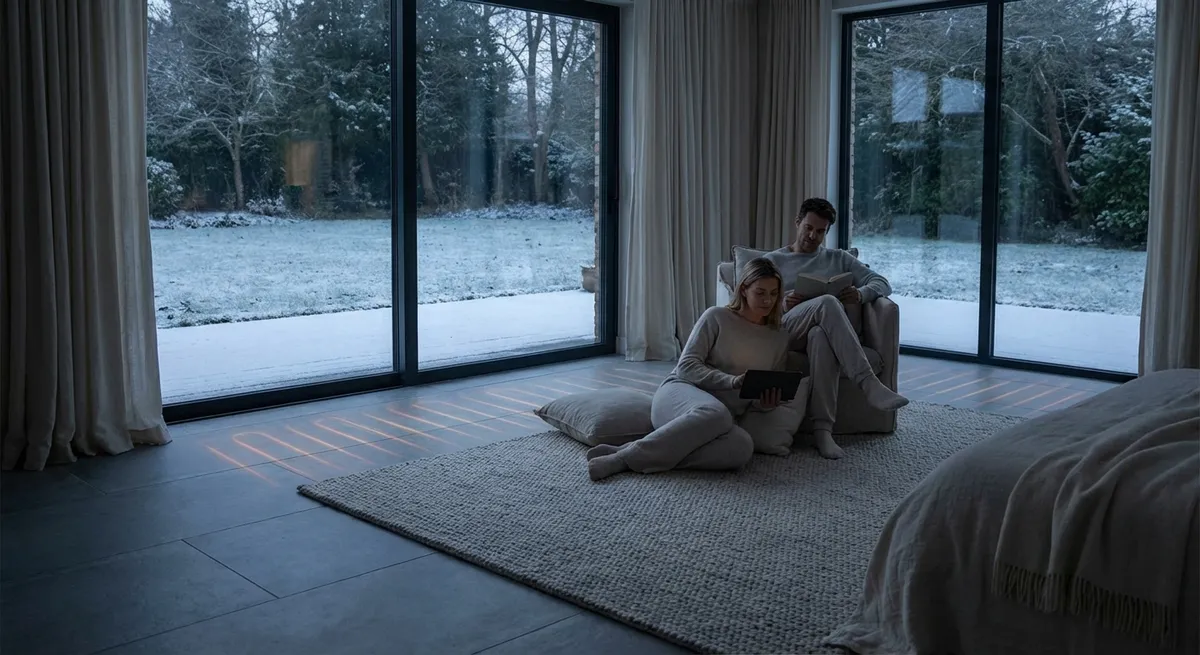
Most discussions of energy efficiency fixate on utility savings, but the most perceptible luxury is surface temperature. Humans feel radiant temperature as keenly as air temperature; a cold glass surface can make a room feel inhospitable even when the thermostat reads 72°F.
High‑performance windows raise the interior glass temperature in winter and lower it in summer, narrowing the difference between surface and air. This reduces the “cold wall” effect, making seating near windows dramatically more comfortable. It also means your HVAC system can work more gently and steadily, instead of compensating for sharp thermal swings at the perimeter of the room.
Indicators of a comfort‑focused window:
- Low U‑factor: Indicates strong resistance to heat transfer.
- Consistent interior glass temperatures: Particularly near corners and edges.
- Reduced drafts and downdrafts: This is as much about air‑sealing and installation as the window itself.
For a discerning homeowner, this is where energy efficiency feels tangible: a reading nook that is truly usable in January, a dining room that remains serene in August, and a home that maintains an enveloping sense of calm rather than cycling between warm and chilly.
5. The Long View: Energy Efficiency as Architectural Longevity
High‑efficiency windows are not just a response to today’s utility costs; they are a hedge against tomorrow’s energy landscape and regulatory environment. As building codes tighten and energy prices fluctuate, a home with advanced fenestration stands apart—operationally, environmentally, and in perceived value.
Durable frames that resist warping, premium seals that maintain airtightness, and glazing units with robust edge seals all play into long‑term performance. Efficient windows also help mechanical systems last longer by reducing load and cycling frequency. In many markets, energy‑efficient upgrades can enhance appraised value, and they align favorably with emerging green certifications and buyer expectations.
For a premium property, the question is not “How soon will these windows pay for themselves?” but “How holistically will they support the home’s legacy?” Thoughtfully chosen windows extend the architectural life of the building envelope, preserving both its aesthetic and its performance as decades pass.
Conclusion
Energy‑efficient windows are far more than an equipment upgrade; they are precision tools for shaping how a home feels and functions over time. When you consider orientation, frame engineering, sophisticated glazing, radiant comfort, and long‑term resilience as an integrated whole, the window package ceases to be a line item and becomes an expression of intent.
For the homeowner who values quiet excellence, this is the true luxury: glass and frame assemblies that work silently in the background, protecting comfort, curating light, and honoring the architecture every single day.
Sources
- U.S. Department of Energy – Energy-Efficient Windows - Authoritative overview of window efficiency concepts, including frames, glazing, and climate considerations
- Efficient Windows Collaborative – Window Selection Guidance - Detailed performance guidance on U-factor, SHGC, and climate‑appropriate choices
- Lawrence Berkeley National Laboratory – Window Technologies - Research-based information on advanced glazing, low‑E coatings, and insulating glass performance
- EPA ENERGY STAR – Residential Windows, Doors and Skylights - Certification criteria and regional performance recommendations for efficient windows
Key Takeaway
The most important thing to remember from this article is that this information can change how you think about Energy Efficiency.