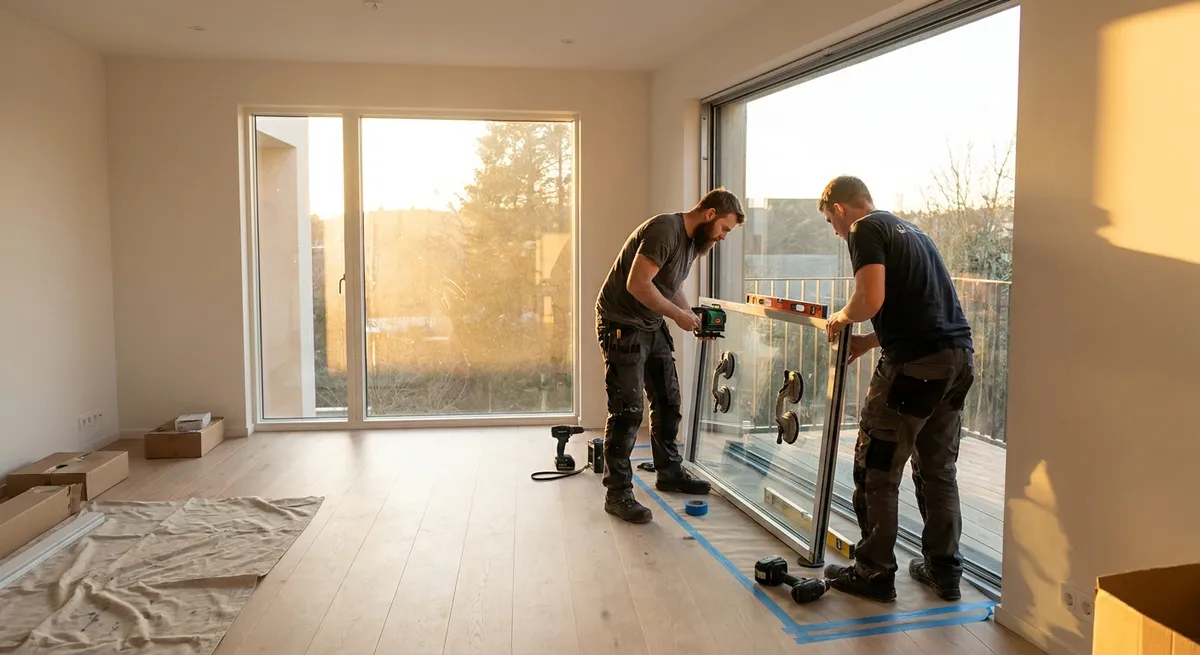
A considered window upgrade is never merely about glass and frames; it is a recalibration of light, climate, and acoustic comfort within your home. While brochures often dwell on visible finishes and performance ratings, the true transformation is decided during installation—where millimeters, materials, and method quietly determine whether your investment feels merely “new” or genuinely elevated. For homeowners who expect more than a basic fit-and-finish, understanding how refined installation practice shapes daily living is essential.
This guide looks beyond the surface, revealing how a premium installation becomes an architectural intervention rather than a simple replacement—and offering five exclusive insights that discerning homeowners rarely hear from conventional contractors.
Installation as an Invisible Performance System
At its highest standard, window installation is less a trade task and more an integration of systems: structure, insulation, moisture control, and interior design. The frame is not simply set into a wall opening; it is precisely aligned with the building envelope to manage movement, expansion, and air pressure over decades, not just seasons.
A refined installer will interrogate the existing opening: Is the wall plumb, or does the opening require shimming to maintain consistent reveal lines? Are there signs of previous moisture incursion, or hidden voids that compromise insulation continuity? The answers to these questions guide choices such as backer rod density, sealant chemistry, and whether to use expanding foam, mineral wool, or a hybrid insulation strategy.
When done properly, the installation becomes almost invisible in daily life. Drafts disappear, mechanical systems cycle less frequently, and interior finishes age gracefully rather than cracking around frames. What you notice is not the windows themselves, but a quiet sense of equilibrium: stable temperatures, controlled daylight, and acoustic calm that feels less like an upgrade and more like a redefined baseline.
The Building Envelope Dialogue: How Your Walls Dictate the Method
Every premium installation begins with a conversation between new windows and the existing building envelope. A heritage masonry façade, a mid-century cavity wall, and a contemporary high-R-value assembly each demand different installation logics if performance is to be preserved—or meaningfully enhanced.
In older homes, where wall thickness and uneven substrates are common, installers may need to create new, structurally sound “subframes” that act as a calibrated transition between the window and the existing wall. Done well, these subframes can improve both insulation continuity and structural anchoring, enabling modern high-performance units to work elegantly within legacy construction.
In high-performance contemporary homes, precision is even more crucial. The window must align seamlessly with existing air and vapor control layers, often requiring tapes and membranes engineered for compatibility with the wall system. A misaligned or punctured membrane at the window perimeter may not be visible, but it can quietly undermine the performance claims of the entire façade.
This dialogue between window and wall is where many standard installations falter—relying on “what we’ve always done” rather than what this specific building, climate, and design intent require. Homeowners who understand this interplay are better equipped to ask the right questions and evaluate proposals that go beyond generic methods.
Five Exclusive Insights for the Detail-Oriented Homeowner
For those who expect a higher standard of execution, certain nuances can profoundly influence the outcome—yet are rarely discussed in conventional sales conversations. These five insights can help you distinguish a merely competent installation from an exceptional one.
1. Reveal Symmetry Is Not Just Aesthetic—It’s Diagnostic
Even reveals (the visible gap between window frame and interior finish) are often treated as a purely visual concern. In reality, they are an immediate visual indicator of underlying precision. Consistent reveal widths suggest a square, properly shimmed installation; irregular or tapered reveals often betray racking, over-shimming, or inadequate preparation of the opening.
Beyond appearance, reveal consistency affects how interior trims, blinds, and treatments sit against the frame. Misalignment can cause light leaks at blackout shades, stress on hardware, or premature cracking of caulk lines. A premium installer will check reveals not just by eye, but with measuring tools, and adjust shims and anchor points until the geometry is coherent across the entire opening.
2. The Choice of Sealant Is a Long-Term Value Decision
To many, sealant is simply “caulk”—a finishing line along the frame perimeter. For high-performance installations, it is a critical component of the air and moisture control strategy. Silicone, polyurethane, silyl-modified polymer (SMP), and acrylics each have distinct adhesion profiles, movement tolerances, and UV resistance.
An elevated installation specifies sealants compatible with both frame material (wood, aluminum, vinyl, fiberglass, clad hybrids) and adjacent substrates (brick, stone, stucco, fiber cement, wood). It also anticipates thermal movement and building settlement, choosing products with adequate elasticity to avoid cracking over time. The sealant system is no place to economize: a premium product, properly applied, may extend the effective life of the installation by many years, preserving both aesthetics and performance.
3. Sill Design Is the Unsung Guardian of Your Walls
Water management is where refined installations quietly justify their cost. The sill is the first line of defense, yet is often reduced to a quick flashing and a bead of sealant. High-caliber practice treats the sill as a drainage strategy, not a single barrier.
This may include sloped substrates that encourage water to shed outward, end dams to prevent lateral water migration, and continuous sill pans—metal or engineered composites—that direct any incidental moisture to the exterior. In climates with wind-driven rain or freeze–thaw cycles, this layered approach is non-negotiable. When executed well, the homeowner never sees it—but also never faces peeling paint, soft drywall, or hidden mold beneath the window line.
4. Installation Foam and Insulation Are About Density, Not Just Filling Gaps
The space between window frame and rough opening is deceptively consequential. Filling it indiscriminately with generic expanding foam can distort frames, compromise operation, and create acoustic bridges. A premium installation considers density, expansion rate, and acoustic and thermal properties.
Low-expansion foams designed explicitly for window and door applications, mineral wool batts for fire resistance and sound attenuation, or hybrid assemblies that combine backer rod, foam, and tapes can all be deployed strategically. The goal is to achieve a continuous, resilient insulation band that supports the frame without exerting undue pressure, while also contributing to quieter interiors and more stable indoor temperatures.
5. Hardware Calibration Turns Windows into Precision Instruments
Once frames are aligned and sealed, many installers stop their refinement. Yet for tilt-turn, casement, and advanced operable systems, hardware calibration is where the window’s everyday “feel” is truly defined. Handle torque, closing pressure, and hinge tension all influence not only tactile satisfaction, but also air tightness and gasket compression.
A meticulous installer will adjust hinges and locking points so that sashes close with smooth, even pressure—firm enough to ensure an effective seal, but never so tight that components strain or deform. This final tuning often differentiates luxury window experiences from standard ones: the effortless closing action, the reassuring solidity, the consistent acoustic performance over many years.
Coordinating Installation With Interior Design Intent
For design-led homes, the window installation must be choreographed alongside interior finishes, not treated as a separate technical exercise. The thickness of casings, alignment with wall reveals, integration with custom millwork, and placement relative to built-ins or statement pieces all deserve deliberate planning.
Flush, drywall-returned windows require especially rigorous alignment and edge protection to avoid hairline cracking and shadow-line irregularities. Deep, gallery-style sills may be detailed as display ledges, requiring additional structural support and careful insulation planning to prevent cold surfaces. Even the positioning of mullions relative to anticipated furniture layouts or artwork can enhance or diminish the sense of visual harmony.
When installer, designer, and homeowner collaborate early, details such as shade pockets, integrated motorized blinds, or invisible wiring for sensors and smart glass controls can be elegantly embedded. The result is a window installation that feels inseparable from the architecture, rather than an afterthought imposed on the design.
Conclusion
Windows occupy a deceptively modest footprint in the home, yet their installation quietly orchestrates light, comfort, and tranquility every hour you inhabit the space. For homeowners pursuing a truly elevated upgrade, the distinction lies not only in the glass specifications or frame profiles, but in the disciplined precision with which each unit is anchored, sealed, insulated, and tuned.
By looking beyond surface finishes and engaging with the underlying geometry, materials science, and building-envelope logic of installation, you transform your project from a routine replacement into a long-term refinement of how your home feels and performs. In that quiet precision, every view, every filtered ray of light, and every moment of acoustic calm becomes part of a more considered, more luxurious daily experience.
Sources
- U.S. Department of Energy – Energy-Efficient Window Attachments - Overview of window performance, replacement considerations, and energy implications
- Efficient Windows Collaborative – Installation Guidelines - Technical guidance on best practices for high-performance window installation
- Building America Solutions Center (energy.gov) – Window and Door Installation Details - In-depth resources on flashing, air sealing, and integration with the building envelope
- Green Building Advisor – High-Performance Window Installation - Practical discussion of advanced installation strategies and detailing
- American Architectural Manufacturers Association (AAMA) – Window Installation Resources - Industry standards and reference materials for proper fenestration installation
Key Takeaway
The most important thing to remember from this article is that this information can change how you think about Installation.