For homeowners accustomed to making considered, high‑impact improvements, windows occupy a curious place on the investment spectrum. They are both infrastructure and ornament; both thermal shield and visual signature. Yet the financial logic behind a superior window upgrade is often reduced to crude shortcuts—“payback period,” “energy savings,” or “lowest bid.” A truly refined approach requires a more nuanced lens: one that weighs comfort, longevity, architectural integrity, and risk mitigation alongside the obvious numbers.
Below are five exclusive cost insights that speak to the quietly sophisticated economics of exceptional windows—insights that rarely appear on standard quotes, but matter profoundly to those curating a home of lasting distinction.
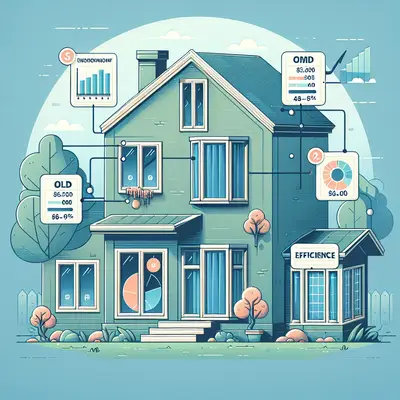
1. The Cost of Standing Still: Deferred Replacement as a Hidden Liability
Most cost conversations start with “How much will new windows set me back?” A more revealing question is: “What is the financial drag of keeping what I have?”
Aging windows impose their own silent tax. Air leaks increase heating and cooling loads, forcing mechanical systems to work harder and shortening their service life. Frames that have begun to warp or rot can lead to water infiltration—often subtle at first—ultimately compromising drywall, flooring, and even structural elements. At that point, the “window project” has become an envelope remediation, with costs that exceed what a timely upgrade would have required.
There is also a valuation dimension. In upper-tier markets, buyers increasingly expect modern glazing performance—low‑E coatings, argon or krypton fills, warm‑edge spacers, and precision installation. Outdated windows may not only depress resale price; they can lengthen time on market. When viewed over a 5–10 year horizon, the cost of doing nothing can rival, or even surpass, the cost of doing it correctly once.
In short, the status quo has a price tag. A sophisticated cost analysis treats deferral not as “free,” but as a conscious financial position with measurable risk.
2. Beyond the U‑Factor: How Performance Choices Shape Ongoing Costs
Many homeowners know to look for Energy Star labels or low U‑factors, but the real financial story lies in how specific performance choices interact with climate, orientation, and lifestyle.
Low‑E coatings, for instance, come in different formulations. A coating optimized for a cold climate may capture more passive solar heat in winter, lowering heating bills, while a different formulation better suits hot, sunny regions by sharply reducing solar heat gain. Selecting the wrong performance package for your region and façade can quietly erode the return on a premium window, even if the label numbers appear impressive.
Glazing configuration is equally influential. Triple‑pane units add cost and weight, but in harsh climates or high‑noise environments, they can reduce energy consumption, provide superior acoustic comfort, and maintain interior surface temperatures significantly closer to room temperature. That last point is not just about comfort; warmer interior glass drastically reduces the risk of condensation-related damage—an insurance policy against latent repair costs.
When performance specifications are tuned carefully—not generically—you’re not merely buying “better windows”; you’re curating a cost profile for your home’s comfort, maintenance, and mechanical systems over decades.
3. The Long Arc of Ownership: Evaluating Lifespan, Not Just Warranty
Many quotes highlight a “lifetime warranty,” but the sophisticated question is: Whose lifetime—and what does the warranty actually cover?
Different frame materials carry different cost trajectories. High-quality fiberglass, for example, typically has superior dimensional stability compared with vinyl, meaning fewer issues with seal failures or operational problems over time. Aluminum‑clad wood can deliver a warm interior aesthetic with a durable exterior face, but it requires careful attention to detailing and drainage to avoid moisture-related failures in the wood core.
Hardware and seals are equally critical. Robust multipoint locking mechanisms, high‑grade finishes, and premium gaskets often add modest upfront cost yet significantly extend functional life. When a window operates flawlessly 20 years later—with no drafts, no binding, no hardware replacements—that’s a financial outcome, not just a comfort benefit.
A refined cost analysis therefore includes:
- Expected service life by material and construction type
- Typical failure modes and their remediation cost
- The likelihood you will need partial replacement (glass, hardware) versus full unit replacement
This shifts the conversation from “How much does the window cost today?” to “What is the cost per year of graceful, trouble‑free performance?”
4. Curated Complexity: The Price of Customization Done Properly
Higher‑end homes often feature non‑standard openings: expansive glass walls, sculpted arches, narrow mullions, or historic profiles that demand faithful replication. Translating those architectural intentions into high‑performance modern windows introduces a layer of cost—and opportunity—that mass‑market quotes usually ignore.
Complex shapes, oversized spans, slim sightlines, and highly specific finishes all have implications:
- Engineering and structure: Large or minimally framed openings may require reinforced frames, upgraded glazing thickness, or even structural steel integration. These add cost, but they also safeguard against deflection, seal failure, and stress cracks that can emerge years later.
- Finish durability: Custom colors, anodized treatments, and high‑performance coatings carry a premium, yet they better resist fading, chalking, and corrosion—especially in coastal or high‑UV settings—reducing future repainting or replacement.
- Historic or architectural fidelity: Faithfully replicating divided lites, profiles, and proportions may involve simulated or true divided lites, custom muntin patterns, and precise interior millwork integration. These refinements preserve architectural value and can materially affect appraisal and buyer perception.
The key insight: Customization is not merely aesthetic indulgence; done correctly, it is a targeted investment in both long‑term performance and preserved architectural equity. The cost premium attached to bespoke solutions often underwrites decades of visual and structural coherence.
5. The Value of a Quieter, More Stable Interior: Intangible Gains with Tangible Effects
Certain benefits of elite window systems resist simple spreadsheets yet have real financial consequences over time.
Superior acoustic control—achieved through laminated glass, asymmetrical glazing, or specialized spacers—can dramatically reduce street noise, aircraft disturbance, or neighborhood activity. In urban or high‑traffic locations, this level of quiet is not just a lifestyle upgrade; it can influence property desirability and help position a home in a more discerning segment of the market.
Thermal stability is equally consequential. When interior surfaces remain closer to room temperature, spaces near windows remain fully usable year‑round. This can change the way occupants use and value their square footage: a bay window becomes a true reading nook in winter, a glass corner becomes a daily workspace rather than an overheated alcove. Over years, that pattern of use translates into real perceived value, especially when compared with similar properties that fail to deliver comparable comfort.
Even indoor environmental quality—less condensation, reduced risk of mold, more consistent humidity—feeds into maintenance costs, health considerations, and future buyer impressions. While difficult to quantify precisely, these “soft” returns often tip the balance between a merely adequate upgrade and an exceptional one.
Conclusion
For homes of quiet distinction, window upgrades should never be reduced to a race to the lowest bid or the simplest payback calculation. The true economics live in subtler domains: the cost of deferral, the integrity of performance specification, the arc of material longevity, the discipline of tailored engineering, and the understated power of comfort and quiet.
When these factors are placed at the center of the conversation, the numbers begin to tell a different story—one in which a thoughtfully executed window upgrade becomes less a discrete project and more a long‑term asset, reinforcing the home’s value, resilience, and daily livability. The most compelling “savings” are often not the ones printed on an energy bill, but the ones quietly preserved in a home that continues to feel precise, composed, and deeply considered, year after year.
Sources
- U.S. Department of Energy – Energy‑Efficient Windows - Explains window performance metrics, low‑E coatings, and climate‑appropriate choices
- U.S. Environmental Protection Agency – ENERGY STAR Windows, Doors & Skylights - Details Energy Star criteria and the impact of efficient windows on energy costs
- Efficient Windows Collaborative (National Fenestration Rating Council) - Provides data on benefits of efficient windows, including comfort, condensation reduction, and noise
- Lawrence Berkeley National Laboratory – Windows & Daylighting - Research on advanced window technologies, thermal performance, and long‑term impacts on building energy use
- National Association of Realtors – Remodeling Impact Report - Offers insight into resale value, owner satisfaction, and return on investment for home improvements, including window replacement
Key Takeaway
The most important thing to remember from this article is that this information can change how you think about Cost Analysis.