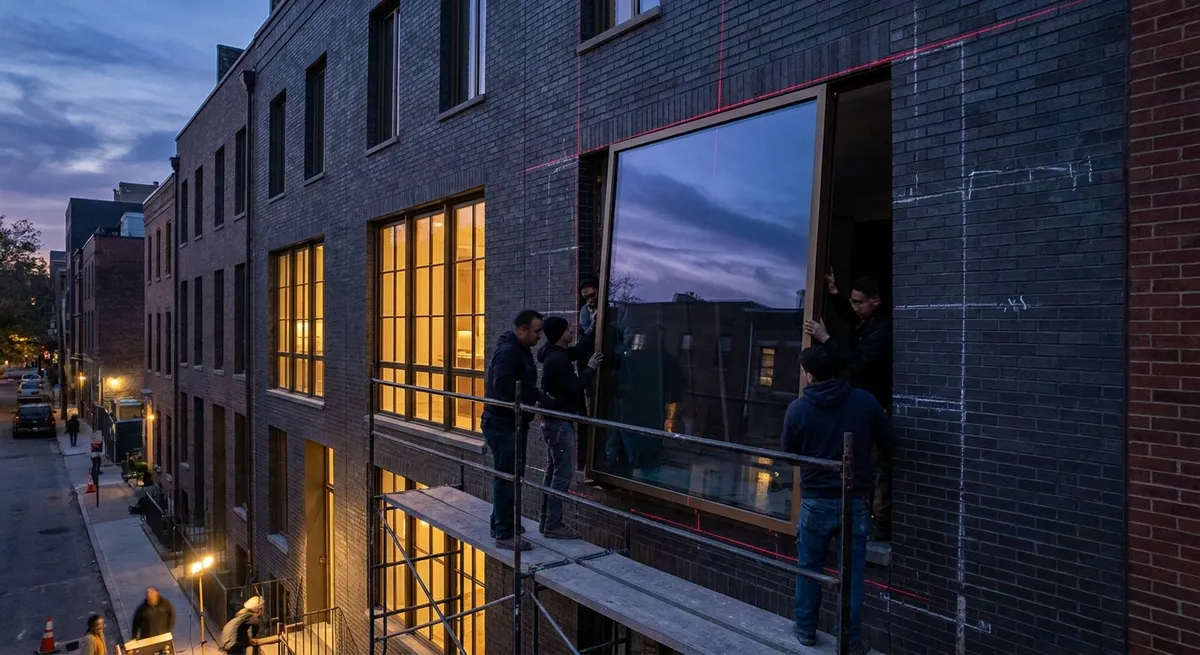
A truly elevated window upgrade is never just about the glass, the frame, or even the view. It is about the exacting choreography that happens between structure and sunlight, precision and performance. Installation is where a window transcends the catalog and becomes part of the architecture—quietly influencing comfort, acoustics, and the way a room feels at 6:30 a.m. in winter. For homeowners who expect more than the standard “tear-out and replace,” understanding this hidden geometry is essential.
Below are five exclusive installation insights that discerning homeowners often only learn after the work is done. Consider this your opportunity to know them in advance—and to insist on them.
The Structural Conversation: How Your Walls “Negotiate” With New Windows
Every window installation is, at its core, a structural negotiation between the opening and the unit being placed within it. A sophisticated installation acknowledges that your walls are not theoretical; they are aging, sometimes imperfect, and shaped by previous renovations.
The finest installers begin with a forensic assessment of the rough opening: checking for out-of-square framing, deflection in headers, and any subtle movement in load-bearing elements. Rather than forcing a perfectly machined window into an irregular space, they adjust shimming and anchoring to distribute loads correctly and avoid frame distortion. This matters because even small warp or twist in the frame can subtly compromise air tightness, sash operation, and long-term durability.
Premium projects will also consider the relationship between the window and adjacent finishes: stone surrounds, millwork, built-in cabinetry, or integrated paneling. In such settings, alignment is everything. Sightlines should run unbroken from casing to baseboard, from mullion to ceiling shadow gap. The technical craft disappears, and what remains is a sense that the window has always belonged exactly where it is.
Beyond “Draft-Free”: The Art of Invisible Air Management
Most homeowners are told they’re getting “draft-free” windows; very few are shown how that promise is actually delivered. Air management is the invisible art of window installation, and in high-end work, it extends far beyond a bead of caulk and a can of foam.
A refined installation treats the window opening as an air-control assembly—where interior air barriers, exterior weather-resistive barriers (WRB), and flashing all meet with intent. High-performance tape systems and gaskets are used not just to seal gaps, but to create continuous, layered protection that integrates with your wall system. Done correctly, this yields a calm interior environment: no mysterious cold spots near window corners, no whistling on windy nights, and a markedly more stable indoor temperature.
Equally important is pressure management. In windy or coastal environments, the way a window is anchored and sealed affects how it responds to pressure differentials. High-quality installation minimizes micro-movements that can, over time, compromise seals and hardware. The result is a quieter, more controlled interior—one that feels substantial and composed even in adverse weather.
The Intersection of Acoustics and Precision: Quiet as a Design Standard
Noise control is often discussed in terms of glazing selection—laminated glass here, triple-pane there—but installation remains the unsung partner in acoustic performance. The most advanced glass package can be undermined by careless detailing at the perimeter.
Premium window installation treats the surrounding wall assembly as part of your acoustic strategy. Dense, properly placed insulation around the frame, airtight detailing at the interior side, and the avoidance of rigid, sound-transmitting bridges (like improperly set shims or over-tightened fasteners) all contribute to a more serene interior. Careful installers will also pay attention to staggered joints in trim and cladding, preventing continuous paths for sound to travel.
The payoff is not simply “less noise,” but a more luxurious acoustic texture: distant traffic reduced to a muted backdrop, city sounds softened to a gentle hush, and interior rooms that maintain their own sense of privacy even when the world outside is animated. For homeowners used to premium audio systems and quiet HVAC, this level of acoustic refinement at the window line feels harmoniously consistent.
Moisture as a Design Foe: Detailing for Decades, Not Seasons
Moisture is the quiet adversary of every opening in a building envelope. In the context of luxury windows, premature deterioration, swelling of jambs, or subtle staining at corners is not just a nuisance—it is an aesthetic and financial affront. Installation is where these future problems are pre-empted or invited.
A sophisticated installer approaches each window as a controlled drainage and drying system. This includes correctly sloped sills, properly integrated pan flashing, and meticulous connection of flashing tapes into the WRB so that any incidental water is directed out and away from the structure. In climates prone to driving rain, this is non-negotiable. In cold climates, the interface between interior air, insulation, and exterior cladding is detailed to avoid condensation points that can quietly degrade materials over time.
For homes with high-end finishes—custom plaster, fine hardwoods, or integrated stone—the stakes are even higher. Moisture-related movement or failure can telegraph into hairline cracks, warped casings, and subtle misalignments that undermine the entire design language of the room. When moisture management is treated as a design discipline, window installations acquire a calm, lasting solidity that is felt every time you pull back the drapery.
Finish Integration: Where Installation Meets Interior Architecture
The most memorable windows are not simply well-installed; they are beautifully resolved into the architecture. This is where installation transcends trade work and becomes a kind of micro-architecture, coordinating with interior designers, millworkers, and even lighting designers.
On refined projects, installers will collaborate on reveal details—choosing whether the frame is expressed, partially concealed, or fully buried for a minimal “frameless” effect. They will ensure that trim profiles, shadow lines, and casing proportions are perfectly consistent from room to room, even when wall conditions vary. In some cases, they will prepare for integrated motorized shades, recessed tracks, or concealed hardware, so that technology disappears into the composition.
Attention is also given to how the window is perceived from different vantage points: seated, standing, or moving through the space. Sill heights may be calibrated to align with furniture or to create a gallery-like horizon. Mullion placement might be tuned to frame a mature tree or distant skyline. When installation is executed with this level of nuance, the result is not just a well-fitted window but a meticulously framed experience of light, view, and proportion.
Conclusion
Windows occupy a privileged position in any home: they are performance components, aesthetic statements, and emotional conduits to the world outside. Yet the true measure of a window upgrade is found less in product specifications and more in the quality of its installation—the invisible geometry that determines how it looks, feels, sounds, and endures.
For the discerning homeowner, insisting on this higher standard is not an indulgence; it is the only way to ensure that premium windows deliver a premium life within them. When structure, air, moisture, acoustics, and finish all converge with intention, the window ceases to be an object and becomes part of an orchestrated, enduring environment.
Sources
- U.S. Department of Energy – Efficient Windows and Proper Installation - Overview of how window installation affects energy performance and comfort
- Fine Homebuilding – Principles of Waterproof Window Installation - Practical detailing on flashing, moisture management, and integration with WRB
- Building Science Corporation – Water Management Guide - In-depth discussion of drainage, air barriers, and window-to-wall interfaces
- Green Building Advisor – Air Sealing Around Windows and Doors - Technical guidance on airtight installation and its impact on comfort and efficiency
- American Architectural Manufacturers Association (FGIA) – InstallationMasters Program - Industry-recognized training program outlining best practices for high-performance window installation
Key Takeaway
The most important thing to remember from this article is that this information can change how you think about Installation.