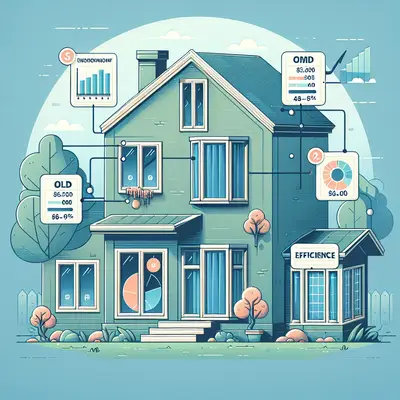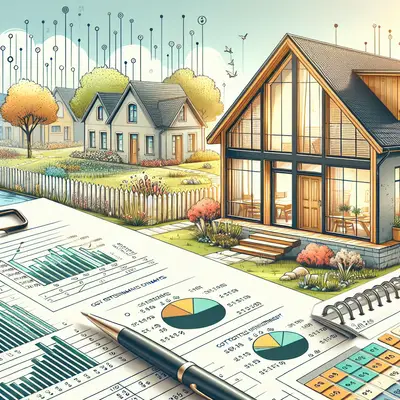
Windows are one of the few elements in a home that touch architecture, comfort, energy, and resale value all at once—yet their financial logic is often reduced to crude payback charts and sticker comparisons. A considered upgrade deserves a more nuanced lens: one that weighs aesthetics and comfort as seriously as kilowatt-hours, and that recognizes your windows as long-lived assets woven into your home’s identity.
This cost analysis is designed for homeowners who expect more than standard sales pitches. Below, you’ll find a refined framework for understanding value, along with five exclusive insights that quietly redefine how to think about the economics of exquisite window solutions.
Reframing Cost: From Line Item to Long-Term Asset
The starting point for any sophisticated cost analysis is to abandon the notion of windows as simple “expenses.” High‑performance units can last several decades; over that span, they influence your heating and cooling bills, your maintenance schedule, your insurance exposure, and even your future negotiation position when you eventually sell.
Instead of asking, “What do these windows cost today?” a more elevated question is, “What financial and experiential roles will these windows play over the next 20–30 years?” This shift reframes glazing as infrastructure: a quiet, ever-present system that delivers temperature stability, acoustic comfort, UV protection, and architectural credibility. When assessed in this broader context, what first appears as a premium often reveals itself as disciplined, long-horizon spending.
Insight 1: The Real Baseline Is Not Your Current Bill
Many cost analyses for window upgrades anchor to current energy bills. While that seems intuitive, it is also incomplete—because your “true” baseline is not what you pay now, but what you would pay as energy prices and climate conditions evolve.
Forecasts from energy agencies and utilities consistently suggest rising volatility in energy costs, particularly for heating and cooling. A home insulated with advanced glazing and well‑sealed frames is, in effect, partially hedged against these fluctuations. The return is not just the first year’s savings, but the avoided shock when extreme temperatures or rate hikes arrive.
A more refined cost view therefore asks:
- How exposed is my current glazing to rising cooling loads (for hot climates) or heating loads (for cold climates)?
- What would my five‑ or ten‑year energy spend look like without an upgrade versus with one?
- How does improved thermal performance reduce the need to oversize or over‑run HVAC equipment?
Seen through this lens, the cost of not upgrading—of remaining vulnerable to future conditions—can quietly exceed the premium of high‑performance windows.
Insight 2: Comfort and Quiet Have Monetary Echoes
Comfort is often spoken of as intangible, but it produces very tangible financial effects over time. A home that feels thermally stable, quiet, and visually balanced tends to be:
- Easier to occupy year‑round, extending the usable square footage (think previously drafty rooms or sun‑blasted spaces that become genuinely livable)
- More appealing to potential buyers, who increasingly equate comfort and acoustic calm with quality construction
- Less reliant on stopgap measures such as heavy draperies, space heaters, or portable fans
Acoustic performance is particularly underrated in cost analyses. If your home is near traffic, schools, popular venues, or flight paths, the move to laminated glass or specialty sound-attenuating configurations can meaningfully shift the character of your interior. This isn’t merely a lifestyle upgrade; for selective buyers with demanding expectations, it can be a decisive factor in valuation.
While you may not assign a line-item price to “quiet” or “even temperature,” their influence on future saleability and perceived quality is substantial. In high-value markets, these refinements can strengthen your position when buyers compare your property with superficially similar homes lacking the same sense of calm and refinement.
Insight 3: Design Discipline Can Be More Powerful Than Downgrading
When budgets tighten, the default reaction is often to step down the window specification: fewer upgrades, lower-performing glass, or simpler hardware. A more strategic—and often more financially intelligent—response is to maintain performance but apply design discipline.
Examples of design-led cost control include:
- Prioritization by orientation: Allocate the highest-spec glazing to the most thermally and visually demanding elevations (e.g., south- or west-facing facades), while using slightly simplified options on less exposed sides.
- Rationalizing sizes and shapes: Reducing the number of custom shapes or non-standard sizes can meaningfully lower manufacturing and installation complexity, while still delivering a refined aesthetic if coordinated carefully with your architecture.
- Thoughtful operability: Converting some openings from operable to fixed, where ventilation isn’t essential, allows funds to be concentrated on higher-quality operators and hardware where you truly need functional excellence.
- Curated feature windows: Instead of downgrading all units slightly, select a small number of architecturally significant openings to receive a genuinely exceptional specification—oversized panes, ultra-clear low-iron glass, or slim profiles—and keep the rest disciplined but well-optimized.
This approach preserves the performance narrative of your home and avoids the “almost premium” outcome where everything is modestly compromised, while still maintaining fiscal restraint.
Insight 4: Maintenance, Materials, and the Cost of Aging
The least glamorous aspects of window ownership—paint, sealants, weatherstripping, hardware lubrication—may seem trivial in year one. Over 20 or 30 years, they can define the true financial story.
Different frame materials age in distinct ways:
- Wood offers a warm, architectural presence but demands vigilant maintenance in many climates. In coastal, humid, or high‑sun environments, maintenance costs and risk of deterioration can accumulate unless you choose carefully engineered products or protective exterior cladding.
- Vinyl (uPVC) can be budget‑efficient upfront, but cheap formulations may discolor, warp, or become brittle over time, especially in intense sun. Replacements or repairs a decade earlier than expected can offset early savings.
- Fiberglass and composite frames often command a higher initial price but are dimensionally stable, resistant to thermal movement, and generally low-maintenance—traits that reduce the risk of seal failures and air leakage as the home ages.
- Aluminum (especially thermally broken) can offer sleek, modern lines and durability, though care must be taken in extreme climates to balance conductivity and performance.
A sophisticated cost analysis considers not just today’s purchase price but the “aging curve” of your chosen material. Over the life of the windows, stability, resistance to swelling or warping, and the quality of factory-applied finishes often outweigh marginal upfront savings.
Insight 5: Aligning Window Strategy With Your Exit Timeline
Perhaps the most exclusive—and under-discussed—dimension of window cost analysis is time horizon. A homeowner planning to remain for two years should evaluate costs very differently from one intent on staying for twenty.
For a shorter timeline, your analysis might focus on:
- Enhancing the home’s visual and tactile cues that buyers immediately register: clarity of glass, smooth operation, noise reduction, and curb appeal
- Selecting upgrades that appraisers and discerning buyers can identify, such as Energy Star–rated windows, impact-rated units in storm-prone regions, or branded high-performance glazing
- Ensuring that your documentation—warranties, specifications, and performance ratings—is organized and presentable as part of the home’s “dossier” at sale
For a longer horizon, larger investments in thermal performance, triple glazing (where climate-appropriate), or highly durable frames can be justified by cumulative energy savings, deferred maintenance, and long-term comfort. In this scenario, you are not only preparing for eventual resale but also buying decades of elevated daily experience.
Aligning your window strategy with your personal exit timeline transforms cost analysis from an abstract exercise into a deeply pragmatic planning tool that ensures you invest at the right level, for the right reasons.
Conclusion
The economics of exceptional windows are rarely captured in simple payback charts. A truly refined cost analysis acknowledges that windows are long-lived structural companions: mediating light, sound, temperature, and aesthetics across decades.
By redefining your baseline beyond today’s bills, recognizing the monetary echo of comfort, applying design discipline rather than across-the-board downgrades, understanding how materials age, and aligning your window strategy with your time horizon, you transform an ordinary purchase into a thoughtfully orchestrated investment.
In an era where homes are increasingly judged by both performance and poise, well-chosen windows are not merely panes of glass—they are a quiet, enduring statement of how seriously you take the intersection of beauty, comfort, and financial intelligence.
Sources
- [U.S. Department of Energy – Energy-Efficient Window Attachments](https://www.energy.gov/energysaver/update-or-replace-windows) – Overview of how window upgrades and improvements influence energy use and costs
- [ENERGY STAR – Residential Windows, Doors and Skylights](https://www.energystar.gov/products/residential_windows_doors_and_skylights) – Details on efficiency criteria, climate considerations, and potential bill savings for high-performance products
- [Efficient Windows Collaborative (NFRC)](https://www.efficientwindows.org/benefits.php) – Explains benefits of efficient windows, including comfort, condensation reduction, and financial implications
- [Lawrence Berkeley National Laboratory – Windows and Building Envelope Research](https://buildings.lbl.gov/window-and-envelope-materials) – Research-based insights on window technologies, performance, and long-term impacts on building energy use
- [U.S. Department of Housing and Urban Development – Residential Rehabilitation Guide: Windows and Doors](https://www.huduser.gov/portal/publications/resrehab_guide.html) – Guidance on window selection, durability, and rehabilitation considerations that affect lifecycle costs
Key Takeaway
The most important thing to remember from this article is that this information can change how you think about Cost Analysis.