Upgrading windows is rarely just a maintenance decision; for a discerning homeowner, it is a statement of intent. The frames you choose, the glass you specify, and the installation you commission become part of a long-term financial choreography—balancing immediate outlay with comfort, performance, and architectural poise. Viewing windows purely as a cost line misses the point. Seen correctly, they are a strategic asset: one that reshapes your home’s energy profile, acoustic comfort, and resale narrative for decades.
Below, we explore five exclusive cost insights that matter to those who refuse to settle for ordinary solutions.
1. The “Cost per Year of Tranquility” Principle
Most homeowners look only at the initial quote; refined buyers examine what each option costs per year of high-quality performance.
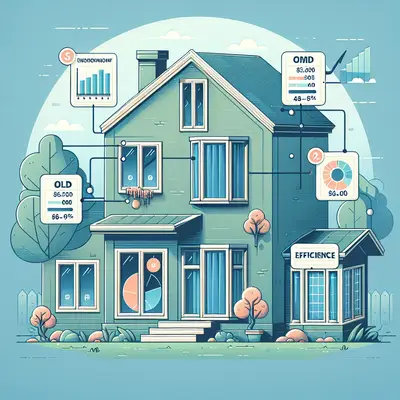
Instead of comparing a $900 window to a $1,400 window in absolute terms, normalize it over its realistic service life. A builder-grade unit may require replacement or significant repair in 15–20 years, while a carefully specified, premium window can hold performance and aesthetic integrity for 30–40 years with proper care. Suddenly, the “expensive” choice often reveals itself as the quieter, less disruptive, and more economical partner over time.
This lens is especially meaningful in urban or high-traffic locations. If a mid-tier replacement reduces street noise slightly, but a premium acoustic-optimized system transforms interiors into a serene retreat, the additional cost becomes a calculated investment in daily quality of life. When amortized across decades of better sleep, clearer focus, and more pleasant entertaining, the per-year cost of that tranquility is often surprisingly modest.
2. Invisible Savings: Comfort as a Financial Asset
Energy efficiency is typically framed in terms of utility bills, but comfort is a parallel—and often underappreciated—economic advantage.
High-performance glazing with low-emissivity (low-E) coatings, warm-edge spacers, and insulated frames significantly reduce cold drafts and radiant chill near glass. This tighter temperature consistency does more than reduce heating and cooling loads; it expands the usable square footage of your home. Spaces that were previously avoided in winter or late afternoon heat become functional and enjoyable—without additional construction.
That reclaimed comfort has value. You may delay or avoid projects like adding secondary HVAC zones, installing heavy draperies that compromise natural light, or building out additional conditioned space. In premium real estate markets, prospective buyers can sense the difference immediately: a home where every room feels uniformly comfortable throughout the day reads as better built, even if they never see the window specification sheet.
3. Curated Specifications vs. One-Size Pricing
Most quotes compress complex technical decisions into a single number. The sophisticated approach is to deconstruct that figure into finishes, glass packages, hardware, and installation scope—and then upgrade selectively where it matters most.
For example, you might specify:
- Top-tier sound-attenuating glass on street-facing façades
- Solar-control low-E coatings on south- and west-facing elevations
- Enhanced security or laminated glass on more vulnerable ground-floor locations
- More modest, but still well-engineered, units in low-priority or secondary spaces
By aligning performance with exposure and use, you avoid overpaying for capabilities in rooms that do not need them while ensuring no compromise in critical areas. This curated strategy frequently yields a better overall specification at a cost closer to a mid-range, one-size-fits-all package.
The same logic applies to frames and finishes. You might reserve custom metallic finishes, flush hardware, or ultra-slim sightlines for principal entertaining areas, while specifying more restrained, cost-effective profiles where design impact is secondary. The result is an elevated whole-home impression, without a uniformly premium price tag.
4. The Resale Multiplier: How Refined Windows Shape Perceived Value
Windows influence far more than energy metrics; they fundamentally define how a property photographs, feels, and appraises.
Natural light, clean sightlines, and quiet interiors translate directly into perceived luxury. Thoughtfully upgraded windows can:
- Make spaces read larger, brighter, and more contemporary
- Emphasize architectural symmetry and curated views
- Reduce external distractions, enhancing the “sanctuary” effect
- Subtly signal that the home has been maintained to a high standard
From a cost-analysis perspective, this matters because refined windows don’t simply recoup a percentage of their cost; they can help shift a property into a higher comparables bracket entirely. Appraisers and buyers may not isolate “window upgrades” line by line, but they absolutely respond to the overall impression of quality, comfort, and quiet.
In competitive markets, premium window solutions can help a home sell faster and closer to asking price, effectively reducing holding costs, staging expenses, and negotiation pressure. That time-value component is often overlooked—and yet, for high-value properties, it can be financially significant.
5. The Long Game of Maintenance, Warranty, and Brand Provenance
At the upper end of the market, brand choice and technical pedigree are more than cosmetic preferences; they shape real long-term costs.
Reputable manufacturers usually provide:
- Documented performance ratings (U-factor, solar heat gain coefficient, air infiltration)
- Robust, clearly written warranties on glass, frames, and hardware
- Established parts availability and service networks
- Proven track records in demanding climates and architectural applications
Cheaper, unbranded options may appear attractive initially but can carry hidden future liabilities: limited warranty coverage, poor hardware longevity, finishes that degrade under UV exposure, or difficulty sourcing replacement parts a decade later. Each of these issues translates into either a premature re-investment or an aesthetic compromise.
When you factor in maintenance—repainting versus factory-applied finishes, cheap seals versus durable gaskets, low-grade components versus architectural hardware—the initial price gap between mid-market and premium narrows considerably. In a refined cost analysis, you are not paying for a logo; you are underwriting reliability, continuity, and the assurance that your windows will age gracefully alongside your home.
Conclusion
For the homeowner who views their residence as a long-term, curated environment rather than a short-term asset, window upgrades demand a more nuanced financial lens. The key questions extend well beyond “How much does it cost?” to “What does this choice deliver, year after year, in comfort, tranquility, design clarity, and resale influence?”
When you evaluate windows through cost per year of performance, comfort as an asset, precise specification, resale multipliers, and long-horizon maintenance, the value of refined solutions becomes unmistakably clear. In the quiet efficiency of a sealed sash, the purity of a frame line, and the calm of a well-insulated room, you are not merely purchasing windows—you are investing in the way your home will be experienced for decades.
Sources
- U.S. Department of Energy – Guide to Energy-Efficient Windows – Explains performance metrics like U-factor and low-E coatings and how they influence long-term energy costs
- ENERGY STAR – Residential Windows, Doors and Skylights – Details federal efficiency criteria and potential energy bill savings associated with high-performance products
- Efficient Windows Collaborative – Window Selection Guidance – Provides in-depth information on climate-appropriate window choices and lifecycle cost considerations
- National Association of Realtors – 2023 Remodeling Impact Report – Offers insight into resale value, buyer perception, and cost recovery for various home improvements, including window replacements
- U.S. Environmental Protection Agency (EPA) – Climate and Energy Savings at Home – Outlines how building envelope improvements, including windows, contribute to reduced energy use and emissions
Key Takeaway
The most important thing to remember from this article is that this information can change how you think about Cost Analysis.