The most exquisite windows in the world lose their magic if they are installed indifferently. In a refined home, installation is not merely a trade task; it is a choreography—quiet, precise, and deeply considered. When executed well, the process disappears, leaving only light, comfort, and an impression of effortlessness. When executed poorly, the evidence lingers in drafts, warping, condensation, and a subtle but persistent sense that something feels “off.”
For homeowners contemplating a thoughtful window upgrade, understanding how installation should unfold is a powerful advantage. What follows is a curated perspective on what separates ordinary window installation from an elevated, near-bespoke experience—plus five exclusive insights discerning homeowners rarely hear, but always appreciate.
Installation as Architectural Performance, Not a Technical Errand
Exceptional window installation begins long before the first sash is removed. It starts with a holistic reading of the home—its architecture, climate, orientation, and the way its occupants live. A premium installer is not simply inserting frames into holes; they are resolving the delicate junction where structure, exterior façade, interior finishes, and building envelope converge.
This means assessing how the new windows will interact with existing wall assemblies, insulation, vapor barriers, and cladding. Historic brick, stucco, stone veneer, and high-end siding each demand distinct strategies. In a high-performance home, window installation must honor the continuity of the air and thermal barrier, not puncture it. Done properly, the window is not merely “held in place” but integrated into the home’s envelope in a way that controls air, water, and heat with quiet authority.
This architectural mindset also influences sequencing. Thoughtful installation considers how trim, shades, integrated blinds, and even future automation may be added or upgraded. The result is a window system that feels native to the home—never an afterthought, never an intrusion.
Precision at the Threshold: Where Weather, Sound, and Comfort Are Decided
Windows succeed or fail at their edges. The frame perimeter—often hidden behind trim and cladding—is where the serious technical work occurs. A refined installation approach treats this threshold as a high-stakes zone: the meeting point of weather resistance, acoustic performance, and energy efficiency.
At this interface, professional installers are making choices about flashing tapes, backer rod, sealants, shims, and fasteners. In a premium installation, these materials are not generic; they are selected for compatibility with both window and wall system, and for longevity under UV exposure, temperature swings, and moisture loads. The goal is a controlled pathway for water to drain away, not become trapped; a continuous air barrier, not a patchwork of gaps; and a stable, square frame that will operate effortlessly for decades.
The homeowner rarely sees this detail, but they feel it—on a windy winter night, during a driving rainstorm, or when closing a bedroom window and noticing the satisfying, vault-like seal. That experience is won or lost in a few critical millimeters around the frame.
Five Exclusive Insights Discerning Homeowners Quietly Value
Beneath the brochure language and showroom displays, there are subtleties of window installation that typically only architects and building scientists discuss. For the homeowner pursuing an elevated result, these five insights are worth carrying into every conversation with a prospective installer.
1. The Wall Matters as Much as the Window
A high-performance window installed into a poorly understood wall assembly is like a fine speaker in a badly tuned room. Ask your installer how they will integrate the new units with your specific wall type: cavity walls, insulated sheathing, masonry, or older mixed-construction homes each have unique requirements.
Listen for answers that mention air barriers, vapor management, and water drainage planes—not just “caulk and foam.” An installer who understands your wall system is more likely to preserve structural integrity, prevent hidden moisture issues, and deliver the performance your window specifications promise.
2. Installation Standards Are a Floor, Not a Ceiling
Industry standards from organizations such as the American Architectural Manufacturers Association (AAMA) and the International Residential Code (IRC) define minimum acceptable practices. Luxury homes and architected renovations often demand more.
Ask whether your installer follows manufacturer-specific best practices, regional building-science recommendations, and any above-code guidelines relevant to your climate. The most capable professionals will be eager—not defensive—when you reference standards and ask how they exceed them. Their answer often reveals whether their work will merely comply, or quietly outperform for decades.
3. True Craftsmanship Is Measured in Alignment and Operation
A visually beautiful window can fail the moment you interact with it. Subtle misalignments—barely visible to the eye—translate into sashes that require force to close, locks that resist latching, and weatherstripping that never fully seats. Over time, these flaws accelerate wear and undermine efficiency.
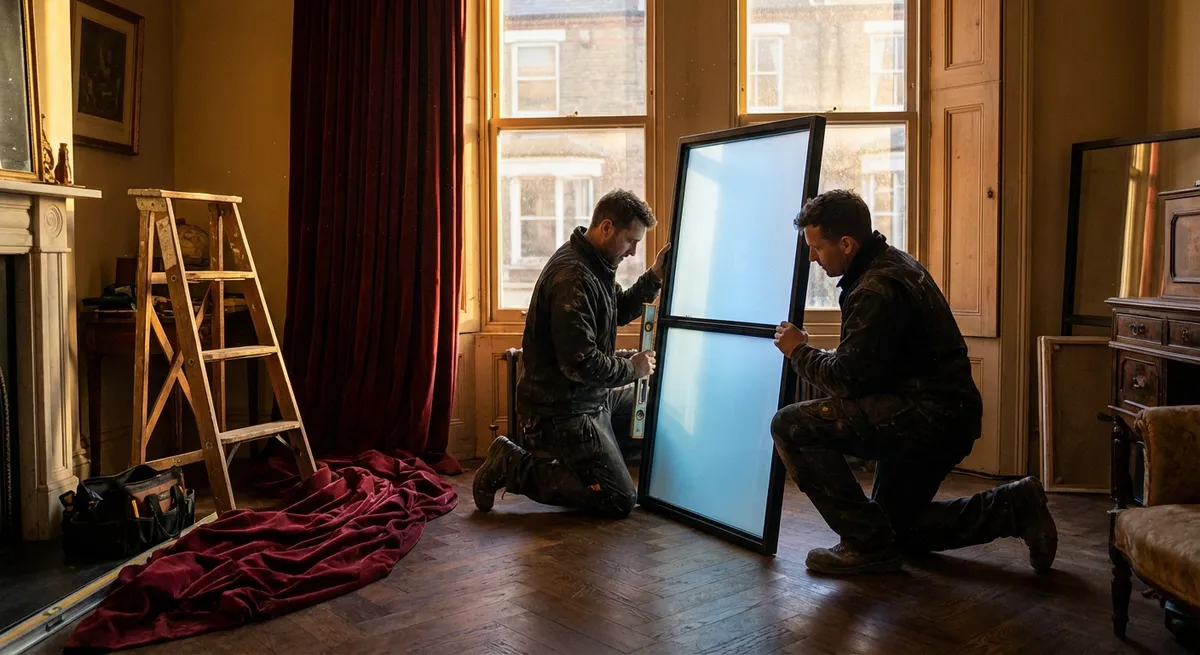
During installation, a premium crew will repeatedly test each unit through its full range of motion, confirming not only that it functions, but that it does so with ease and consistency. As a homeowner, you are entitled to participate in this moment. Walk the home with the installer at completion. Open, tilt, slide, and lock every window. The feel of the operation is not a minor detail; it is the daily interface with your investment.
4. The Interior Finish Is a Quiet Indicator of Respect
What you see inside tells a story about what you cannot see outside the frame. Crisp, symmetrical reveals; mitered trim that closes invisibly at the corners; sills without ripples or gaps; and paint or stain touch-ups performed with restraint and precision—all are hallmarks of a crew that understands they are working within a curated environment, not a jobsite.
Ask how the team will protect floors, furnishings, and textiles; whether they assign a lead finisher; and how they handle transitions where new work meets older plaster, specialty wallcoverings, or custom millwork. In refined homes, installation must be as gentle as it is precise. The best crews leave behind no evidence of their presence—only upgraded light and comfort.
5. Documentation Is Part of the Luxury
The most sophisticated installations are accompanied by thoughtful documentation, not just a warranty card. This may include:
- Product data sheets and performance ratings for each window line
- Installation photos at key stages (particularly flashing and sealing)
- A summary of materials used at the perimeter (tapes, sealants, insulation)
- Maintenance and care recommendations for finishes and hardware
- Contact details and service protocols for future adjustments
Request this from the outset. A well-documented installation simplifies future service, resale conversations, and even insurance claims. More importantly, it signals a professional culture that takes its work seriously enough to stand behind it transparently.
Selecting an Installation Partner in the Premium Tier
Beyond brands and brochures, the most significant decision you will make is not which window, but who installs it. In the upper tier of the market, the differentiators are subtle yet consequential.
Look for teams that are comfortable discussing building science, not just aesthetics. References from architects, designers, or high-end builders are particularly valuable, as they indicate familiarity with complex projects and elevated expectations. Ask about training and certifications—AAMA, manufacturer-specific programs, or regional building performance organizations.
During estimates, pay attention not only to the number, but to the questions they ask you. An installer who inquires about noise concerns, comfort issues in specific rooms, sun exposure, existing condensation problems, or long-term renovation plans is likely thinking holistically. That alignment of curiosity and expertise is a good sign that your windows will be treated not as components, but as critical instruments in your home’s overall comfort and expression.
Conclusion
Truly refined window installation is not theatrical—but it is quietly transformative. When frames are aligned with care, when thresholds are sealed and flashed with intention, when interior finishes are treated like the final strokes on a painting, the result is more than a functional upgrade. It is a re-calibration of your home’s relationship with light, climate, and sound.
For the discerning homeowner, understanding the subtleties of installation turns a potentially opaque process into a curated decision. With the right partner and a clear appreciation of what excellence looks like at every stage, your window upgrade becomes not just a project, but an enduring refinement of how your home feels, performs, and endures.
Sources
- [Efficient Windows Collaborative – Window Selection and Installation](https://www.energy.gov/energysaver/design/windows-doors-and-skylights/selection) – U.S. Department of Energy guidance on selecting and installing energy-efficient windows
- [AAMA InstallationMasters – Window & Door Installation Training](https://aamanet.org/pages/installationmasters) – Industry-recognized installation best practices and certification program
- [U.S. Department of Energy – Air Sealing Your Home](https://www.energy.gov/energysaver/weatherize/air-sealing-your-home) – Explains the importance of air barriers and sealing details around openings
- [Building America Solution Center – Window Installation Details](https://basc.pnnl.gov/resource-guides/window-installation) – Technical guidance on integrating windows with various wall assemblies
- [Forest Stewardship Council – Certified Wood Products](https://fsc.org/en/fsc-labels) – Information on responsibly sourced wood, relevant for premium window frames and interior trim
Key Takeaway
The most important thing to remember from this article is that this information can change how you think about Installation.