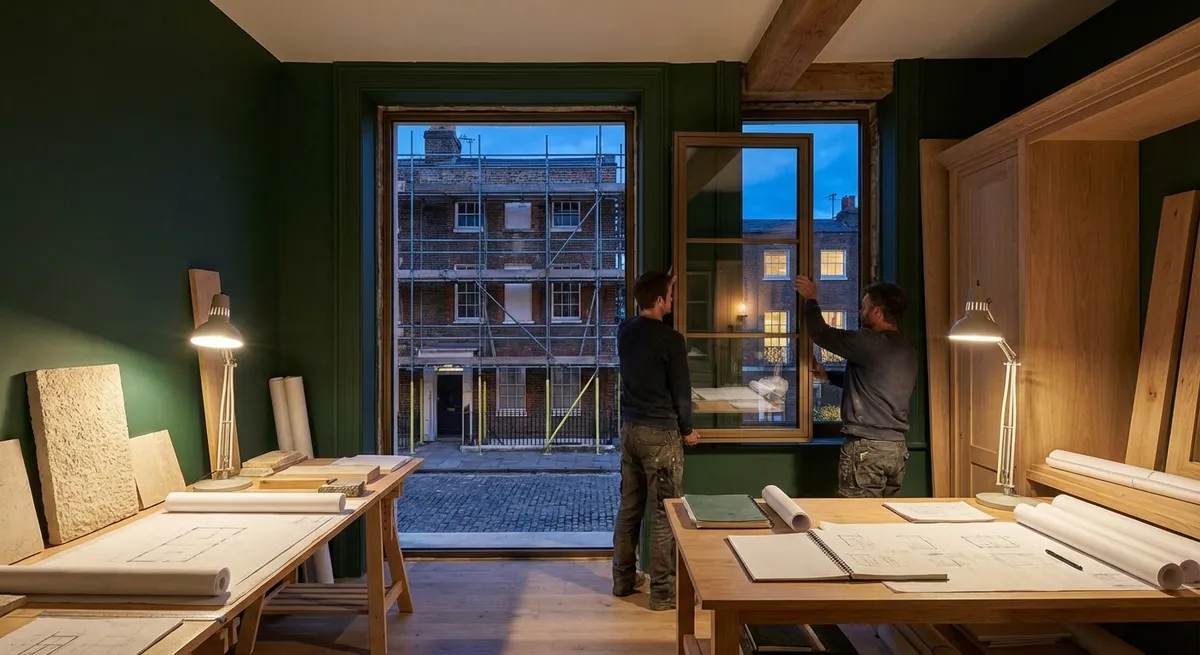
The most successful window upgrades rarely announce themselves. They do not shout with oversized frames or ostentatious shapes; instead, they quietly recalibrate the way a home feels, functions, and endures. Installation, in this context, is not simply a technical step between purchase and enjoyment—it is the pivotal moment when concept becomes lived experience. For homeowners who expect more than standard solutions, understanding the subtleties of how windows are positioned, detailed, and integrated into the architecture is essential.
Below are five exclusive, under-discussed insights that distinguish a merely “new” window from a truly elevated installation.
Insight 1: The Precision of Alignment Shapes Perception of Space
In a refined home, window installation is as much about visual rhythm as it is about weatherproofing. The precise alignment of mullions, sills, and heads with interior elements—such as door frames, cabinetry lines, wall paneling, or ceiling transitions—creates a deliberate visual language. When installers treat a window as an isolated unit, the result can feel disjointed, even if the product is technically excellent.
A premium installation begins with a full-room (and often full-elevation) alignment strategy. Are the tops of the windows in a room all on a consistent datum line? Does a large picture window align vertically with a fireplace, art niche, or architectural column? Do transoms maintain a consistent head height across adjacent spaces? These refinements give the eye an intuitive sense of order and calm. A thoughtful homeowner will insist that the installation plan include elevation studies or field-marked reference lines, not just rough openings and dimensions.
Insight 2: The Depth of the Install Transforms Light, Not Just Views
Most homeowners evaluate windows by width and height; few consider depth. Yet the way a window sits within the wall—flush, recessed, or slightly projected—profoundly influences how daylight behaves and how the window reads as an architectural element.
A deeper installation can create a subtle reveal or “shadow pocket” around the frame, softening the transition from wall to glass and visually thinning the frame. In thicker walls, recessing the window slightly can create a niche-like effect, enhancing a sense of solidity and craftsmanship. Conversely, placing the window closer to the exterior plane can improve solar gains in colder climates while maximizing interior sill depth for display or seating.
A sophisticated installation strategy pairs depth decisions with orientation and climate. South-facing windows in colder regions may be set differently from west-facing ones in hotter climates, even within the same project. The result is a home where light is curated, not merely admitted.
Insight 3: Substrate Strategy Matters as Much as the Window Brand
Many homeowners invest heavily in the window itself, yet treat the surrounding wall assembly as a secondary concern. In reality, the interface between frame, substrate, and weather barrier is where long-term performance is either secured or compromised. Insisting on a substrate strategy—rather than a simple “install per manufacturer’s instructions”—elevates the entire project.
A premium installation clarifies:
- How existing materials (brick, stucco, stone, siding, or historic plaster) will be protected, cut, or refinished.
- Whether the current rough openings will be corrected for plumb, level, and square rather than simply “shimmed to fit.”
- How the weather-resistive barrier (WRB), flashing tapes, and sealants will be layered to create a continuous drainage plane and air barrier.
- How dissimilar materials (e.g., aluminum cladding and masonry) will be separated or isolated to prevent staining and deterioration.
In many homes, particularly those undergoing partial renovation, it is the quiet sophistication of these substrate decisions that preserves the visual integrity of both façade and interior. A truly considered homeowner will ask for written details or diagrams about how the new window integrates into the existing envelope—not just the finish trim.
Insight 4: Acoustic Refinement Begins at the Perimeter, Not the Pane
Upgraded glazing can dramatically reduce noise, but the perimeter installation often determines whether those acoustic benefits are fully realized. Gaps, inconsistent insulation, or poorly chosen sealants can undermine even the finest laminated or triple-pane units.
An acoustically refined installation pays attention to:
- Cavity fill: Density and continuity of insulation around the window frame, avoiding voids and loosely packed material.
- Sealant selection: Using elastomeric sealants with appropriate modulus for both movement and sound control, rather than generic caulk.
- Layering: Combining backer rods, sealants, and interior trim in a way that forms multiple, offset barriers to sound migration.
- Hard-surface bridging: Minimizing direct rigid connections where exterior vibrations can travel uninterrupted to interior finishes.
This level of detail is especially important in urban homes, properties near busy roads, or residences under flight paths. When installation is treated as an acoustic system—not merely a draft-prevention exercise—windows contribute to a quieter, more composed interior atmosphere commensurate with a sophisticated lifestyle.
Insight 5: Future Serviceability Is a Design Decision, Not an Afterthought
True luxury is not only how a space presents itself today, but how gracefully it can be maintained over decades. Many installations are visually crisp on completion but difficult to service without disturbing finishes, damaging exterior materials, or requiring extensive scaffolding.
A future-focused installation considers:
- Access: Can hardware, balances, or gaskets be replaced from the interior without dismantling finished trim or disturbing stone surrounds?
- Replaceable components: Are sills, exterior trims, or panning systems designed as modular elements that can be removed and refinished or swapped as needed?
- Cleaning strategy: Does the installation height, swing direction, and opening style allow safe cleaning of exterior glass from inside, particularly on upper floors?
- Compatibility: Are sealants, paints, and adjacent materials chosen for long-term compatibility, avoiding premature staining, cracking, or adhesion failure?
Homeowners who request a “serviceability narrative” or lifecycle discussion from their installer or design professional signal that they value enduring elegance over fleeting novelty. A window that can be discreetly serviced, refreshed, and maintained without visible disruption is one that will continue to feel premium long after the project dust has settled.
Conclusion
A sophisticated window installation is defined less by spectacle and more by thoughtful restraint, precision, and intention. It is found in alignments that calm the eye, depths that sculpt the light, interfaces that protect the envelope, perimeters that quiet the world outside, and assemblies that respect the home’s future as much as its present.
For homeowners who view their residence as a long-term investment in comfort, beauty, and performance, these subtleties are not indulgences—they are the very hallmarks of a carefully considered upgrade. When installation is approached as an art form rather than a commodity service, windows cease to be mere openings and become an integral expression of how a refined home should look, feel, and endure.
Sources
- [U.S. Department of Energy – Efficient Windows and Installation](https://www.energy.gov/energysaver/installing-new-windows) – Guidance on best practices for window installation and energy performance.
- [Efficient Windows Collaborative – Window Selection and Installation](https://www.efficientwindows.org/installation/) – Technical insights into proper integration of windows into the building envelope.
- [Building America Solution Center – Window Installation Best Practices](https://basc.pnnl.gov/resource-guides/window-installation) – Detailed construction and flashing guidance to ensure durability and air/water management.
- [National Institute of Building Sciences – Sound Control in Buildings](https://www.wbdg.org/resources/sound-control-buildings) – Explains how assemblies and interfaces, including windows, influence acoustic performance.
- [Historic England – Traditional Windows: Their Care, Repair and Upgrading](https://historicengland.org.uk/images-books/publications/traditional-windows-care-repair-upgrading/) – Offers perspective on integrating high-performance windows while respecting existing substrates and architectural character.
Key Takeaway
The most important thing to remember from this article is that this information can change how you think about Installation.