The most sophisticated homes rarely shout; they whisper refinement through proportion, light, and material integrity. Nowhere is this more evident than in the choice of windows. Yet even in high-end projects, the financial dimension of a window upgrade is often reduced to a line item on a contractor’s spreadsheet. For homeowners with cultivated taste—and substantial investment at stake—a more nuanced, strategic cost analysis is not a luxury; it is essential due diligence. This guide reframes window spending as a curated allocation of capital, revealing where premium choices genuinely earn their place, and where discretion achieves better value.
Looking Beyond the Invoice: The Full Financial Ecosystem of a Window Upgrade
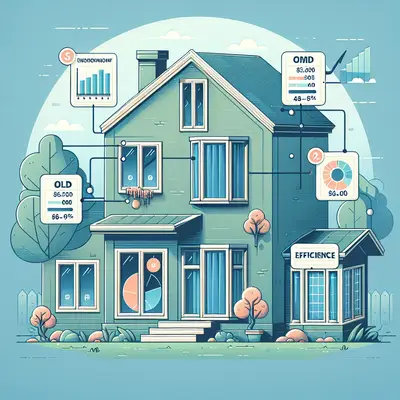
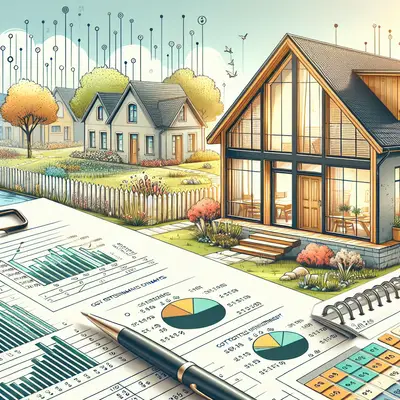
The initial proposal from an installer or architect typically captures only a fraction of the true economic picture. While the visible line items—product, labor, disposal—are important, they omit a range of deferred and indirect costs that will accrue, quietly but persistently, over the next 20–30 years.
The full financial ecosystem should account for energy consumption over the window’s lifespan, maintenance cycles, refinishing or repainting needs, and the cost of potential failures (condensation, drafts, or water intrusion). There is also an opportunity cost to inferior glazing: diminished comfort reduces the functional value of key spaces, nudging daily habits in subtle ways, such as avoiding a stunning bay window in winter because it feels uncomfortably cold.
High-performance windows, particularly those with low-emissivity (low‑e) coatings, insulated frames, and premium seals, can materially shift long-term operational costs. Federal and local incentives, such as tax credits for energy-efficient windows, reshape the net cost as well. For the discerning homeowner, the correct question is not “What do these windows cost today?” but “What is the 20-year financial profile of this decision—compared to the best available alternative?”
Exclusive Insight #1: The “Comfort Dividend” Is a Hidden Asset Class
Typical cost analyses fixate on ROI in strictly monetary terms—utility reduction, resale price, incentives. Sophisticated homeowners benefit from adding a fourth metric: the comfort dividend. This captures the financial value of improved comfort, even when it does not appear on a traditional utility bill.
Draft-free rooms, stable interior temperatures near large expanses of glass, and reduced glare directly influence how a home is used. An underperforming glass wall turns a spectacular room into a visual artifact, admired but under-occupied. A thermally and acoustically optimized opening, by contrast, converts that same space into a daily sanctuary—office, reading room, afternoon salon—vastly increasing its “live value.”
While difficult to quantify precisely, the comfort dividend can be estimated by examining time spent in upgraded zones, perceived need for supplemental heating or cooling, and the relative desirability of these rooms when entertaining. In practice, homeowners frequently report that the most expensive windows, when thoughtfully specified, become the most used and most cherished features of the home, skewing the subjective return far beyond the raw numbers.
Exclusive Insight #2: Material “Tier Jumps” Often Outperform Incremental Upgrades
When selecting windows, homeowners commonly compare options within a single material class—standard vinyl vs. upgraded vinyl, basic aluminum vs. thermally improved aluminum. However, a more incisive cost analysis often reveals that a strategic “tier jump” between material categories can deliver far better performance for a modest premium.
For instance, upgrading from mid-range vinyl to a high-end, fiberglass or aluminum-clad wood system may increase the initial outlay, but it can fundamentally alter durability, structural integrity, thermal performance, and aesthetic longevity. Fiberglass frames expand and contract at rates closer to glass, which can minimize seal stress and extend the effective lifespan of insulated glass units. Aluminum-clad wood can preserve the warmth and character of interior timber while shielding the exterior from weathering.
Instead of refining the lowest acceptable option, consider whether the next category up delivers an entirely higher order of value: greater dimensional stability, slimmer sightlines, richer finishes, and quieter operation. That material tier jump, once amortized over decades, often represents a surprisingly efficient use of funds, particularly when evaluated as cost per year of high-quality performance.
Exclusive Insight #3: Precision Glazing Choices Quietly Reshape Lifetime Costs
Most homeowners encounter glazing as a binary: double-pane or triple-pane. In reality, glazing selection is a multi-variable exercise involving solar heat gain coefficient (SHGC), U-factor, visible light transmittance, gas fill, coatings, and in some cases, laminated or acoustic interlayers.
The financial nuance lies in specifying the right glass for each façade, not simply choosing a single “premium” glass package for the entire home. South- and west-facing elevations in sunny climates may benefit from lower SHGC to reduce cooling loads, while north-facing or shaded orientations may prioritize higher visible light transmission to preserve luminance and thermal gain in cooler seasons. Over-specifying ultra-low SHGC glass in low-sun exposures can inadvertently increase heating costs and flatten the quality of daylight.
Similarly, triple-pane units are not automatically the most economical choice. In temperate climates, a well-specified double-pane, low‑e unit with gas fill and warm-edge spacers may render triple glazing an unnecessary expense. The refined approach is to assign glazing specifications deliberately by orientation and climate, optimizing for long-term energy behavior rather than defaulting to the highest price tier.
Exclusive Insight #4: Installation Quality Has a Silent, Compounding Financial Impact
The most impeccably engineered window cannot compensate for imprecise installation. While installation is often perceived as a commodity—one crew versus another—the reality is that installation quality can swing the total cost of ownership more dramatically than a modest upgrade in materials or glass.
Substandard flashing, misaligned shims, or compressed insulation can create minute gaps that lead to air leakage, moisture intrusion, and premature failure of frames, finishes, and adjacent materials. These issues frequently appear five to ten years later as fogged glass, spongy sills, or peeling plaster—symptoms that require invasive remediation.
A premium installer—properly trained, fully insured, and willing to document their methodology—may add 10–25% to the labor line. However, when amortized across the service life of the windows, this uplift often becomes negligible compared with the avoided repair costs and performance degradation. For the discerning homeowner, the strategic question is not “Can I save a little on labor?” but “Which installer treats air, water, and structural loads as rigorously as the manufacturer treated the frame and glass?”
Exclusive Insight #5: Resale Value Is Non-Linear—and Design-Led
Not all window upgrades translate equally into resale value. Basic replacements may prevent a discount during sale negotiations, but they rarely inspire a premium. High-end window packages, however, can shift a property into a different perceived segment—particularly when aligned with the architecture and interior palette.
Prospective buyers rarely articulate, “These are triple-pane, low‑e, argon-filled units with thermally broken frames.” Instead, they respond to the sensory outcomes: quiet interiors despite traffic, expansive glass with minimal glare, smooth operation, and a palpable cohesion between interior finishes and exterior façades. In competitive markets, this can shorten time on market and sharpen the final sale price in ways that traditional ROI calculators struggle to capture.
Crucially, the cost-benefit equation is aesthetic as much as technical. A meticulously detailed steel or aluminum system in a modernist home, or finely profiled wood windows in a heritage property, can serve as visual anchors that elevate the overall perceived quality of the residence. In these contexts, premium windows function less as a discrete upgrade and more as an architectural thesis that justifies a higher valuation.
Cost Structuring: How to Allocate Intelligently Across a Premium Window Project
Once you acknowledge that not all spend is equal, the question becomes how to structure the investment with intention. A refined cost strategy might prioritize the most visible or most used spaces for the highest-spec solutions while applying a more restrained approach to secondary zones.
For example, you might deploy ultra-slim, thermally broken steel or high-spec aluminum systems in primary living areas and façades that frame signature views, while selecting robust but more economical solutions for utility rooms, garages, or less frequently used spaces. Similarly, acoustic upgrades may be reserved for bedrooms and home offices facing streets or flight paths, rather than uniformly applied throughout the home.
This calibrated strategy recognizes that luxury is most impactful when concentrated where it will be felt—and noticed—every day. Rather than flattening quality across the entire property, you shape a hierarchy of investment, ensuring the most demanding spaces receive the most capable products and detailing. The result is a portfolio of window solutions that feels uniformly elevated, yet is meticulously optimized for cost and performance.
Conclusion
A premium window upgrade is not merely a purchase; it is an architectural and financial composition. The true sophistication lies in understanding that cost is not confined to the invoice date—it unfolds over decades in comfort, performance, maintenance, and resale narrative. By considering the comfort dividend, making strategic material tier jumps, tailoring glazing by orientation, demanding rigorous installation, and aligning design with long-term market perception, homeowners transform a necessary expenditure into a carefully curated asset.
The most successful window projects do not simply minimize cost; they orchestrate value. For the discerning homeowner, that is the difference between replacing glass—and rewriting how the home lives, feels, and endures.
Sources
- [U.S. Department of Energy – Energy-Efficient Windows](https://www.energy.gov/energysaver/design/windows-doors-and-skylights/energy-efficient-windows) - Explains key performance metrics like U-factor, SHGC, and the impact of high-performance windows on energy use
- [ENERGY STAR – Residential Windows, Doors and Skylights](https://www.energystar.gov/products/residential_windows_doors_and_skylights) - Provides guidance on certified high-efficiency window products and potential savings
- [Efficient Windows Collaborative (National Fenestration Rating Council)](https://www.efficientwindows.org) - Offers comparative information on window types, glazing options, and climate-specific recommendations
- [Lawrence Berkeley National Laboratory – Window Technologies](https://windows.lbl.gov) - Research-based insights on advanced glazing systems, low‑e coatings, and performance modeling
- [National Association of Realtors – 2023 Remodeling Impact Report](https://www.nar.realtor/research-and-statistics/research-reports/remodeling-impact) - Discusses perceived value, resale impact, and owner satisfaction for home improvement projects, including windows
Key Takeaway
The most important thing to remember from this article is that this information can change how you think about Cost Analysis.