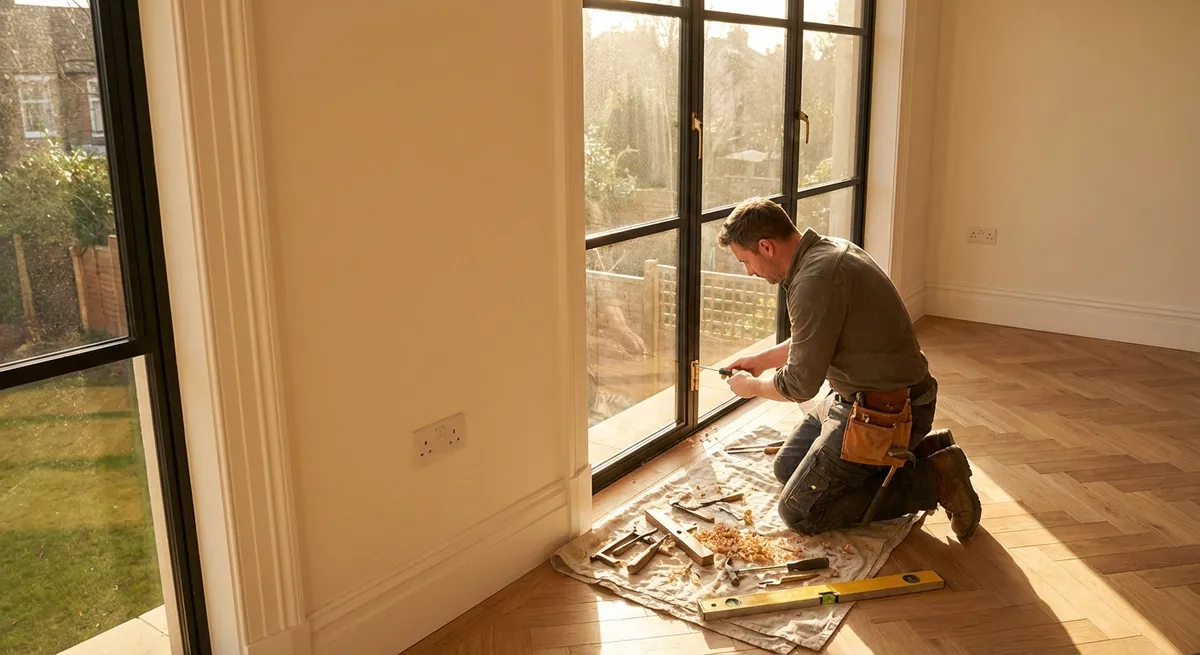
For the discerning homeowner, a window upgrade is rarely about glass alone. It is the choreography of measurement, framing, sealing, and finishing that determines whether new windows feel merely “new” or genuinely elevated. The most elegant installations are often invisible to the casual eye—yet they shape how your home sounds, feels, and performs every day.
Below, we explore five exclusive installation insights that refined homeowners increasingly expect from truly exceptional window projects.
The Art of Alignment: Why Millimeter Accuracy Feels Luxurious
Luxury in windows begins long before the sash meets the frame—it starts in the discipline of measurement. Precise alignment is the difference between a window that technically “fits” and a window that disappears into the architecture. Installers working at a premium level are not satisfied with nominal sizing; they study wall plumb, header sag, and sill level, often taking measurements at multiple points in each opening rather than a simple width/height check.
This attention to micro-geometry affects everything from how easily the sash operates to how evenly weatherstripping compresses. A frame slightly out of square can introduce subtle air infiltration, rattling in high winds, and premature wear on hardware. Elite installers may even request minor factory adjustments to frame size for particularly demanding openings, rather than forcing a unit into an imperfect cavity. When alignment is treated as an art form, the result is a window that feels effortless to operate, locks with a quiet, confident click, and maintains its precision over years of seasonal movement.
Hidden Interfaces: What Happens Between Wall and Window Matters Most
Most homeowners focus on the visible edge of the frame, but the true performance of a window is decided in the concealed interface between structure and unit. This gap—often only a fraction of an inch—can either be an elegant transition or an ongoing source of drafts, moisture pathways, and sound leakage. A premium installation treats this joint not as a void to be “filled,” but as a multi-layered system.
High-caliber installers evaluate whether low-expansion foam, mineral wool, backer rod and sealant, or a hybrid approach is most appropriate given the wall assembly and climate. In colder regions, for example, a carefully sequenced combination of insulation and air-sealing materials can dramatically reduce condensation risk within the wall. The installer’s choice of compressible materials also affects acoustic performance: denser fills and continuous air barriers can significantly reduce urban noise transmission. When you ask how your installer plans to handle this hidden interface, you are effectively asking how seriously they regard the long-term integrity of your envelope.
The Quiet Science of Water Management: Sills, Flashing, and Gravity
Exceptional window performance is, in many ways, an exercise in respecting gravity and water. While modern products are rigorously tested, even the finest units can be compromised by careless integration into the building envelope. A refined installation strategy acknowledges that water will attempt to enter and then designs every detail to guide it safely out.
Proper sill pan design—whether pre-formed or site-built—is foundational. The pan should subtly slope to the exterior, extending beyond the framing to direct any incidental water outward, not into the wall cavity. High-quality flashing tapes are layered shingle-style, starting at the sill and working upward, always encouraging water to move down and out. In advanced installations, installers also consider drainage paths in the cladding, pairing the window integration with rain screens or weep strategies where appropriate.
This kind of water management does not call attention to itself, yet it preserves finishes, prevents rot, and protects insulation performance over decades. The most sophisticated result is the one you never need to think about again.
Thermal Continuity: Connecting High-Performance Windows to a High-Performance Wall
Upgrading to high-spec glazing—triple-pane, low-e coatings, thermally improved spacers—only delivers its full benefit when the installation respects the home’s thermal continuity. A premium window should not sit as an isolated “island” of performance; it should be carefully aligned with the home’s insulation and air barrier strategy.
In high-performance or energy-conscious homes, installers often position the window closer to the insulated portion of the wall, sometimes within an exterior insulation layer, to minimize thermal bridging at the frame. They coordinate with air barrier membranes or tapes so that the window perimeter becomes part of a continuous, traceable air-sealing line around the building. Even in traditional construction, thoughtful placement of insulating materials around the frame, and meticulous sealing of joints, can noticeably reduce cold spots and drafts.
The result is not merely a lower utility bill; it is a more consistent interior comfort—rooms that feel balanced, glazing that remains clearer in winter, and surfaces that avoid the subtle chill that undermines a well-appointed interior.
Finishing as Signature: Details That Signal a Truly Considered Installation
The final visual impression of your window installation is shaped by finishing decisions that most checklists overlook. Trim profiles, reveals, and transitions can either compete with your architecture or quietly enhance it. A refined installation treats finishing as the signature on the work, not an afterthought.
Indoors, this may mean aligning new casing profiles with existing millwork, attending to reveal lines so that shadows fall consistently from room to room, and choosing caulks and fillers that accept paint gracefully over time. On the exterior, it might involve coordinating trim dimensions with siding courses, masonry joints, or stucco reveals so the window appears integral to the façade rather than “stuck on.”
Even hardware positioning, sash sightlines, and screen design play into this final composition. When these elements are curated rather than improvised, your windows become part of a coherent architectural narrative—one that elevates furnishings, finishes, and views rather than distracting from them. It is this quiet harmony that distinguishes a properly installed premium window from a merely competent one.
Conclusion
A window upgrade worthy of a refined home is never defined by the product alone. It is the subtle precision of alignment, the intelligence of hidden interfaces, the quiet rigor of water and thermal management, and the elegance of finishing that determine whether your investment feels genuinely elevated.
When evaluating installers, the most telling questions are not only about price and timing, but about how they measure, seal, flash, align, and finish. Those who can articulate these nuances—and welcome your curiosity—are far more likely to deliver windows that look effortless, perform beautifully, and remain a quiet source of satisfaction for years to come.
Sources
- U.S. Department of Energy – Efficient Window Attachments & Installation – Overview of window performance considerations and the role of proper installation
- Efficient Windows Collaborative – Window Selection and Installation – Technical guidance on window performance, climate considerations, and installation impacts
- Building America Solution Center – Windows, Doors, and Skylights – Detailed building-science resources for integrating windows into high-performance envelopes
- Green Building Advisor – Installing Windows for High Performance – In-depth discussion of flashing, water management, and air sealing strategies
- National Research Council Canada – Window Wall Interface Details – Technical analysis of window-to-wall transitions and their effect on durability and energy performance
Key Takeaway
The most important thing to remember from this article is that this information can change how you think about Installation.