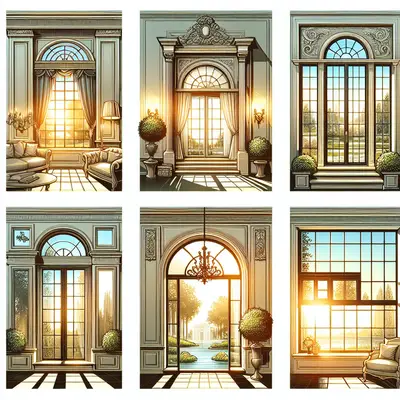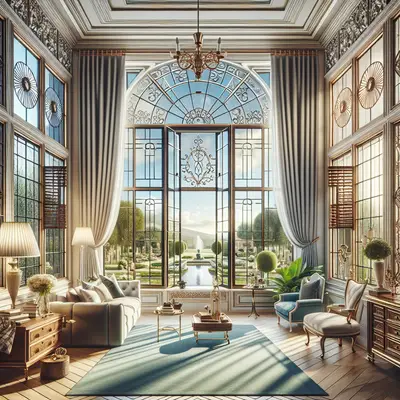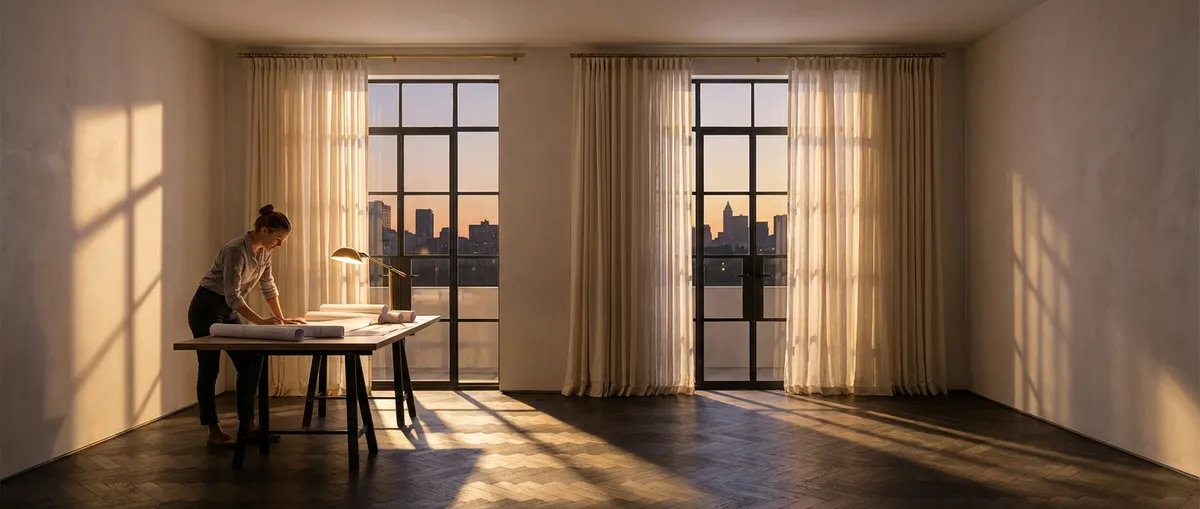
Windows do far more than admit daylight; they choreograph it. In a refined home, the choice of window type defines how light moves, how views are framed, and how each room feels at different hours of the day and seasons of the year. For homeowners contemplating an upgrade, understanding window types is less about ticking off a style box and more about curating an architectural experience that marries performance, aesthetics, and longevity.
This guide explores how different window types shape a sophisticated interior—and offers five exclusive insights that discerning homeowners can use to elevate their next upgrade from merely functional to truly exceptional.
Reading the Room: Matching Window Types to Spatial Intent
Before comparing casement to awning or picture to slider, the most strategic question is not “Which window is best?” but “What should this space do?”
In a formal living room, fixed picture windows and slender casements can function as a cinematic frame, directing attention outward to landscape, skyline, or garden architecture. Their role is to capture a view and present it almost as a piece of art—often with minimal muntins or slim sightlines to preserve visual purity. In bedrooms, by contrast, easy operation, privacy control, and acoustical performance often take precedence, making tilt‑and‑turn or well‑sealed casements particularly appealing.
Kitchens and baths introduce another layer: ventilation with control. Awning windows can be positioned higher on the wall to invite fresh air while protecting from light rain, preserving privacy and storage wall space. In transitional spaces—stairwells, landings, gallery halls—tall, narrow fixed or operable windows can draw the eye upward and wash surfaces with vertical ribbons of light.
Thoughtful selection of window types room by room transforms openings into architectural instruments—each calibrated to how the space is meant to be lived in, not just how it is furnished today.
Beyond Profiles: Understanding the Character of Major Window Types
Each principal window type has a distinct “behavior”—how it relates to air, light, and movement.
Casement windows, hinged at the side and opening like a door, invite generous airflow and excel at capturing breezes, especially on façades perpendicular to prevailing winds. Their compression seals often deliver excellent energy and sound performance, which is why they are favored in many high‑performance homes.
Awning windows, hinged at the top, project outward to create a protective “visor.” They are invaluable in spaces where ventilation is needed regardless of light drizzle and can be placed higher on the wall for privacy and clear wall space below.
Double‑hung and single‑hung windows carry a strong architectural heritage, particularly in traditional and historic homes. Their vertical sliding sashes create a timeless rhythm on the façade. Modern engineering and counterbalance systems have elevated their performance, and tilt‑in designs make them practical in multi‑story residences.
Sliding windows, with horizontally gliding sashes, deliver a wide, uninterrupted opening and can be suitable where egress codes permit and space for projecting sashes is limited. In more contemporary designs, they are often specified with very slim frames to maintain broad, horizontal sightlines.
Fixed or picture windows do not open but reward you with maximum clarity and minimal framing. They are ideal where the priority is view, daylight, or architectural impact. When paired with operable units nearby, they can compose a façade that is both functional and visually serene.
Five Exclusive Insights for the Discerning Window Upgrade
1. Treat Window Types as a Lighting Strategy, Not a Product List
Most homeowners think in terms of “style”; sophisticated renovators think in terms of light choreography. The choice of window type should be deliberate in relation to sun path, orientation, and the way light changes over the day.
For south‑facing rooms in colder climates, large fixed units paired with casements or tilt‑and‑turns can capture low winter sun while maintaining a tight thermal envelope. On western elevations, narrower or more articulated window types, possibly with divided lites or integrated shading systems, can temper glare and heat gain in late afternoon.
Evaluating window types through the lens of how they admit, diffuse, or filter light creates interiors that feel balanced and calm—not washed out at noon and gloomy by evening. This is particularly critical in spaces designed with pale or reflective surfaces, where poorly controlled light can quickly become uncomfortable.
2. Use Mixed Typologies to Elevate Both Façade and Function
A luxury home rarely uses a single window type throughout; it composes a family of types that speak the same design language but perform different technical roles.
For instance, a façade might rely on large fixed units for primary views, flanked by narrow casements for ventilation. On upper floors, tilt‑and‑turn windows can provide secure ventilation in the tilt position and full egress capability when turned fully open. Garden‑level spaces might integrate sliding or folding glass walls to dissolve the boundary between interior and exterior living.
The key is consistency of proportion, muntin pattern (if used), and finish. When these aesthetic constants are maintained, mixing types becomes an asset rather than a distraction—each window is chosen for what it does rather than as a mere repetition of a default choice.
3. Prioritize Operable Windows Where It Truly Matters
In many homes, far more windows are operable than necessary, adding cost and complexity without a meaningful lifestyle benefit. Discerning homeowners strategically limit operable units to where they add real value.
Bedrooms, kitchens, and occasionally ensuites demand intelligent operability for fresh air, moisture control, and night‑time comfort. But in double‑height spaces, stairwells, or areas primarily valued for their view, fixed glazing can be more elegant, more efficient, and visually quieter. The reduction in hardware, seals, and frames often translates into cleaner lines and superior thermal and acoustic performance.
By deliberately pairing key operable windows with carefully positioned fixed expanses, you refine both cost and experience—channeling the budget into higher‑quality hardware, premium glazing, or bespoke finishes where they will be appreciated daily.
4. Consider Maintenance Geometry as Much as Aesthetics
One of the most overlooked aspects of window type selection is how realistically the windows will be cleaned and maintained over decades.
Tilt‑and‑turn windows, for example, are prized in European‑inspired designs not only for tight sealing but for the ability to safely clean the exterior pane from inside, a compelling advantage in multi‑story homes without extensive exterior access. Similarly, double‑hung windows with tilt‑in sashes can provide a traditional façade without sacrificing interior cleaning convenience.
Very large sliding or fixed panels deliver drama but may require professional equipment or specialized coatings to maintain clarity and surface quality. Some advanced glass options feature low‑maintenance or hydrophilic coatings that reduce the frequency and effort of cleaning—an investment that can be particularly valuable where expansive glazing is central to the design.
When evaluating window types, envision how each will be accessed, cleaned, and serviced. Luxury that cannot be easily maintained soon loses its refinement.
5. Align Window Types with Long‑Term Acoustic and Energy Goals
Two windows that look superficially similar can perform very differently in terms of sound insulation and energy efficiency, especially in urban or high‑exposure locations.
Casement and tilt‑and‑turn windows typically offer strong acoustic and thermal sealing due to their compression gaskets, making them ideal on street‑facing elevations or near flight paths. Paired with laminated or triple glazing, they can dramatically reduce noise intrusion while stabilizing interior temperatures.
Fixed windows, having no moving parts, can achieve outstanding performance when combined with high‑specification framing and glazing. Strategically locating them on the noisiest or most exposed sides of the home, while reserving operable types for quieter façades, can create a delicate equilibrium of air flow and acoustic calm.
Homeowners with long‑term sustainability goals should also consider future‑ready configurations, such as deeper frames that can accommodate upgraded glazing down the line or integrated shading pockets. Choosing the right types now can make later performance enhancements more straightforward and less invasive.
The Material Dialogue: How Frame Choices Complement Window Types
Window type selection is only half the equation; the frame material completes the conversation. Different materials amplify or soften the inherent character of each window type.
Slim aluminum or aluminum‑clad frames, for example, can accentuate the crisp geometry of large fixed and sliding units, ideal for modernist or coastal designs where minimal sightlines and structural strength are prized. High‑end wood frames, by contrast, bring warmth and tactility to casement or double‑hung windows in traditional or transitional homes, adding richness to mullions and sashes.
Composite and fiberglass frames bridge performance and aesthetics—offering dimensional stability, low maintenance, and the ability to support larger operable units without visual bulk. In high‑performance envelopes, these materials pair especially well with tilt‑and‑turn or sophisticated casement systems.
The most considered projects treat frame material, finish, and hardware as an ensemble cast that supports the chosen window types, ensuring that function, feel, and façade all speak in the same refined voice.
Conclusion
Choosing window types for a premium home is not an exercise in catalog selection; it is the quiet craft of orchestrating light, air, sound, and view. By treating each room as a distinct experience, mixing typologies with purpose, prioritizing operability where it truly matters, planning for maintenance, and aligning selections with long‑term performance goals, homeowners can transform their windows from necessary openings into defining architectural signatures.
In a well‑considered upgrade, every casement, awning, picture, and tilt‑and‑turn becomes part of a larger composition—one that feels effortless to live with, yet unmistakably intentional to anyone who looks closely.
Sources
- [U.S. Department of Energy – Window Types and Technologies](https://www.energy.gov/energysaver/types-windows) – Overview of common window types and their energy performance characteristics
- [Efficient Windows Collaborative – Window Selection Guidance](https://www.efficientwindows.org/selection.php) – Detailed guidance on matching window types and performance to climate and orientation
- [National Fenestration Rating Council (NFRC)](https://www.nfrc.org/windows-doors-skylights/) – Information on certified window performance ratings for energy and comfort
- [Purdue University – Daylighting and Window Design](https://www.extension.purdue.edu/extmedia/fnr/fnr-477-w.pdf) – Technical perspective on how window design and type influence daylighting quality
- [Milgard Windows & Doors – Types of Windows](https://www.milgard.com/learn/parts-of-a-window/types-of-windows) – Practical reference illustrating major residential window types and their typical applications
Key Takeaway
The most important thing to remember from this article is that this information can change how you think about Window Types.