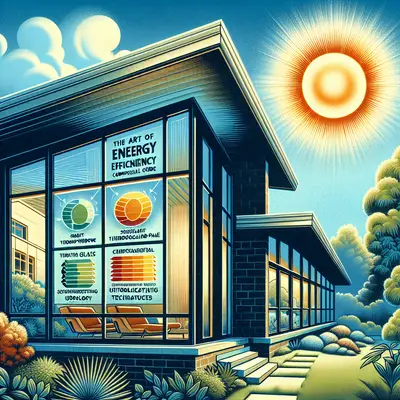
Energy efficiency is often discussed in terms of utility bills and payback periods. Yet for the discerning homeowner, refined window upgrades are less about blunt savings and more about orchestrating a quieter, more composed interior—where temperature, light, and acoustics are deliberately managed. The most sophisticated solutions do their work invisibly, turning your windows into silent partners in comfort, efficiency, and architectural poise.
Below are five exclusive, under‑discussed insights that elevate window efficiency from a technical checkbox to a carefully curated design decision.
1. Spectral Selectivity: Choosing Glass That Edits Light, Not Just Blocks Heat
Most conversations about “efficient windows” stop at double- or triple-pane glass. The more nuanced choice lies in the spectral profile of the glazing—how it edits different wavelengths of light before they enter your home.
Low‑E (low‑emissivity) coatings can be tailored to either invite or resist solar gain. A high solar heat gain coefficient (SHGC) can be an asset in colder northern climates, leveraging winter sun to gently warm interior spaces. In contrast, a low SHGC is more desirable in hot or mixed climates, where controlling cooling loads is paramount. The sophistication comes from specifying glass packages by orientation: more solar control on west- and south-facing façades, more permissive coatings on north-facing or shaded elevations.
The result is a home that feels intentionally calibrated—no room excessively bright or strangely dim, no area chronically overheated in late afternoon. Rather than imposing the same glass everywhere, you allow each façade to respond to its own light, climate, and purpose.
2. Frame Materials as Thermal Furniture: Selecting Profiles That Behave Like Insulation
While glass often gets the spotlight, the frame quietly determines how well a window resists thermal transfer. For high-performance homes, the frame is no longer just a border; it behaves almost like a piece of built‑in insulation wrapped in an architectural finish.
Aluminum frames, for instance, can be exquisitely slim and modern but require thermal breaks—internal, non‑conductive barriers—to avoid acting as cold conduits. Fiberglass frames offer low thermal expansion and high stability, aligning well with large expanses of glass where precision is paramount. High‑end vinyl and composite frames can rival or exceed wood in thermal performance while offering more consistent, low‑maintenance finishes.
The refined approach is to select frame materials with the same intentionality as fine furniture: proportion, texture, and color matter—but so does the invisible performance. Frames that are thermally optimized reduce drafts at the perimeter, mitigate condensation risk on cool mornings, and support the glass in maintaining a stable interior environment year‑round.
3. Microclimates by Design: Zoning Windows for Functional Comfort
A sophisticated window plan does more than “brighten rooms”; it creates intentional microclimates within the home. Instead of a single, generic solution, you consider how each room lives—how it is used, when it is occupied, and what kind of comfort it demands.
A reading room or study might benefit from slightly higher SHGC glass during winter, paired with interior shading that you can modulate through the day. A primary suite could prioritize acoustic glazing and ultra‑low U‑factor glass for a cocoon‑like nighttime environment. Kitchens and south‑facing living areas may benefit from high‑performance, solar‑control glazing that keeps temperatures composed during cooking and gatherings.
When you think in terms of microclimates, energy efficiency becomes an outcome of comfort‑driven design rather than a constraint. Your HVAC system works less frantically because each zone is supported by windows that already anticipate how that space is meant to feel.
4. Invisible Air Management: Advanced Sealing, Spacers, and Gas Fills
In premium window design, the elegance is often in what you do not see. Behind the glass, subtle technologies quietly govern how air, moisture, and temperature behave around the window assembly.
Warm‑edge spacers between panes reduce the thermal bridge at the glass perimeter, where condensation typically appears in colder weather. Argon, and in some ultra‑high‑performance cases krypton, can be used to fill the space between panes, slowing heat transfer more effectively than air. High‑grade gaskets, advanced weatherstripping, and carefully engineered sash interfaces keep unwanted drafts from ever reaching the interior.
What feels like “better insulation” is actually the combined effect of dozens of invisible refinements: a slightly warmer glass edge, a tighter seal, a calmer interior surface temperature. These details allow your walls and windows to perform more like a continuous thermal envelope, instead of a patchwork of strong and weak points.
5. Intelligent Shading as a Performance Layer, Not a Decoration
Energy‑efficient windows are not only about glass and frames; they are about how those elements collaborate with shading. When approached thoughtfully, shading acts as a performance layer that can dramatically alter solar gain without compromising aesthetics.
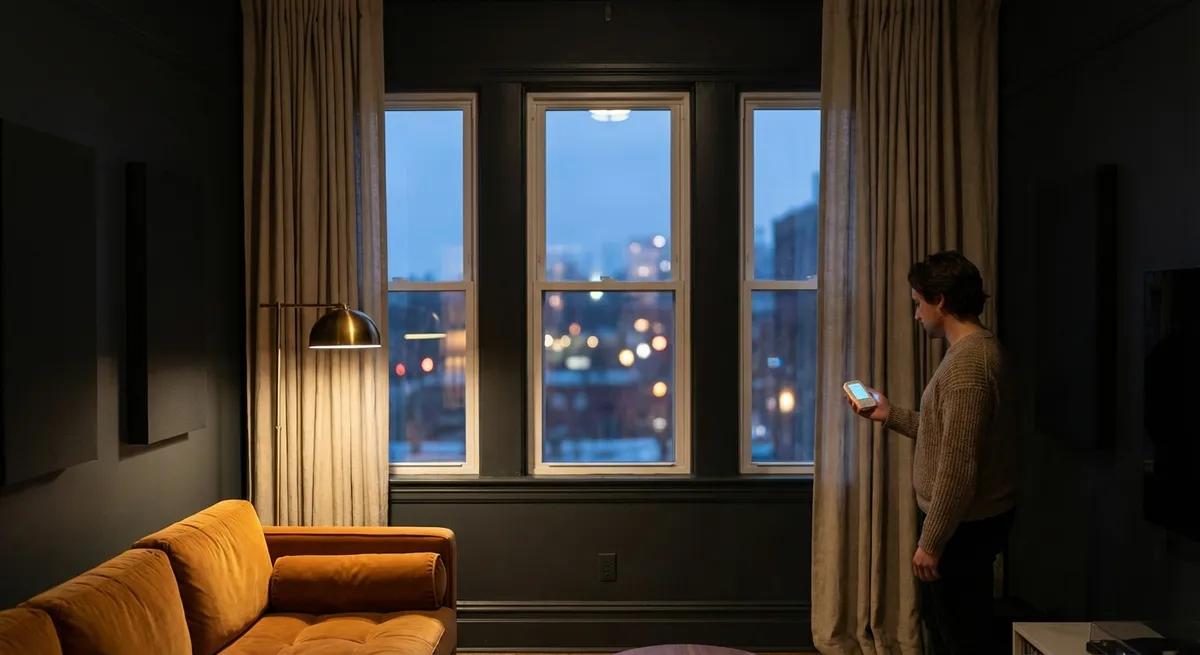
Exterior shading—such as architectural overhangs, brise‑soleil, or subtle metal fins—blocks high summer sun while often allowing lower winter sun to enter. Inside, cellular shades, lined draperies, and high‑quality blinds can be chosen not just for style, but also for thermal performance and reflectivity. For truly elevated control, integrated or automated shading systems can respond to time of day, solar position, or even interior temperature.
This layered approach turns each window into a dynamic aperture rather than a fixed opening. During winter, shades may remain open to harvest gentle warmth; during summer peaks, they participate actively in cooling strategy. The home’s energy profile improves not merely because the glass is efficient, but because the entire window assembly—glass, frame, and shading—behaves as a coordinated system.
Conclusion
Energy‑efficient windows, at their best, are less a technical upgrade and more a refinement of how your home feels, functions, and presents itself. By tuning spectral performance, frame materials, room‑by‑room microclimates, invisible air management, and intelligent shading, you transform windows from potential liabilities into quiet, high‑performing assets.
For homeowners who value composure, discretion, and long‑term resilience, these details matter. The most luxurious efficiency is the kind you never have to think about again—only feel, every time you enter a room that is quietly, effortlessly comfortable.
Sources
- U.S. Department of Energy – Energy-Efficient Windows - Overview of window ratings, glazing options, and efficiency strategies
- Efficient Windows Collaborative – Window Selection Guidance - Detailed guidance on climate-specific window performance, SHGC, and U-factor
- ENERGY STAR – About Energy-Efficient Windows - Criteria and performance metrics for qualifying high-efficiency windows
- Lawrence Berkeley National Laboratory – Windows and Daylighting - Research on advanced glazing, spectral selectivity, and window energy modeling
- National Renewable Energy Laboratory (NREL) – Windows and Building Envelope Research - Technical insights into window technologies and their impact on building energy use
Key Takeaway
The most important thing to remember from this article is that this information can change how you think about Energy Efficiency.