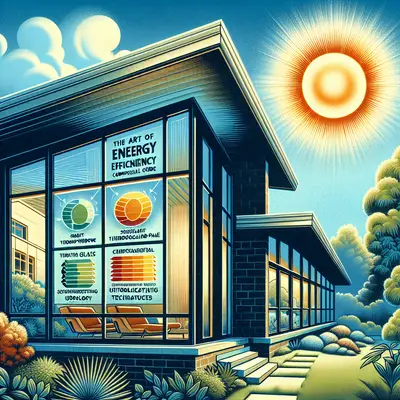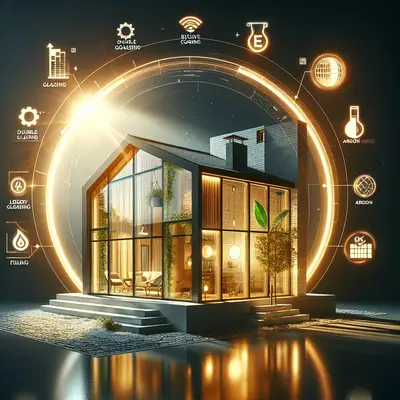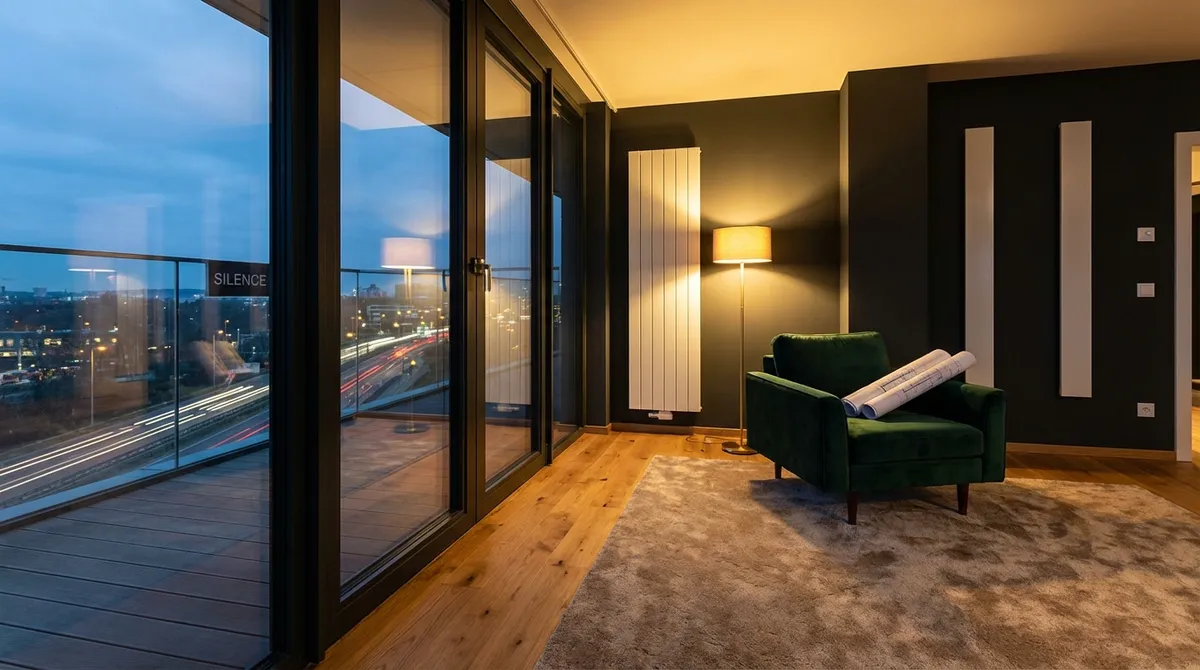
For the discerning homeowner, windows are no longer mere apertures to the outside world; they are performance instruments that quietly orchestrate comfort, efficiency, and aesthetic cohesion. An elegant energy strategy does not shout in kilowatt-hours—it reveals itself in stable indoor temperatures, hushed interiors, and glass that works as hard as the architecture that surrounds it.
This guide explores how to curate window upgrades that feel refined yet rigorously efficient, with five exclusive insights that move beyond generic advice and into the realm of truly elevated decision-making.
Reframing Efficiency as Comfort Performance
For sophisticated homes, energy efficiency is best understood as “comfort performance”—a blend of thermal stability, visual quality, and acoustic refinement. Instead of focusing solely on U‑factors and energy labels, consider how each window decision shapes your lived experience across seasons and times of day.
High-performance windows moderate temperature swings, reduce draft perception, and maintain more consistent surface temperatures on the glass itself. This minimizes cold-wall effects in winter and radiant heat discomfort in summer, allowing interiors to feel more balanced and luxurious. The result is not just lower bills; it is the subtle sensation that every room feels “finished,” no matter the weather outside. When viewed through this lens, energy efficiency becomes an investment in daily quality of life rather than a purely technical or financial calculation.
Insight 1: Glass Specification as a Tailored Climate Instrument
Most homeowners encounter terms like “double-pane” and “low‑E” as generic upgrades; sophisticated specification treats glass as a climate instrument, tuned to orientation and region. The same window package should not perform identically on a south-facing elevation in Phoenix and a north-facing elevation in Boston.
A refined strategy might deploy different low‑E coatings on different façades: a higher solar heat gain coefficient (SHGC) on south-facing windows in colder climates to harness passive solar warmth, and a lower SHGC on west-facing glass in warm regions to defend against intense late‑afternoon sun. In mixed climates, spectrally selective coatings—glass that admits generous visible light while sharply limiting infrared heat—preserve brightness without sacrificing efficiency.
Triple glazing, often marketed as universally “better,” becomes markedly more intelligent when reserved for areas of greatest exposure or where acoustics and thermal comfort are paramount: primary suites, home offices, or large format glazing facing open landscapes. Rather than a one-size-fits-all package, glass type, coating, and cavity fill (argon or krypton gas) are curated to each façade’s role in the home’s overall energy and comfort profile.
Insight 2: Frame Materials as Thermal Architecture
The frame is not simply a border around the view; it is an integral thermal component that deserves the same level of scrutiny as the glass. Many homeowners focus on glazing upgrades while accepting frame choices as a purely aesthetic decision. In elevated window packages, the frame is treated as thermal architecture—the interface between indoor sanctuary and outdoor volatility.
Vinyl, fiberglass, thermally broken aluminum, and wood-clad systems each offer distinct thermal behaviors. Fiberglass frames, for example, expand and contract at rates similar to glass, supporting weather-tightness over time and helping maintain performance tolerances. High-end aluminum systems with robust thermal breaks can deliver slender sightlines without the historical penalty of heat loss, while wood-clad options offer natural insulation internally and durable, low-maintenance exteriors.
The key is not simply selecting a “premium” material, but ensuring that frame construction, internal chambers, and thermal breaks complement the glass package. In cold or variable climates, a high-performing frame can significantly elevate interior surface temperatures around the perimeter of the window, making spaces near the glass conspicuously more comfortable during winter months. This is where performance and perceived luxury intersect.
Insight 3: Orientation-Aware Design That Acts Like Passive Technology
A truly sophisticated energy strategy acknowledges that the most elegant technologies are often passive. Intelligent orientation planning—whether you are remodeling, replacing, or enlarging openings—can transform windows into seasonal allies rather than thermal liabilities.
South and southeast orientations can be composed to capture soft morning and midday light in colder regions, while carefully sized overhangs or exterior shading control summertime overheating. East and west exposures typically benefit from more defensive glazing: lower SHGC, perhaps smaller expanses of unshaded glass, and strategic placement of operable vents to purge accumulated heat.
North-facing windows, while generally lower in solar heat gain, contribute significantly to daylighting and can be specified with coatings optimized for maximum visible light transmission. The most refined solutions often combine several strategies: orientation-specific glass, precise eave and awning design, and exterior elements such as pergolas, trellises, or automated shades. The result is an envelope that behaves almost “intuitively,” moderating energy loads before mechanical systems are ever engaged.
Insight 4: Air Tightness as an Invisible Luxury
Insulation and glass often command the spotlight, yet air tightness is where energy efficiency becomes tangible as everyday comfort. Drafts, cold zones near windows, and subtle whistling on windy nights are all signatures of compromised air sealing—not necessarily poor glass.
Upgrading windows presents an opportunity to dramatically improve the continuity of the building envelope. This means looking beyond the unit itself to the interface between the window and the wall: high-performance tapes, sealants compatible with your wall assembly, properly integrated flashing, and careful attention to transitions at sills and heads.
From a lived-experience standpoint, enhanced air tightness means fewer cold spots, more stable temperature distribution, and quieter interiors. For homes located near busy streets, airports, or urban centers, this reduces not just energy loss but acoustic intrusion. The pairing of tightly installed units with well-designed mechanical ventilation—such as energy recovery ventilators (ERVs)—creates interiors that feel both fresh and composed, embodying a standard of quiet luxury that is felt rather than seen.
Insight 5: Performance Metrics as a Curated Toolkit, Not a Checklist
Energy labels and performance metrics—U‑factor, SHGC, visible transmittance (VT), air leakage ratings—can easily become a confusing alphabet soup. Sophisticated homeowners treat these data points not as an overwhelming checklist but as a curated toolkit that supports intentional decisions.
U‑factor governs how well the window resists heat loss; in colder regions, lower values are paramount for winter comfort and reduced heating loads. SHGC determines how much solar heat passes through; balancing this number allows you to either leverage or filter solar gains depending on climate and orientation. Visible transmittance, often overlooked, shapes how luminous your interiors feel—particularly important if you value a bright, gallery-like ambiance.
Instead of pursuing the “lowest possible” or “highest possible” values across the board, a refined approach aligns these metrics with your climate, your architecture, and your lifestyle. For example: slightly higher SHGC on south-facing elevations in a heating-dominated climate, paired with excellent U‑factors and thoughtful shading, can outperform a uniformly low-SHGC specification that sacrifices passive winter gains. The nuance lies in acknowledging that the “best” performance profile is situational, not universal.
Conclusion
Energy-efficient windows, at their most sophisticated, are not an isolated upgrade but a finely tuned component of an integrated home. They blend glass science, frame engineering, orientation strategy, and air-tight installation into a quiet choreography of comfort and restraint. The true luxury is not just in the materials or the brand names, but in how well the solution is tailored—to your climate, your architecture, and the way you inhabit your spaces.
By treating window upgrades as a curated performance system rather than a purely transactional replacement, you unlock a home that feels consistently composed: visually luminous, thermally stable, acoustically calm, and elegantly efficient—day after day, season after season.
Sources
- [U.S. Department of Energy – Energy-Efficient Windows](https://www.energy.gov/energysaver/energy-efficient-windows) - Authoritative overview of window technologies, performance metrics, and climate-specific considerations
- [ENERGY STAR – Windows, Doors and Skylights](https://www.energystar.gov/products/building_products/residential_windows_doors_and_skylights) - Details on performance criteria, regional requirements, and labeling for high-efficiency products
- [Efficient Windows Collaborative (NFRC)](https://www.efficientwindows.org/selection.cfm) - In-depth guidance on selecting windows based on climate, orientation, and performance ratings
- [Lawrence Berkeley National Laboratory – Windows and Daylighting](https://windows.lbl.gov/) - Research-based insights on glazing, coatings, and whole-window performance
- [Oak Ridge National Laboratory – Window Technologies](https://www.ornl.gov/content/window-technologies) - Technical background on advanced window systems, thermal performance, and building envelope integration
Key Takeaway
The most important thing to remember from this article is that this information can change how you think about Energy Efficiency.