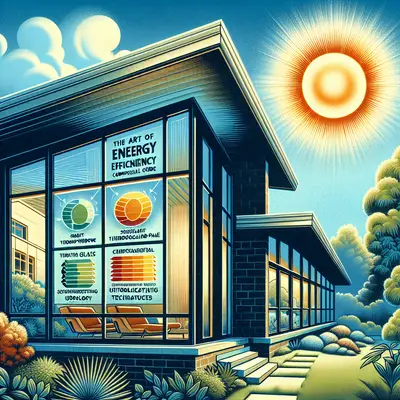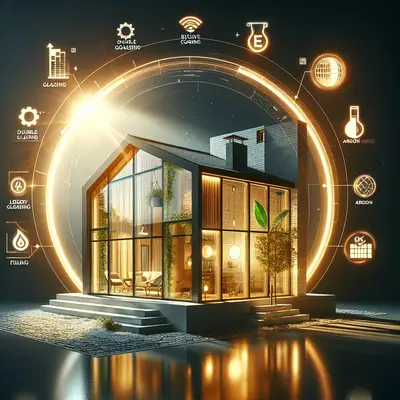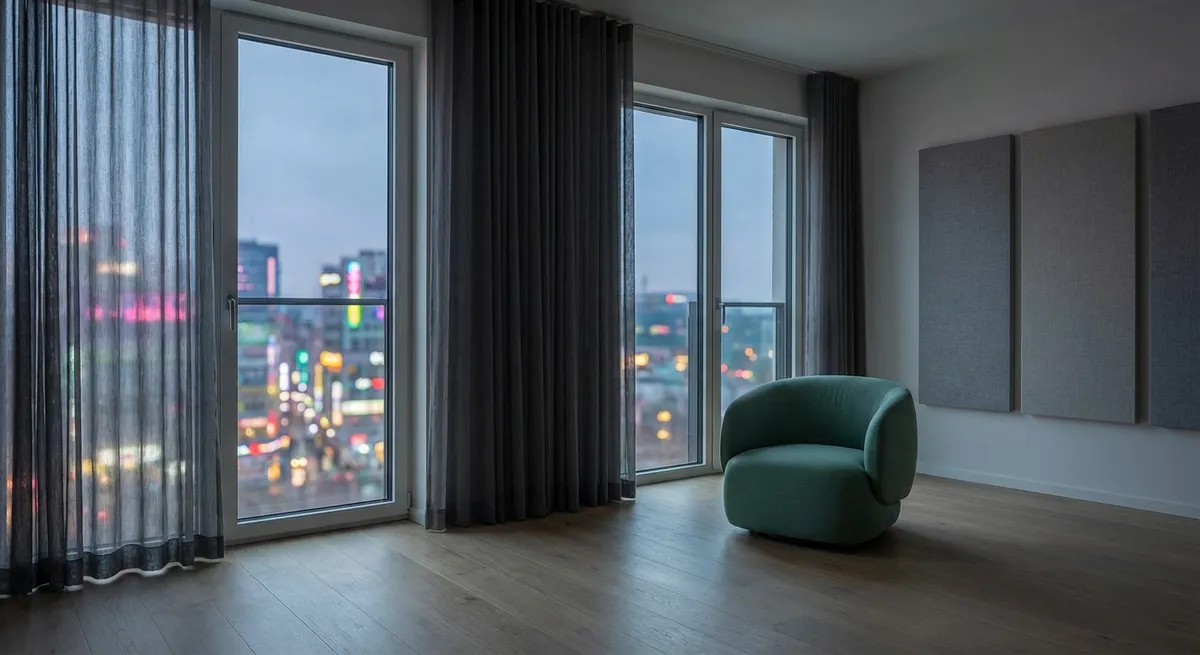
Energy-efficient windows are often discussed in terms of utility bills and payback periods. Yet for the discerning homeowner, the conversation is far more nuanced. Refined fenestration is about creating interiors that feel quietly temperate, visually calm, and architecturally resolved—while the engineering that enables this comfort remains almost invisible. When energy efficiency is approached as a design discipline rather than a constraint, your windows become instruments of silent performance, orchestrating light, temperature, and comfort with extraordinary subtlety.
This perspective reveals several underappreciated opportunities—small, precise decisions that dramatically influence how your home feels and functions. Below are five exclusive insights that matter specifically to those pursuing elevated, high-performance window solutions.
The Microclimate at the Glass: Designing for Perceived, Not Just Measured, Comfort
Most efficiency discussions begin with U‑factor and solar heat gain coefficients. Important, certainly—but thermally sophisticated homes are designed around how a room actually feels, not just what the thermostat reports. The true luxury is a living space in which you never instinctively avoid sitting near the glass.
A well-chosen glazing assembly creates a stable “microclimate” adjacent to the window. High-spec double or triple glazing with low‑emissivity (low‑E) coatings and argon or krypton gas fill reduces radiant temperature asymmetry—the subtle discomfort you feel when your body “senses” cold glass even in a heated room. This is why a premium, low‑U‑factor window can make a room feel warmer at 68°F than a builder-grade window at 72°F.
Equally important is edge-of-glass performance. Warm-edge spacers and thermally broken frames reduce the cold perimeter band that can cause both discomfort and condensation. In refined window design, comfort is not left to the HVAC system; it is engineered into the glass and frame so the interior envelope feels quietly consistent, season after season.
Solar Management as a Curated Experience, Not a One-Size-Fits-All Coating
High-end window buyers are often offered a “best” low‑E glass as if performance were universal. In reality, solar control should be curated façade by façade, room by room. Morning light in a primary suite, afternoon sun in a salon, and low winter light across a dining room all interact differently with glass.
A sophisticated specification starts with orientation: south- and west-facing elevations often benefit from lower solar heat gain coefficients (SHGC) to control unwanted summer gain, while north elevations can support slightly higher SHGC to leverage passive light and warmth. But equally refined is the attention to visible light transmittance (VT). A carefully selected low‑E glass can preserve luminous clarity and color accuracy while still modulating heat—avoiding the greenish or overly reflective tint that undermines the sense of visual luxury.
For homes with expansive glazing, layered strategies are particularly powerful. Exterior shading (deep overhangs, fins, or brise-soleil) can work in concert with tuned coatings and interior treatments to create a dynamic envelope: bright and open in winter, selectively filtered in summer. The result is not just lower cooling demand, but a lived experience of light that feels intentionally composed.
Frame Architecture: The Quiet Engine of Thermal Performance
Glazing often receives the accolades, but in high-performance windows, the frame is the quiet engine. Inferior frames can erase much of the benefit of sophisticated glass, particularly in extreme climates or large-format units. For a truly efficient envelope, frame selection must be elevated from afterthought to architectural decision.
Thermally broken aluminum, high-density fiberglass, engineered wood-clad systems, and advanced composites each bring distinct thermal, structural, and aesthetic qualities. Top-tier fiberglass and composite frames offer minimal thermal expansion, allowing tight tolerances over time and supporting slender, elegant profiles without sacrificing performance. In cold climates, deep, multi-chambered frames and warm-edge technologies reduce conductive heat loss and surface temperature drops that can invite condensation.
A refined frame design also considers installation details: how the frame interfaces with continuous exterior insulation, air barriers, and interior finishes. The most successful projects treat the frame as a precision component in a larger thermal assembly, not merely a border around the glass. It is this holistic approach that distinguishes a truly premium, energy-efficient window from a merely compliant one.
Airtightness as a Luxury: The Acoustics and Stillness of a Well-Sealed Envelope
Energy efficiency is often linked to R‑values, but for many homeowners, the immediately perceptible upgrade is the newfound stillness of an airtight home. Drafts, whistling, and subtle movement of curtains are all symptoms of air leakage—an issue that undermines both thermal performance and perceived quality.
High-performance windows bring advanced sealing strategies: multi-point locking systems that compress gaskets evenly, continuous perimeter seals, and carefully engineered sash-to-frame interfaces. When combined with meticulous installation, these elements dramatically reduce uncontrolled air exchange. The luxury benefit extends beyond utility savings: exterior noise is filtered, temperature stratification is reduced, and the home feels cocooned rather than exposed.
From an energy standpoint, controlling infiltration can rival or exceed the gains of upgrading insulation alone. Modern standards such as ENERGY STAR and passive house guidelines increasingly emphasize airtightness for this reason. For the premium market, this means you are investing not only in a better thermal envelope, but in quieter rooms, more consistent humidity levels, and an overall sense of calm that is difficult to quantify yet immediately recognizable.
Intelligent Integration: Windows as Active Partners in Whole-Home Efficiency
The most advanced window upgrades no longer exist in isolation; they are integrated into a broader ecosystem of smart, responsive building technologies. Rather than static panes of glass, your windows can become active participants in how your home manages energy, comfort, and light.
Motorized, insulated shades or blinds—concealed within pockets or integrated into the frame—can be programmed to respond to solar angle, temperature, and occupancy. Smart glass technologies, such as electrochromic glazing, allow dynamic tinting to reduce glare and solar gain without sacrificing views. Paired with intelligent thermostats and zoned HVAC, this creates a self-adjusting environment that anticipates heat loads rather than reacting to them.
Even in more traditional builds, simple integrations like daylight-responsive lighting controls can capitalize on high-performance glazing by dimming artificial lighting when natural illumination is abundant. In luxury homes, this choreography is most successful when it is visually discreet: quiet motors, hidden wiring, and interfaces that blend into the architectural language. The outcome is a residence that remains visually timeless while its performance quietly evolves with the most advanced standards of energy efficiency.
Conclusion
Energy-efficient windows, at their highest expression, are not merely cost-saving devices. They are instruments of refined living, orchestrating thermal comfort, acoustic serenity, and luminous clarity in ways that feel effortless to those who inhabit the space. By looking beyond basic ratings and engaging with the subtleties of microclimate, solar management, frame architecture, airtightness, and intelligent integration, homeowners can create envelopes that are both technically exceptional and sensorially elevated.
In this context, an upgraded window is not a commodity—it is a long-term architectural decision that shapes how your home performs, feels, and endures. When chosen and detailed with care, these quiet panes of glass become one of the most sophisticated elements of your residence’s design.
Sources
- [U.S. Department of Energy – Energy-Efficient Windows](https://www.energy.gov/energysaver/design/energy-efficient-windows) – Overview of window performance metrics, glazing options, and design considerations for efficiency
- [Efficient Windows Collaborative – Window Selection Guidance](https://www.efficientwindows.org/selection.php) – Detailed explanations of U‑factor, SHGC, visible transmittance, and climate-specific recommendations
- [Lawrence Berkeley National Laboratory – Windows & Daylighting](https://windows.lbl.gov/) – Research on advanced glazing, dynamic windows, and whole-building energy impacts
- [ENERGY STAR – Residential Windows, Doors and Skylights](https://www.energystar.gov/products/building_products/residential_windows_doors_and_skylights) – Criteria and certification information for high-performance residential fenestration products
- [Passive House Institute US (PHIUS) – Envelope & Windows](https://www.phius.org/passive-building-resources) – Technical resources on airtightness, thermal envelopes, and high-performance window strategies in low-energy homes
Key Takeaway
The most important thing to remember from this article is that this information can change how you think about Energy Efficiency.