Windows are more than apertures in a wall; they are architectural decisions that choreograph light, silence, comfort, and value. For homeowners contemplating an upgrade, the true luxury lies not only in the glass, but in the way each unit is positioned, supported, and finished. Installation, when executed at a high standard, becomes almost invisible—perceived only through the ease, quiet, and effortless elegance it brings to everyday living.
What distinguishes a premium installation from a merely adequate one is not a single detail, but a constellation of quiet decisions: alignment, sealing strategy, structural preparation, and continuity with the home’s building envelope. The following insights reveal the nuances that discerning homeowners should expect—and insist upon—when commissioning an elevated window installation.
The Architectural Line: Why Alignment Is a Luxury Detail
A refined window installation begins long before any fasteners touch the frame. It starts with an architect’s eye for alignment: the relationship between glass, trim, and the visual lines of the room. In luxury properties, windows are rarely treated as stand-alone objects; they are calibrated to door heads, ceiling heights, cabinetry, and even sightlines from adjacent rooms.
Precision alignment accomplishes two things. First, it creates a serene visual rhythm—frames line up across elevations, mullions echo interior millwork, and sill heights are consistent enough that furniture placement becomes intuitive rather than forced. Second, it protects long-term performance: an out-of-square opening can twist a frame, inviting air and water infiltration, compromised locking mechanisms, and premature wear.
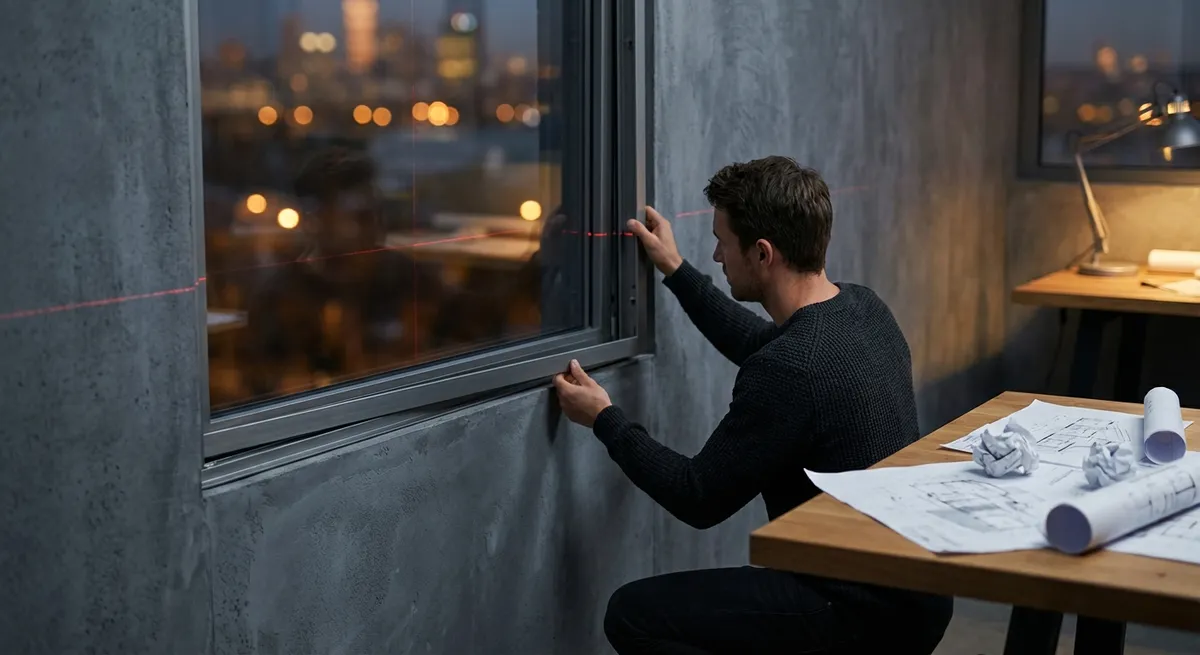
A meticulous installer will confirm that rough openings respect both structural requirements and design intent. Laser levels, story poles, and mock-ups are tools of choice, not afterthoughts. For homeowners, the question to ask is simple: “How will you ensure that my windows align with the architecture, not just the hole in the wall?” The answer reveals whether you are buying an installation service—or an aesthetic partnership.
The Invisible Envelope: How Premium Installations Control Air and Water
The most beautiful window fails in its purpose if the building envelope is not treated as a continuous, thoughtful system. The distinction between a standard install and a premium one often comes down to how meticulously the interface between window and wall is sealed, layered, and protected.
A high-caliber installer treats each opening as a micro-building envelope. Flashing tapes and pan flashing are sequenced to direct any incidental water safely outward. Properly integrated housewrap or air barrier membranes overlap in a shingle-style pattern, eliminating reverse laps that can funnel water inward. Sealant is not simply “caulked around”; joint dimensions, backing materials, and compatible products are selected so the sealant can flex with seasonal movement rather than tear away.
This level of care pays dividends. Reduced air leakage enhances comfort, stabilizes interior temperatures, and allows high-performance glass to deliver its full promise. It also minimizes moisture-related risks within walls—mold growth, concealed rot, and insulation degradation. For homeowners, documentation matters: request that your installer specify the flashing, tape, and sealant systems by brand and installation method. The finest work is almost invisible, but never undocumented.
Structure in Silence: Reinforcement You Feel but Never See
In elevated projects, structural preparation is as important as the windows themselves. Heavier insulated glass units, triple glazing, and large-format panels impose greater loads on framing than older single-pane or small double-hung windows. A sophisticated installation does not simply “fit to the hole”; it subtly upgrades the supporting structure so that the performance of premium units remains stable for decades.
Proper load transfer begins at the sill. High-density shims and continuous support surfaces prevent frame distortion and sagging. In some cases, headers are re-evaluated and reinforced if new configurations introduce wider spans or larger openings. Anchoring patterns are calculated to resist wind loads and accommodate the specific frame material—wood-clad, aluminum, fiberglass, or composite—each of which moves and reacts differently over time.
The result is something you experience rather than see: windows that close with a quiet, confident latching action year after year, minimal seasonal binding, consistent gasket compression, and hardware that feels solid rather than tentative. For the discerning homeowner, a useful question is: “How will you confirm that the existing framing is appropriate for this new window size and weight?” The most capable professionals will reference code requirements, manufacturer instructions, and site conditions in a single, coherent strategy.
Five Exclusive Insights for Homeowners Pursuing Exceptional Installations
Discerning homeowners often sense that “better is possible,” but may not have the vocabulary to request it. These five insights provide that language, enabling you to have a more precise, elevated conversation with your window professional.
Specify Installation Protocols, Not Just Product Lines
Many premium brands offer multiple installation tiers. Ask which specific installation standard will be followed—manufacturer’s full system, local best practice, or a building-science–driven approach—and insist that the contract reference it explicitly. You are curating a methodology, not only a window.
Treat Interior Finishes as Part of the Window, Not an Afterthought
The most refined installations anticipate how casing profiles, returns to drywall, and sill details will resolve once the window is in place. Moisture-resistant back-priming for wood trim, carefully concealed fasteners, and millwork that aligns with furniture and built-ins elevate the experience from “new windows” to a meticulously composed interior.
Request a Pre-Installation Mock-Up for Complex or High-Value Areas
For dramatically sized openings, feature walls, or rooms facing harsh climates, a single opening can be used as a mock-up to validate flashing, insulation strategies, and finishing details. This allows adjustments before the full home is touched, protecting both aesthetics and building performance.
Insist on Thoughtful Integration with Mechanical and Shading Systems
High-performance windows interact with HVAC systems, smart shades, and even indoor air quality. A premium installer will coordinate with your HVAC contractor and low-voltage integrator to ensure that new airtightness levels do not unbalance ventilation, and that motorized shades or sensors can be incorporated without damaging frames or seals.
Document Performance, Not Just Warranties
Warranties cover components; performance is what you live with. Ask for blower-door test results before and after the project when feasible, or at least a detailed checklist verifying air sealing, fastener placement, and flashing steps for each elevation. A project binder—digital or physical—that compiles product data, installation photos, and test results becomes part of your home’s provenance, enhancing long-term value.
These insights transform you from a passive client into a knowledgeable collaborator. The best installation teams welcome this level of engagement; it is a clear signal that their craft will be understood and appreciated.
Light, Sound, and Comfort: The Sensory Payoff of Meticulous Work
The narrative of window installation is often reduced to energy ratings and square footage pricing, yet the true measure of refinement lies in how a space feels once the work is complete. When windows are placed, sealed, and finished with care, the transformation is sensory and immediate.
Daylight no longer arrives as glare but as a controlled, softened wash—because glass coatings, orientations, and frame dimensions were chosen in concert with each room’s function. Sound from the exterior becomes a distant, muted presence, not because the glass alone is exceptional, but because every perimeter gap was properly insulated and sealed. Drafts at the ankles disappear, and temperature gradients between window walls and interior partitions are noticeably reduced.
In this context, installation becomes a form of quiet hospitality. It anticipates how you move through your home in early morning and late evening, how you entertain, how you rest. The precision of the work shows up in subtleties: the way handles align across a bank of doors, the absence of whistling on windy nights, the reassuring solidity when locking up at the end of the day. Elegant windows frame your view; impeccable installation frames your experience.
Conclusion
For those investing in elevated window solutions, the frame, glass, and hardware are only half the story. The other half is written in how those elements are introduced into the fabric of your home: aligned with your architecture, integrated with your building envelope, and supported by structure that remains quiet and reliable over time.
By approaching installation as a sophisticated craft—and by asking informed, specific questions—you transform a routine upgrade into a meaningful enhancement of comfort, performance, and design integrity. The most successful projects are those where the installation is scarcely noticed, yet its benefits are felt every time you close a sash, draw a shade, or pause to enjoy the view.
Sources
- [U.S. Department of Energy – Energy-Efficient Window Attachments](https://www.energy.gov/energysaver/energy-efficient-window-attachments) – Overview of how windows and their interfaces affect comfort and efficiency
- [Efficient Window Coverings – Window Selection Guidance](https://efficientwindowcoverings.org/learn/understand/selecting-new-windows/) – Explains how window choices interact with building envelope and interior comfort
- [Building America Solutions Center – High-Performance Windows and Shading](https://basc.pnnl.gov/resource-guides/high-performance-windows-and-shading) – Technical guidance on detailing, flashing, and integration with the building envelope
- [U.S. Environmental Protection Agency – Indoor Air and Moisture Control](https://www.epa.gov/mold/mold-and-moisture) – Discusses the importance of moisture management near openings like windows
- [Green Building Advisor – Installing Windows for High Performance](https://www.greenbuildingadvisor.com/article/installing-windows-for-high-performance) – In-depth discussion of best practices for air sealing, flashing, and structural support in modern window installations
Key Takeaway
The most important thing to remember from this article is that this information can change how you think about Installation.