Energy-efficient windows are often marketed as a line item on an upgrade list—another box to check, another rebate to claim. In reality, they function more like the home’s operating system, quietly reshaping how light, temperature, and comfort are managed every hour of the day. For the discerning homeowner, the difference between “new windows” and intentionally specified glazing is the difference between a refreshed façade and a genuinely elevated living environment.
What follows is a deeper, design-forward look at energy-efficient windows—five exclusive insights that move beyond jargon and rebates and into the realm of intelligent, elegant performance.
Beyond U-Factor: Reading the Energy Label Like a Connoisseur
Most window conversations stop at “double-pane and Energy Star–rated.” For a refined home, this is the bare minimum, not the benchmark.
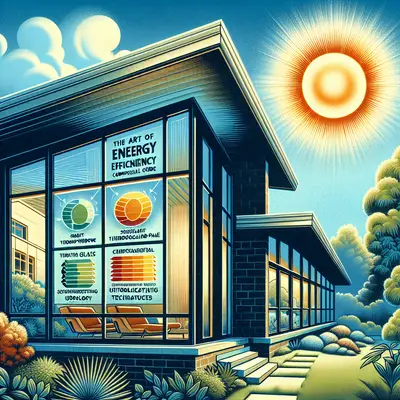
The National Fenestration Rating Council (NFRC) label offers a far more nuanced portrait of performance. U-factor describes heat loss, solar heat gain coefficient (SHGC) governs how much solar warmth enters, visible transmittance (VT) reveals how much daylight passes through, and air leakage indicates how tightly the unit is assembled. The real sophistication lies in balancing these metrics for your specific climate, architecture, and lifestyle.
In a heating-dominated, colder region, a slightly higher SHGC can translate to welcome passive solar gains on south-facing façades, while a low U-factor preserves that warmth deep into the evening. In hot, sun-drenched climates, a low SHGC becomes paramount, reducing cooling loads and protecting interiors from harsh radiation, while still aiming for a VT that keeps interiors luminous rather than dim. The discerning approach is not “the most efficient number wins,” but “the right combination of values harmonizes with the home’s orientation, materials, and daily patterns.”
Approached this way, the NFRC label stops being a technical afterthought and becomes a set of curatable performance characteristics—much like selecting the profile of a fine audio system or the tuning of a luxury vehicle.
Comfort as a Design Outcome, Not a Byproduct
Energy efficiency is often framed in kilowatt-hours and utility bills. Yet the true luxury of high-performance windows is comfort that feels almost architectural: the way air, light, and temperature combine into something quietly effortless.
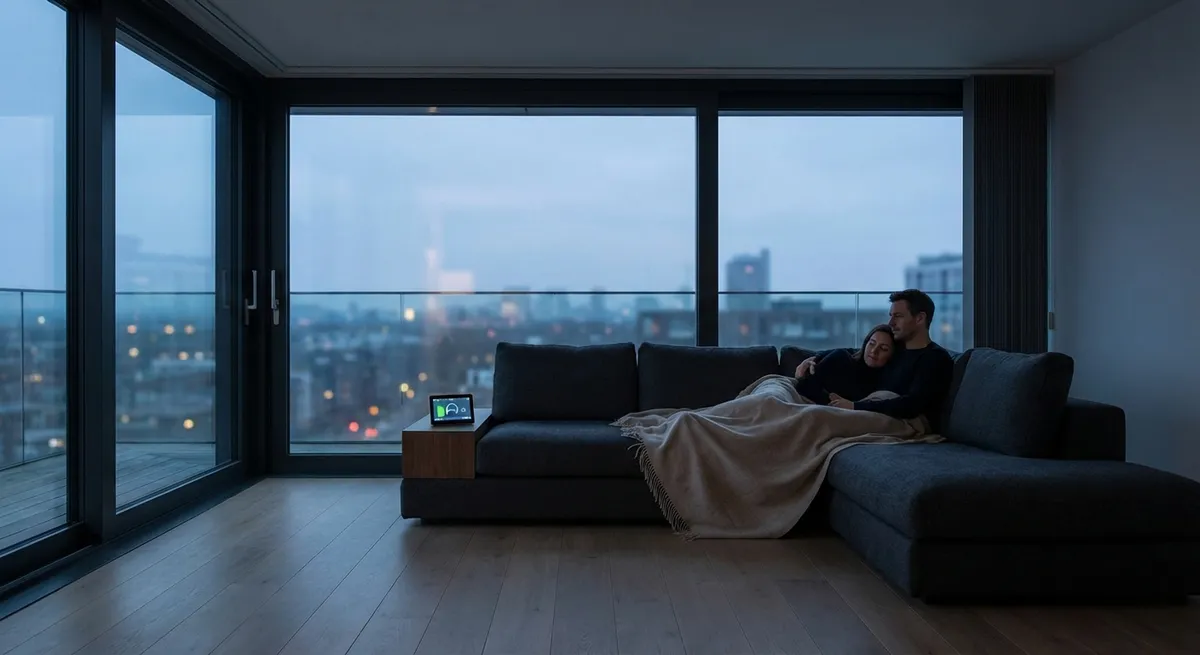
High-specification glazing dramatically reduces radiant temperature asymmetry—the sensation of a “cold wall” you feel near inferior glass in winter or a “hot panel” near unprotected west-facing windows in summer. With well-chosen units, you can sit inches from a large pane in January without a chill, or read by a sunlit window in August without being baked in a spotlight.
This matters not just physically but psychologically. Research has shown that stable temperatures and soft, balanced daylight improve sleep quality, mood, and cognitive performance. Pair low U-factor glass with well-designed frames and attentive installation, and drafts cease to be a seasonal inevitability. Heavy drapery becomes an aesthetic choice, not a thermal necessity. The home stops being negotiated one “good seat” at a time and becomes uniformly usable, regardless of the weather pressing against the glass.
In this context, energy-efficient windows function as an invisible comfort system—silently curating the interior climate so that the experience of each room is consistent, calm, and deliberately composed.
Glass That Works as Climate Attire: Matching Coatings to Orientation
Low-emissivity (low-e) coatings are often described generically, as though there were a single “efficient” setting. In reality, these ultra-thin metallic layers can be tuned like a wardrobe, with different ensembles for different exposures.
On sun-soaked southern or western elevations, a spectrally selective low-e coating can admit generous visible light while filtering out a large percentage of infrared heat. This maintains luminous interiors without imposing a costly cooling penalty. On the more subdued north side, however, that same aggressive heat-rejecting formula may be unnecessary or even counterproductive, robbing the home of helpful winter gains and leaving rooms feeling visually flat.
The most thoughtful window strategies embrace a façade-specific approach: a more solar-controlling low-e for the high-glare elevations, a more neutral, higher-gain coating where passive heating and richer daylight are welcome. In some climates, this refinement extends to floor level—large first-floor glazing may warrant a more guarded coating where landscaping allows intense reflection, while upper stories can tolerate slightly different tuning.
When specified with care, low-e glass becomes more than “efficient glass.” It becomes climate attire for the home—different layers for different orientations, all coordinated into a cohesive performance wardrobe.
Framing the Invisible: Material Choices That Shape Thermal Performance
Glass carries much of the efficiency conversation, but frames are where performance either flourishes or quietly erodes. For a premium installation, frame selection is not a simple style decision; it is a thermal and tactile one.
Aluminum, for example, offers exquisite rigidity and slender sightlines but is naturally conductive. Without robust thermal breaks, it becomes a cold bridge in winter and a hot one in summer. Thermally broken aluminum systems, especially those designed for high-performance envelopes, mitigate this issue with insulating barriers that allow you to enjoy the precision of metal frames without the discomfort of conductive edges.
High-quality fiberglass frames expand and contract at rates closer to glass, preserving seals and reducing long-term distortion. Their inherent stability allows for darker colors and bolder profiles without the warping risk sometimes associated with lesser vinyl. Wood, when properly engineered and clad, provides exceptional thermal performance combined with a tactile warmth and visual depth that many homeowners find irreplaceable. Modern wood-clad systems marry interior craftsmanship with low-maintenance exterior skins, balancing indulgence and practicality.
The refined choice considers not only today’s performance metrics but also how the frame will interact with glass, seals, and structure over decades. In that sense, the frame is less an accessory to the glass and more a structural instrument—quietly governing efficiency, durability, and the daily experience of touch and sightline.
The Hidden Harmony: Integrating Windows With the Whole Energy Ecosystem
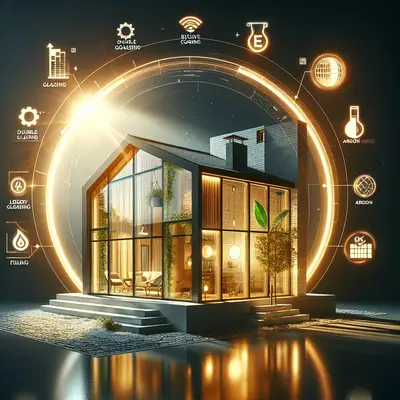
Advanced windows perform at their highest level when treated as part of an integrated energy strategy rather than an isolated upgrade. For a home already investing in a high-efficiency HVAC system, enhanced insulation, or smart controls, the right glazing becomes a force multiplier.
Well-specified windows can reduce peak heating and cooling loads, allowing for smaller, more precise HVAC equipment. Automated shading, synced with the thermal characteristics of your glass, can modulate solar gains hour by hour, letting winter light in while guarding against summer peaks. When combined with smart thermostats and zoned systems, the result is a home that anticipates rather than reacts—keeping temperatures within a narrow, comfortable band with minimal energy input.
There is also a temporal dimension often overlooked: peak pricing and grid stress. Energy-efficient windows, by smoothing temperature swings, naturally reduce dependence on energy-intensive, peak-hour conditioning. In homes with solar arrays or battery storage, this smoothing effect helps align consumption with on-site generation, further enhancing the logic of the entire system.
Viewed this way, premium windows aren’t simply “better insulators.” They are a central instrument in the home’s energy orchestra—balancing, tempering, and coordinating how the building interacts with climate, technology, and the grid itself.
Conclusion
For the exacting homeowner, energy-efficient windows are not a cosmetic upgrade but a structural refinement—altering how the home feels, performs, and ages. By reading beyond a single label value, considering comfort as an intentional outcome, tailoring glass to orientation, elevating frame selection, and integrating windows with the broader energy ecosystem, you move from “new windows” to a recalibrated living environment.
The most successful window projects are almost paradoxical: once installed, they fade into the background. The light is softer yet more generous, temperatures more constant yet less forced, the home quieter, calmer, and more livable. Energy savings become a quiet dividend of a far more important achievement—an interior that feels consistently composed, no matter what the weather writes on the other side of the glass.
Sources
- [U.S. Department of Energy – Energy-Efficient Windows](https://www.energy.gov/energysaver/energy-efficient-windows) - Overview of window performance metrics, climate considerations, and upgrade options
- [NFRC – Understanding Energy Performance Ratings](https://www.nfrc.org/organizations/understanding-energy-performance-ratings/) - Detailed explanation of U-factor, SHGC, VT, and air leakage ratings
- [ENERGY STAR – Residential Windows, Doors and Skylights](https://www.energystar.gov/products/building_products/residential_windows_doors_and_skylights) - Federal efficiency criteria, climate zone guidance, and product qualification details
- [Lawrence Berkeley National Laboratory – Windows and Daylighting](https://windows.lbl.gov/) - Research on window technologies, thermal performance, and daylighting impacts
- [Harvard T.H. Chan School of Public Health – Healthy Buildings Research](https://www.hsph.harvard.edu/healthybuildings/) - Science on how indoor environmental quality, including thermal and visual comfort, affects health and cognitive function
Key Takeaway
The most important thing to remember from this article is that this information can change how you think about Energy Efficiency.