The most successful window upgrades never announce themselves with chaos, dust, or disruption. They arrive quietly—delivered through precise planning, disciplined craftsmanship, and an installation process so refined that the home seems merely to exhale and reveal its new clarity. For discerning homeowners, the installation phase is not a necessary inconvenience, but the pivotal moment where design intent, performance promises, and long-term value are either honored or compromised.
This is where the difference between standard replacement and elevated transformation truly emerges.
Installation as an Extension of Architectural Intent
Exceptional window installation begins long before the first frame is removed. It starts at the intersection of architecture, climate, and how you actually live in the space. Installers working at a premium standard are not simply “fitting products”; they are carefully integrating new fenestration into a pre-existing structural and aesthetic narrative.
On well-run projects, the installation team will review architectural drawings (if available), understand the wall assembly (masonry, wood frame, mixed materials), and discuss interior design priorities—sightlines, trim profiles, sill depth, and interaction with window treatments. In older or historically significant homes, they should also consider how the new units will respect original proportions and shadow lines so the façade remains visually coherent. A refined installation approach ensures that foam, flashing, and fasteners are chosen to complement not only the building code, but also the building’s character. The result is an upgrade that feels native to the home, not appended to it.
The Hidden Engineering of a Silent, Draft-Free Fit
A premium window is only as effective as the precision of its installation. The most luxurious glass, hardware, and finishes cannot compensate for gaps, poor shimming, or inadequate air and water sealing. For the homeowner, the true test of craftsmanship is often experienced in silence: the absence of drafts, rattles, and intrusive street noise.
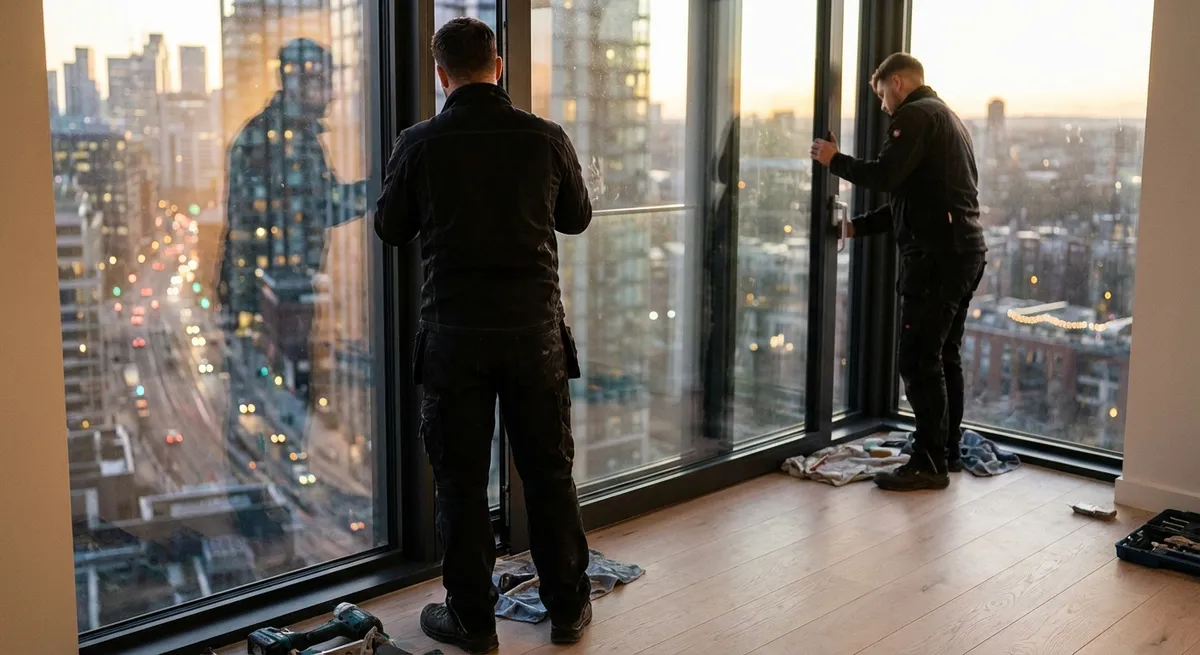
Elite installers treat each opening as a custom condition. They confirm plumb, level, and square not only with standard tools but also by checking sash operation, reveal lines, and compression of weatherstripping in real time. Advanced sealant strategies—combining backer rod, high-performance sealants, and properly lapped flashing—create a layered defense against air and water infiltration rather than a single line of caulk. Over time, this precision translates into fewer callbacks, more consistent interior comfort, and a stable acoustic environment, particularly important in urban or high-wind settings. While a casual observer may only notice the finished trim, connoisseurs understand that the real art lies behind the casing.
Material Transitions: Where Most Installations Quietly Fail
Where window, wall, and exterior cladding meet, building physics becomes both subtle and unforgiving. These transition zones are where many otherwise competent installations underperform. Moisture can collect, thermal bridges can form, and movement between dissimilar materials can strain seals if not carefully anticipated.
A refined installation strategy acknowledges that wood, metal, masonry, and composite claddings all respond differently to temperature and humidity. The best professionals specify flashing tapes and membranes compatible with the window frame material and surrounding substrates, and they ensure proper drainage paths so that any incidental moisture has a controlled way to escape. In insulated walls, they align the window’s thermal layer with the wall’s insulation plane, reducing cold spots and condensation risks. On high-end projects, installers will also coordinate with exterior façade specialists to maintain crisp, uninterrupted lines in stone, stucco, or premium siding, preventing the “patched-in” look that diminishes otherwise elegant architecture. The sophistication here lies in understanding that transitions are not edges—they are engineered relationships.
Five Exclusive Insights for the Discerning Homeowner
For homeowners who expect more than a basic replacement experience, these nuanced considerations can dramatically shape both the process and the result:
Request a Mock Opening on a Less-Conspicuous Window
Before allowing work on your most prominent elevation, ask the installation team to complete one window in a secondary space first. This “pilot opening” reveals how they protect finishes, manage dust, coordinate interior and exterior work, and handle trim and sealing details. It is an elegant way to assess quality without confrontation—simply refine expectations based on what you see.
Clarify Your Priority Hierarchy: Aesthetics, Performance, or Preservation
In complex homes—especially historic or architect-designed properties—there can be trade-offs between maintaining original profiles, maximizing energy performance, and minimizing disruption to interior finishes. Communicate which of these matters most in each room. A sophisticated installer can then tailor installation methods (insert-style, full-frame replacement, or hybrid approaches) to align with your hierarchy rather than applying a single method universally.
Insist on a Documented Air and Water Management Strategy
Instead of asking, “Will it be sealed properly?”, request a brief explanation—preferably in writing—of how air and water are intended to move at each opening. This should include flashing approach, sealant selection, and integration with existing or new weather barriers. Professionals who operate at a higher standard will be comfortable articulating this; generic answers are a subtle signal to probe further.
Consider Future Service Access During Installation Planning
Luxury windows often incorporate concealed hardware, integrated shades, or motorized elements. Ask how these systems will be serviced if something fails. Smart installers plan access points, removable trims, or discreet panels, so future adjustments or repairs don’t require invasive work to your interiors. This forethought is especially important when windows sit behind custom millwork or in tiled or stone-clad surrounds.
Time the Installation with Seasonal Realities, Not Just Schedules
While windows can technically be installed year-round, temperature, humidity, and wind conditions all influence sealant cure times, foam expansion, and job-site comfort. For significant projects, consider phasing work to avoid extreme conditions—scorching heat, driving winter wind, or persistent rain. An experienced installer will help sequence elevations and interior zones to minimize weather exposure and maintain a calm, controlled environment inside the home.
These insights are not about micromanaging the project; they are about engaging with it at the level of intention and detail that a sophisticated home deserves.
Crafting a Low-Drama, High-Control Installation Experience
Refined homeowners often care as much about the experience of the installation as they do about the technical outcome. A well-run project feels choreographed: clean entry paths, discrete staging areas, and a clear rhythm to each day’s work.
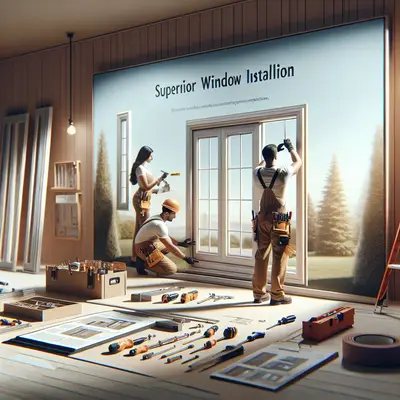
Premium installers typically begin with a pre-construction walkthrough to identify sensitive furnishings, artwork, and surfaces. They specify where protection will be placed, how debris will be managed, and how noise will be controlled—crucial in homes where people work, entertain, or have staff on-site. Inside, they may remove sashes before frames to reduce dust and vibration, and use HEPA-equipped vacuums to capture debris at the source. Outside, they plan ladder and scaffold placement to avoid landscaping or hardscape damage. The best teams leave not only clean glass but also a home that feels respected—no stray fasteners, no adhesive smudges, no forgotten caulk tubes tucked into flower beds.
When installation is approached with this level of care, the process ceases to feel like a construction project and begins to resemble a white-glove service engagement—precisely as it should for a substantial, long-term investment.
Conclusion
Window installation, at its highest standard, is quiet precision in service of a larger vision: a home that feels more composed, more comfortable, and more visually resolved. The frames, glass, and hardware you select are important, but it is the intelligence and discipline of the installation that determines whether those choices fulfill their promise.
For the discerning homeowner, the goal is not merely “new windows,” but an integrated upgrade that honors architecture, elevates everyday experience, and performs reliably for decades. When you engage with the installation phase as thoughtfully as you select the product, the result is not just a better view—it is a more refined way of living with light, comfort, and calm.
Sources
- U.S. Department of Energy – Window Installation Guidance – Overview of best practices for window integration, air sealing, and energy performance
- Efficient Windows Collaborative – Installation Considerations – Technical insights into how installation quality impacts energy efficiency and comfort
- Building America Solution Center (energy.gov) – Window and Door Installation Details – Detailed guidance on flashing, air barriers, and water management at window openings
- National Institute of Building Sciences – Whole Building Design Guide: Windows and Glazing – Architectural-level discussion of window integration, building physics, and façade performance
- Architectural Digest – What to Know Before Replacing Windows – Consumer-focused perspective on design, planning, and working with professionals on window projects
Key Takeaway
The most important thing to remember from this article is that this information can change how you think about Installation.