A true window upgrade is not merely about the glass or the frame—it is about how impeccably those elements are integrated into the architecture of your home. Installation is where theory meets craftsmanship, and where seemingly minor decisions quietly determine comfort, longevity, and the overall sense of refinement in a space. For discerning homeowners, understanding the nuances of installation is not a technical chore; it is a way to protect the integrity of a substantial investment and elevate the everyday experience of living with exceptional windows.
Below are five exclusive, often-overlooked insights that transform window installation from a standard service into a tailored, high‑performance upgrade.
1. Installation as a Tailored System, Not a Single Step
For premium projects, installation should be approached as a coordinated system of components—not a simple “remove and replace” exercise.
An elevated installation plan considers the interaction between the window, the wall assembly, and the building’s climate. That means evaluating existing framing conditions, vapor and air barriers, insulation continuity, and exterior cladding details before the first sash is removed. In many refined homes, walls may include layered materials—brick veneer, stone, stucco, or specialized rainscreens—that demand a custom integration strategy.
This system-level thinking changes key decisions: whether to use full-frame versus insert replacements, which fastening methods preserve structural integrity, and how to align the window within the wall’s insulation layer for optimal thermal and acoustic performance. A thoughtful installer will choreograph all of this long before delivery day, ensuring your home receives a solution designed specifically for its architecture, not just its rough openings.
2. Air and Water Management: The Invisible Luxury
True luxury in window performance is often inaudible and invisible: no drafts, no hidden leaks, no subtle dampness in wall cavities. That level of quiet reliability is only achieved when air and water management are treated as central design elements of the installation.
Expert teams look beyond the window’s factory rating and focus on how the unit interfaces with your building envelope. This includes strategic use of high-performance flashing tapes, pan flashing or slope sills to direct incidental water outward, and carefully sequenced installation of membranes or sealants that preserve continuous air and weather barriers. The objective is not simply “sealed” windows, but intelligently drained and ventilated assemblies that manage moisture rather than trap it.
In high-end homes with complex façades or large expanses of glass, this becomes even more critical. A properly detailed installation preserves your cladding, safeguards insulation, and dramatically reduces the risk of future rot or mold—all while quietly protecting the refined finishes and furnishings inside.
3. Precision Tolerances: Why Millimeters Matter
A window can be exquisitely designed and still perform poorly if it is not installed within tight tolerances. In premium installations, alignment is treated with the same rigor as custom cabinetry or fine millwork.
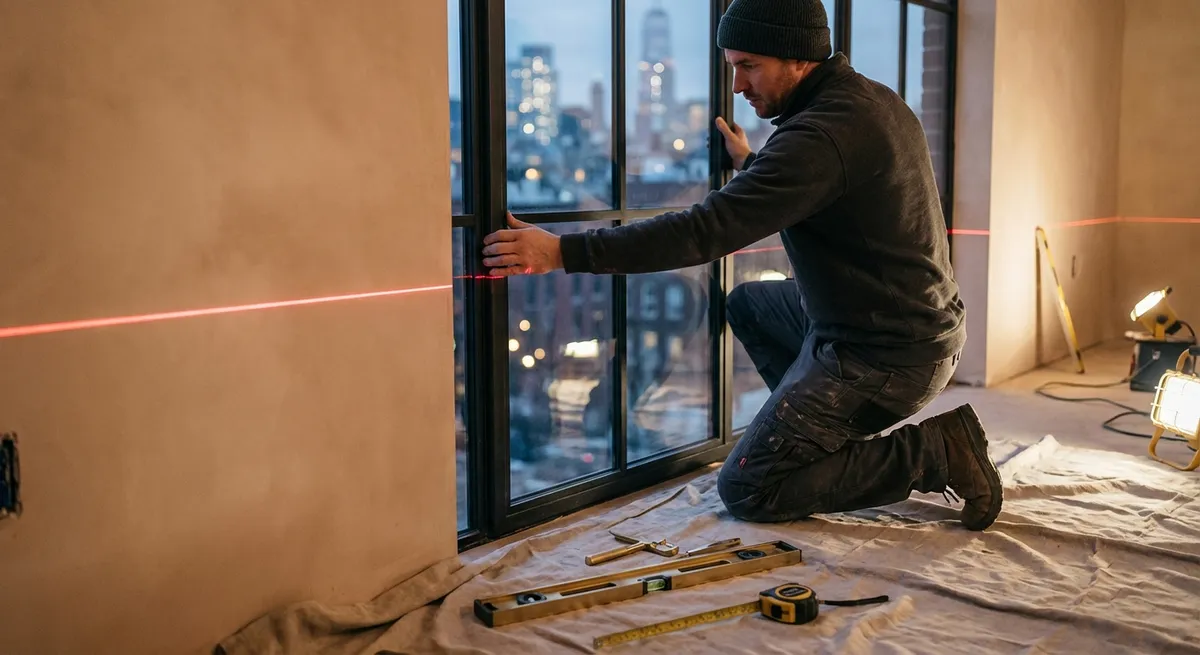
This begins with how the openings are prepared: ensuring plumb, level, and square conditions, verifying structural support for larger units, and addressing any irregularities in older walls before the window is even positioned. Once in place, expert installers fine-tune shimming so that the frame is evenly supported without distortion, allowing sashes to operate smoothly and locks to engage with a satisfying precision.
These seemingly small adjustments influence a host of premium attributes: the feel of the hardware, the effectiveness of compression seals, the uniformity of sightlines, and the performance of multi-point locking systems. In refined projects, millimeters are the difference between “installed” and “flawlessly integrated.”
4. Curated Materials: Beyond Standard Foam and Caulk
Sophisticated homeowners often focus on visible finishes, yet the concealed materials used during installation quietly determine long-term performance. High-caliber installations curate these materials with the same discernment applied to window selection itself.
Instead of generic expanding foams that can over-pressurize frames, premium projects frequently employ low-expansion, window-specific foams or carefully packed mineral wool for stable, non-shrinking insulation. Sealants are chosen not just for color, but for compatibility with both the window material and surrounding cladding, UV stability, and flexibility over time.
On the exterior, layered flashing systems and high-performance tapes are selected to work within the wall’s overall moisture strategy—whether your home favors a traditional, tight envelope or a ventilated façade. Inside, the junction between trim, wall, and frame is detailed so that any future movement is controlled, graceful, and unlikely to crack or gap. The result is a window assembly that ages elegantly, rather than revealing its compromises after the first few seasons.
5. Installation as a Documented, Serviceable Investment
The most sophisticated window installations are not only flawless on day one—they are documented and future-ready. This mindset treats installation as an asset with a clear service history, not a one-time transaction.
A premium installer will often provide a detailed record of products used, fastening patterns for large or structural units, flashing methods, and any custom detailing applied to your project. This documentation becomes invaluable if you ever update cladding, add exterior shading systems, or undertake a remodel involving the same wall assemblies.
It also strengthens your position with manufacturer and installer warranties, ensuring that any future concerns can be evaluated against a clear record of how the windows were integrated. For homes with significant architectural or financial value, this disciplined approach turns window installation into a traceable, maintainable component of the property’s overall performance portfolio.
Conclusion
Exceptional windows deserve exceptional installation. For homeowners who value quiet comfort, architectural integrity, and long-term resilience, the true benchmark is not just how a window looks today, but how discreetly and reliably it serves the home for decades. By insisting on system-level thinking, robust air and water management, precision tolerances, curated materials, and thorough documentation, you transform a standard upgrade into a bespoke installation experience—one that aligns with the caliber of the home it is meant to enhance.
Sources
- U.S. Department of Energy – Window Types and Technologies - Overview of window technologies and performance considerations relevant to installation decisions
- Efficient Window Coverings & Attachments – U.S. Department of Energy - Discusses envelope and window performance, providing context for installation strategies that preserve efficiency
- American Society for Testing and Materials (ASTM) – E2112 Standard Practice for Installation of Exterior Windows, Doors and Skylights - Industry-recognized standard outlining best practices for high-quality installation
- Building America Solution Center – Installed Window Performance - Technical guidance from the U.S. Department of Energy’s Building America program on proper window installation and integration with the building envelope
- FGIA (Fenestration & Glazing Industry Alliance) - Industry organization offering guidelines, research, and best practices for fenestration products and their installation
Key Takeaway
The most important thing to remember from this article is that this information can change how you think about Installation.