In a refined home, windows are not merely apertures; they are instruments of light, temperature, and tranquility. Yet even the most exquisite glazing and frames can underperform—sometimes dramatically—if the installation is anything less than meticulous. For homeowners pursuing truly elevated window upgrades, the distinction between a competent installation and a consummate one is where luxury is either realized or quietly undermined.
This guide explores the subtleties of high-end window installation, revealing five exclusive insights that discerning homeowners can use to orchestrate results worthy of their investment.
Installation as Performance Engineering, Not Just Fitting
In premium projects, thinking of installation as “putting new windows in the openings” is far too reductive. A sophisticated approach treats each window as part of a performance system—acoustic, thermal, structural, and aesthetic.
Elite installers will:
- Map the building envelope, identifying where air and moisture are most likely to infiltrate
- Consider prevailing winds, solar exposure, and microclimate when choosing sealants, flashing, and insulating materials
- Calibrate reveals and margins for both visual symmetry and thermal control, not merely “getting it to fit”
- Integrate each unit into the larger façade strategy, often coordinating with architects, HVAC consultants, and lighting designers
When you interview installers, listen for language that suggests systems thinking—thermal bridging, pressure equalization, air tightness tests—rather than generic promises of “tight seals” and “quality work.”
The Quiet Luxury of a Flawless Air and Water Barrier
In high-end window installation, the unseen layers are often the most luxurious. A meticulously detailed air and water barrier doesn’t call attention to itself, yet it underpins comfort, silence, and durability.
Sophisticated practice goes far beyond a bead of caulk around the frame. It may include:
- Fully integrated flashing systems that tie into the wall’s weather-resistive barrier, not just the window perimeter
- Sealant choices tailored to substrate material (masonry, wood, fiber cement, or metal cladding) and local climate
- Backer rods and multi-stage seals that control joint movement and preserve elasticity over decades
- Redundancy: multiple layers of defense so that if one element fails, others continue to protect the envelope
Ask your installer how they plan to interface the window with the wall assembly, not just the window with the trim. Their answer should reference building science—not just “we’ve always done it this way.”
Tailored Tolerances: Why Millimeters Matter in Premium Homes
In a sophisticated residence, details are orchestrated, not improvised. Nowhere is this more evident than in how tolerances are handled around windows. Millimeters can determine whether a sleek frame reads as intentional or slightly off, whether hardware aligns crisply or feels subtly mis-set.
Discerning installers will:
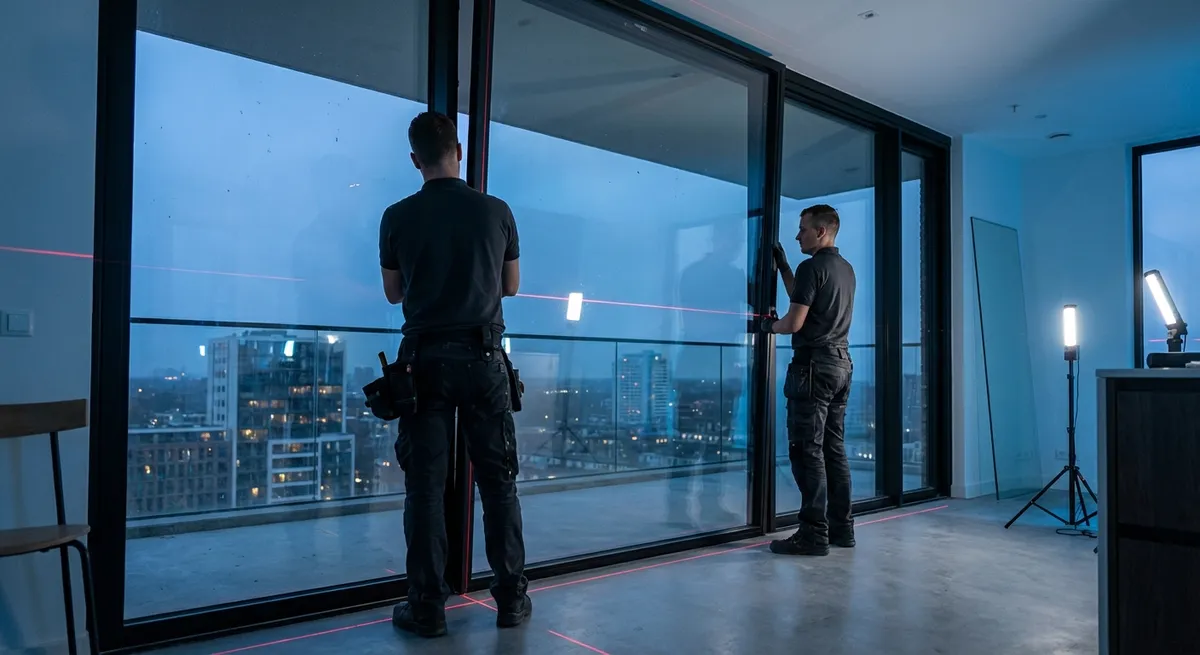
- Use laser levels and digital measuring tools for precision in plumb, level, and square
- Account for material movement (timber, steel, and composite cladding all behave differently seasonally)
- Plan for consistent reveal lines around casings and sills, so every room reads visually disciplined
- Coordinate with interior finishes—plaster, paneling, stone—to avoid “patchwork” adjustments after the fact
You can request a mock-up or a “control window” for complex projects: one window installed early and finished completely, to set visual and technical standards for the rest of the home.
Acoustic Refinement: Installation as a Sound-Management Tool
For many luxury homeowners, calm is a primary objective—and windows are often the weakest point in the acoustic shell of a property. High-spec glass alone is insufficient if the installation leaves minute air paths or uses the wrong companion materials.
Premium acoustic performance depends on:
- Carefully sealed joints using materials with appropriate density and elasticity to damp vibration
- Avoidance of rigid, continuous connections between the window frame and structural elements that can transmit sound
- Thoughtful use of insulating materials in the cavity around the window perimeter—often mineral wool or specialized acoustic insulation, rather than generic fiberglass
- Optional acoustic testing: some high-end projects employ on-site sound measurements pre- and post-installation
If peace and quiet are high on your list, ask your installer specifically how they address flanking noise (sound traveling around, not just through, the window) and what materials they favor for acoustic integrity.
Orchestrated Scheduling: Protecting Craftsmanship from Construction Chaos
Even the most elegant installation plan can be compromised by poor coordination. Luxury outcomes depend as much on timing and sequencing as on products and skill.
A refined installation schedule will:
- Avoid installing windows too early, when heavy trades and rough handling risk damaging frames or glass
- Ensure that the building is appropriately dried-in before delicate finishes, seals, and interior trims are applied
- Coordinate closely with façade work so flashing, cladding, and trim are integrated—not improvised in the field
- Build in weather contingencies for climates prone to sudden storms or temperature swings, which can affect curing times for sealants and adhesives
When reviewing proposals, look beyond the start date and completion date. Ask for phasing: which elevations first, how they will protect units from subsequent trades, and how they will verify performance (air leakage, operation, finish condition) before signing off.
Conclusion
In a truly elevated home, windows are not afterthoughts—they are architectural events. Achieving that level of refinement demands that installation be treated not as a commodity service, but as a disciplined craft grounded in building science and aesthetic rigor.
By focusing on performance engineering rather than simple fitting, insisting on meticulous air and water control, demanding precise tolerances, tuning for acoustic calm, and coordinating installation within the broader construction choreography, homeowners can ensure their investment yields not just new windows, but a transformed living experience.
In the end, the most impressive installations are the ones that disappear—leaving only quiet, comfort, and beautifully framed light.
Sources
- [U.S. Department of Energy – Energy-Efficient Windows](https://www.energy.gov/energysaver/design/windows-doors-and-skylights) - Overview of window performance, installation considerations, and energy impacts
- [Efficient Windows Collaborative (now part of the National Fenestration Rating Council)](https://www.efficientwindows.org/installation.php) - Guidance on proper window installation practices and their influence on performance
- [U.S. Environmental Protection Agency – ENERGY STAR Windows, Doors & Skylights](https://www.energystar.gov/products/building_products/residential_windows_doors_and_skylights) - Criteria for high-performance windows and the role of proper installation
- [Building Science Corporation – Window Installation Details](https://buildingscience.com/documents/digests/bsd-129-window-installation) - Technical insight into flashing, water management, and integration with the building envelope
- [American Architectural Manufacturers Association (FGIA) – InstallationMasters Program](https://fgiaonline.org/education/installationmasters) - Industry training and standards for high-quality window and door installation
Key Takeaway
The most important thing to remember from this article is that this information can change how you think about Installation.