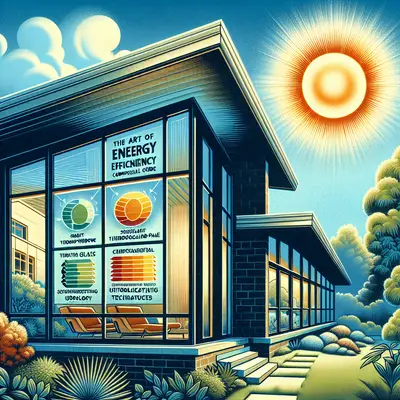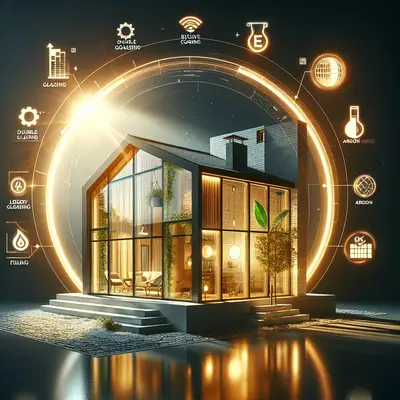
The most luxurious homes today are not defined solely by their finishes, but by how quietly and intelligently they perform. Nowhere is this more evident than in the glass that frames your world. Thoughtful window upgrades can transform a home from merely attractive to exquisitely efficient—reducing energy use, softening acoustic intrusion, and curating light with the same care you might apply to art or furnishings. For homeowners who expect their spaces to feel composed in every season, energy-efficient windows are less an upgrade and more a foundational design decision.
Below are five exclusive, often-overlooked insights that discerning homeowners appreciate when curating truly exceptional window solutions.
1. Daylight as a Performance Asset, Not Just a Design Feature
Most discussions of energy-efficient windows focus on U-factor and solar heat gain, but sophisticated homes treat daylight itself as a performance asset. Properly specified glazing can substantially reduce reliance on artificial lighting—often one of the largest contributors to a home’s energy profile—while preserving visual comfort and privacy.
High-performance low-E coatings, paired with well-considered visible transmittance (VT), allow you to invite in generous daylight without introducing glare or excessive heat. In north-facing rooms, higher VT glass preserves luminous, gallery-like spaces where artwork and fine finishes can be appreciated in natural light. To the south and west, more selective coatings can tame intense sun, keeping interiors cool while still allowing a gentle wash of daylight over surfaces.
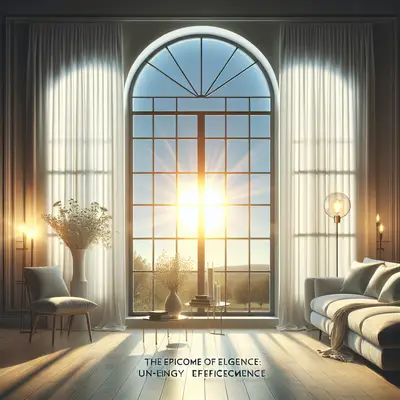
The result is a home that feels naturally illuminated from dawn to dusk—fewer lamps switched on, fewer blinds perpetually drawn, and a more composed interplay between architecture and sun. In a refined residence, light isn’t simply “let in”; it is curated.
2. Thermal Comfort as a Subtle Luxury
Energy efficiency is often framed in kilowatt-hours and utility bills, but the more tangible luxury is thermal serenity—the sensation that every room feels quietly “settled” in any season. High-performance windows with low U-factors and advanced spacers between panes dramatically reduce the cold downdrafts and hot perimeters that plague older glazing.
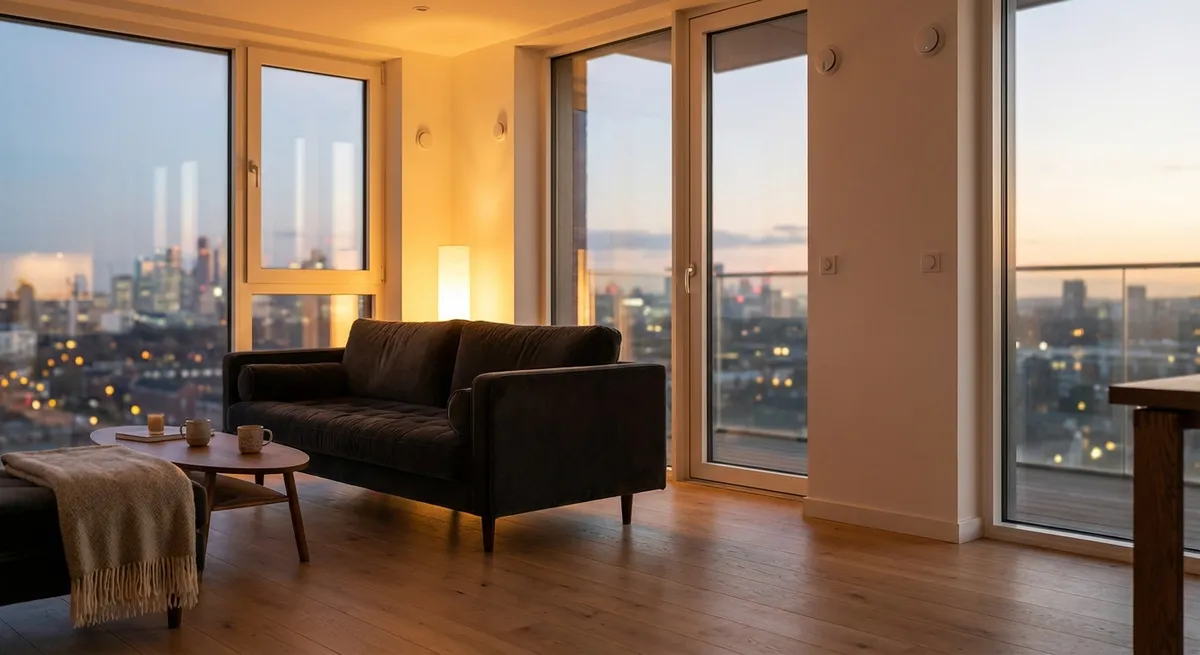
Triple-pane units or expertly engineered double-pane systems help maintain more stable interior glass temperatures, which in turn moderates the temperature of nearby furnishings, floors, and even the air envelope around seating areas. The effect is less perceptible as technology and more as a feeling: no chilly corner near the bay window, no hot seat beside the afternoon sun, no “avoid this chair in January” compromises.
For homeowners who invest in curated interiors—fine textiles, artisanal finishes, museum-quality rugs—this stability is not merely comfort, but preservation. Sensitive materials experience fewer thermal extremes, supporting their longevity and appearance over time.
3. Silent Synergy: When Glazing and HVAC Design Work Together
Advanced windows can significantly alter how a home’s mechanical systems should be conceived. Yet in many projects, glazing and HVAC are designed in parallel, not in concert. The refined approach treats high-efficiency windows as part of a holistic performance strategy, where their insulating and solar-control properties allow for more elegant—and often quieter—mechanical solutions.
Lower heating and cooling loads, achieved through superior window performance, can justify smaller, more carefully zoned systems. Radiant floors, high-efficiency heat pumps, or low-profile air distribution can be specified with greater precision when solar gain and envelope losses are properly controlled. This often leads to equipment that operates at lower speeds, with cleaner lines, less intrusive ductwork, and a more discreet acoustic presence.
The synergy is twofold: your premium windows are allowed to demonstrate their full value through downsized, refined mechanical systems, and your mechanical design becomes visually and aurally quieter, allowing architecture and interiors to remain the focus.
4. The Invisible Economics of Long-Horizon Choice
At the premium end of the market, the question is rarely “What is the lowest cost window?” but rather “What is the most intelligent long-horizon investment for this property?” High-efficiency windows typically cost more at the outset, but over 20–30 years, their financial and experiential returns can be remarkable.
Beyond obvious energy savings, these windows can:
- Protect interior finishes from UV damage, preserving flooring, textiles, and artwork.
- Enhance resale desirability for increasingly sustainability-conscious buyers.
- Reduce maintenance on HVAC equipment that no longer needs to fight extreme gains and losses.
- Support future electrification or net-zero ambitions by lowering overall demand.
For estate properties, second homes, and architect-led residences, the “payback” discussion is often too narrow. It is more accurate to think in terms of total cost of ownership and quality of ownership: a smaller energy footprint, quieter interiors, longer-lasting finishes, and a home that remains competitive and current even as standards for performance continue to rise.
5. Tailored Glazing Strategies for Distinct Rooms and Viewscapes
The most refined window designs resist the temptation to treat all elevations—and all rooms—as identical. Instead, they adopt a tailored glazing strategy that reflects orientation, function, and the quality of each view. Energy efficiency becomes part of a larger choreography between performance and experience.
For a library or study, glass with superior thermal performance and modest solar gain may be prioritized to maintain a calm, steady environment for reading and contemplation. A bathing suite that overlooks a private garden might use highly efficient, privacy-enhancing glass with sophisticated coatings that preserve a spa-like feel while guarding against humidity and condensation issues.
Public entertainment spaces—great rooms, dining areas, salons—may employ more expansive, high-performance glass with selective coatings, creating a sense of connection to the landscape without sacrificing comfort or energy discipline. Upstairs bedrooms facing east could use glazing that softens morning sun while ensuring the room remains tranquil and temperate late into the day.
This zoned approach to glazing acknowledges that windows are not just thermal devices; they are instruments of mood, ritual, and daily experience. Thoughtful specification allows each room to feel intentionally composed, both aesthetically and energetically.
Conclusion
Energy-efficient windows are no longer a purely technical upgrade; they are an essential element of contemporary luxury. When approached with intention, they do far more than reduce bills: they refine light, quiet mechanical noise, stabilize comfort, safeguard interiors, and align your home with the expectations of a more discerning, sustainability-aware future.
For homeowners who see their residence as a long-term, evolving asset—not just financially, but experientially—high-performance glazing offers a rare combination of discretion and impact. The technology hides within slim profiles and clear expanses of glass, but its presence is felt in every room that simply feels right, in every season, for years to come.
Sources
- [U.S. Department of Energy – Energy-Efficient Windows](https://www.energy.gov/energysaver/energy-efficient-windows) – Overview of window performance metrics, glazing options, and efficiency fundamentals.
- [Efficient Windows Collaborative (U.S. DOE / NFRC)](https://www.efficientwindows.org/) – Detailed guidance on window ratings, climate-appropriate choices, and design considerations.
- [ENERGY STAR – Residential Windows, Doors and Skylights](https://www.energystar.gov/products/residential_windows_doors_and_skylights) – Criteria and benefits for high-performance, certified window products.
- [Lawrence Berkeley National Laboratory – Windows and Daylighting](https://windows.lbl.gov/) – Research-based insights into window technologies, daylighting, and building performance.
- [National Renewable Energy Laboratory – Advanced Windows](https://www.nrel.gov/buildings/advanced-windows.html) – Technical background on advanced glazing systems and their impact on building energy use.
Key Takeaway
The most important thing to remember from this article is that this information can change how you think about Energy Efficiency.