Energy efficiency is no longer a backstage utility concern; in a well-appointed home, it is part of the aesthetic vocabulary. The right windows do more than conserve energy—they choreograph light, regulate comfort, and protect interiors while quietly reducing operating costs. For homeowners who view their residence as a curated environment rather than a mere structure, energy-efficient glazing is a discreet yet powerful instrument of refinement.
Below are five exclusive, often-overlooked insights that help translate “efficient windows” from a technical checkbox into a deliberate design decision worthy of a distinguished home.
1. Reading the Glass: Decoding Performance Labels Like a Connoisseur
Many homeowners glance at window stickers without truly interpreting them. In a premium residence, that label is a performance dossier, not a formality.
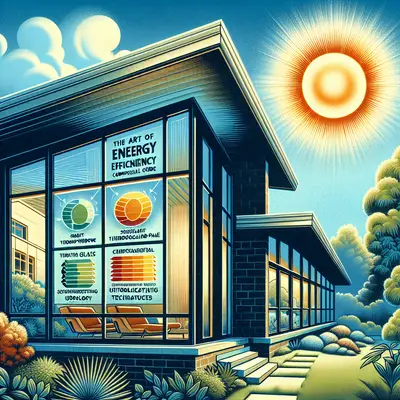
U-Factor quantifies how readily a window conducts heat—the lower the number, the better the insulation. In colder climates, elite performance typically falls at or below 0.27; in milder regions you may prioritize other attributes, but an unnecessarily high U-Factor will quietly inflate heating costs. Solar Heat Gain Coefficient (SHGC), by contrast, measures how much solar radiation penetrates as heat. A low SHGC can be invaluable for sun-exposed façades in hot climates, preserving comfort and fabric integrity, while a more moderate SHGC may be desirable in northern exposures to capture passive winter warmth.
Visible Transmittance (VT) is especially crucial in high-end environments where daylight quality matters as much as energy savings. A window with a thoughtful low-E coating can deliver a high VT—clear, elegant daylight—without the harsh heat load of untreated glass. Finally, Air Leakage and Condensation Resistance ratings offer subtle but consequential clues to build quality and long-term clarity. When read together, these metrics allow you to select windows not only for efficiency, but for how precisely they will support your home’s comfort, mood, and maintenance profile.
2. Strategic Orientation: Designing a Microclimate Around Each Elevation
Energy efficiency becomes genuinely elevated when window performance is matched to each façade, not treated as a one-size-fits-all decision. The same glass that is superb for a sun-soaked south elevation may be suboptimal on a shaded north wall.
On south- and west-facing elevations, where afternoon sun can be intense, pairing low-SHGC glass with exterior shading strategies—overhangs, deep reveals, or architectural fins—creates a controlled solar aperture. This allows for luminous interiors without the thermal penalty of full exposure. On east-facing windows, where the morning sun is gentler, a more balanced SHGC can warm spaces without overtaxing cooling systems.
For north-facing façades, where direct solar gain is limited, prioritize low U-Factor and high VT to maintain crisp, generous daylight in a thermally stable envelope. In homes with dramatic glazing, such as double-height living rooms or gallery corridors, specifying different IGU (insulated glass unit) makeups by orientation—while keeping frames visually consistent—yields a tailored “microclimate” that feels naturally comfortable in every room, at every hour.
3. Invisible Layers of Protection: Low-E, Spectrally Selective, and Beyond
To the untrained eye, high-performance glass appears simply clear. In reality, the surfaces of an elite insulated glass unit can host ultra-thin metallic coatings, gas fills, and spacers that together define the character of your interior environment.
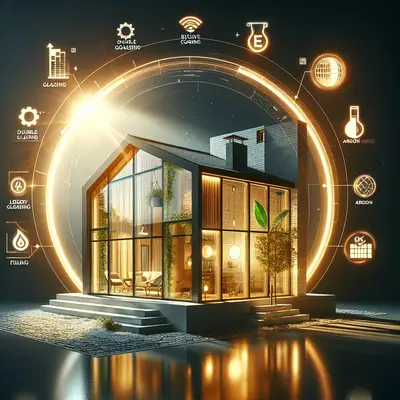
Low-emissivity (low-E) coatings are the foundation: they reflect long-wave infrared energy while allowing light to pass, keeping warmth inside during winter and outside in summer. More advanced spectrally selective coatings refine this further by filtering portions of the solar spectrum—blocking heat and UV while maintaining a bright, neutral color rendering. This keeps artwork, textiles, and wood finishes from fading, preserving the visual integrity of your interiors over decades.
Argon or krypton gas fills occupy the cavity between panes, slowing heat transfer far more effectively than air. Warm-edge spacers, often overlooked, reduce thermal bridging at the glass perimeter, minimizing edge condensation—a subtle but important detail in homes with dark-stained wood or luxurious wall finishes near windows. The elegance here lies in what is not seen: a serene interior climate, unspoiled furnishings, and glass that performs with quiet precision regardless of the season.
4. Frame as Architecture: Materials That Refine Both Form and Performance
In a sophisticated home, the frame is not merely a border for glass; it is a tactile object, a design gesture, and a thermal component. Different frame materials carry distinct energy profiles—and distinct aesthetic narratives.
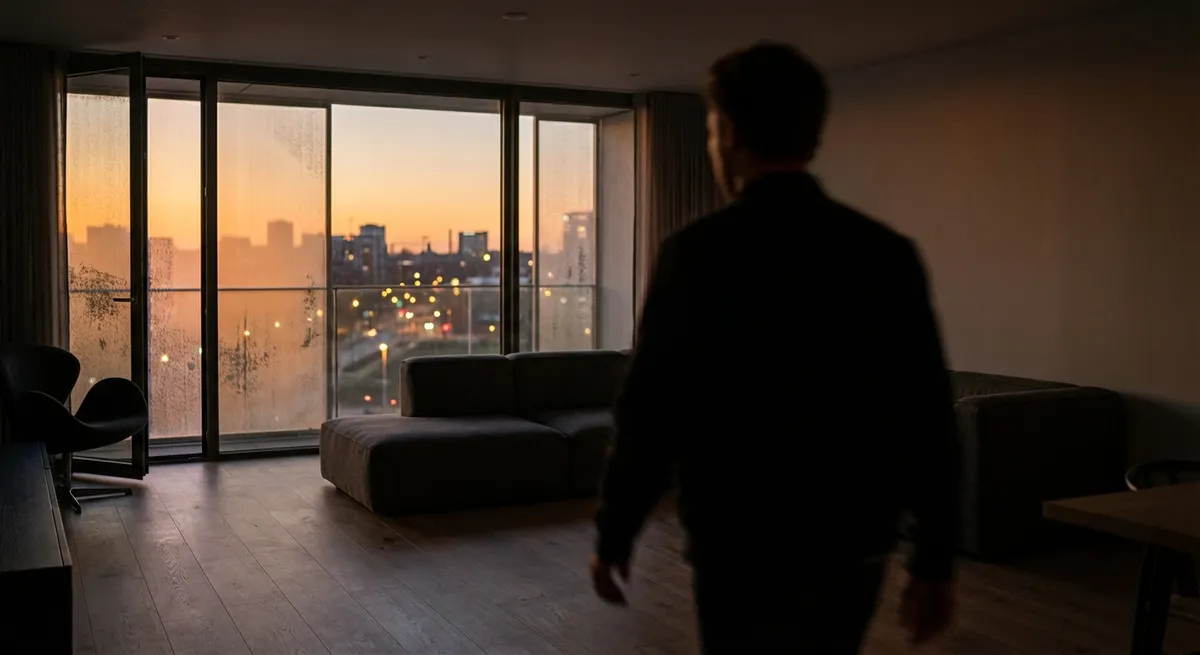
Thermally broken aluminum allows for ultrathin, modern profiles while inserting an insulating barrier between interior and exterior metal, dramatically reducing heat transfer. This makes it possible to achieve gallery-level minimalism without accepting the condensation and discomfort common to older metal frames. Fiberglass frames, dimensionally stable and inherently insulative, perform exceptionally in climates with extremes of heat and cold, maintaining alignment and weathersealing over time.
Wood, still the benchmark for many luxury homes, can be combined with aluminum cladding on the exterior to protect against weather while preserving rich interior grain. High-performance vinyl, in carefully engineered formulations, can also deliver robust thermal performance for secondary spaces or auxiliary structures, especially when reinforced and paired with quality hardware. By viewing the frame as both a design element and a thermal control surface, you can select materials that harmonize with your architecture while meaningfully reducing energy loss at the very edges of each opening.
5. Beyond Replacement: Layering Treatments for a Holistic Efficiency Strategy
Energy efficiency is not confined to the glass plane alone. The finest window strategies treat the opening as a complete assembly—glass, frame, air sealing, and layered shading—each component contributing to comfort and control.
Interior treatments, from lined draperies to cellular shades, can offer significant additional insulation, particularly at night in colder climates. Motorized shades integrated with smart controls can respond to sun position, temperature, or occupancy, subtly modulating solar gain throughout the day without constant manual adjustment. On the exterior, architectural shading—pergolas, brise-soleil, deep balconies—filters the most aggressive sunlight before it ever reaches the glass.
Attention to air sealing is equally essential: meticulously installed gaskets, quality weatherstripping, and properly flashed openings prevent drafts that can undermine even the best glass. Finally, consider integrating your window strategy with whole-home systems: modern HVAC, balanced ventilation, and intelligent thermostats. When windows are specified as part of an orchestrated building envelope, rather than as isolated components, the result is an interior that feels naturally temperate, acoustically calm, and visually composed—with energy savings woven seamlessly into the experience.
Conclusion
For the discerning homeowner, energy-efficient windows are not simply a green upgrade; they are a refinement of how the home lives, feels, and endures. By learning to read performance metrics with nuance, tailoring glazing to orientation, leveraging advanced coatings and gas fills, elevating frame choices, and layering complementary treatments, you transform each opening into a calibrated instrument of comfort and efficiency.
The outcome is subtle yet unmistakable: rooms that hold their temperature with ease, fabrics that age gracefully, daylight that flatters architecture and art, and an energy profile that respects both the environment and the long-term value of the estate. In this context, energy efficiency is not a compromise—it is an extension of luxury.
Sources
- ENERGY STAR – Energy Efficient Windows - U.S. EPA guidance on window performance ratings, climate-specific recommendations, and labeling
- U.S. Department of Energy – Efficient Windows - In-depth overview of U-Factor, SHGC, gas fills, frames, and orientation strategies
- Efficient Windows Collaborative (Alliance to Save Energy) - Technical resources on window selection, climate considerations, and performance comparisons
- Lawrence Berkeley National Laboratory – Windows and Daylighting - Research on advanced glazing, spectrally selective coatings, and building envelope performance
- National Renewable Energy Laboratory – High-Performance Windows - Research insights into next-generation window technologies and their impact on building efficiency
Key Takeaway
The most important thing to remember from this article is that this information can change how you think about Energy Efficiency.