For discerning homeowners, energy efficiency is no longer a checkbox—it is a quiet standard of living. Windows, once treated as mere openings in a wall, now operate as precision instruments that regulate light, temperature, and acoustics. When approached thoughtfully, a window upgrade can transform your home into a more composed, efficient, and effortless environment—where comfort feels continuous rather than conditional.
Below, you’ll find five exclusive, often-overlooked insights that reframe energy-efficient windows as part of a curated performance system, not just a product purchase.
Reframing “Energy Efficient” Windows as Climate Control Instruments
Most homeowners are familiar with double glazing, basic ENERGY STAR labels, and generic “low-E” coatings. But refined window performance begins with understanding that each unit acts as a calibrated climate control instrument, tuned to your region, your façade orientation, and even your daily rhythms.
High-performance glazing strategically balances three key forces: solar heat gain, conductive heat transfer, and air leakage. Rather than chasing the “best” window in the abstract, sophisticated homeowners work with U-factor, Solar Heat Gain Coefficient (SHGC), and visible transmittance (VT) as levers that can be adjusted. On a south-facing elevation in a cold climate, a higher SHGC may be a deliberate choice to harvest winter sun; on west-facing glass in a hot climate, a low SHGC is a shield against late-day overheating and air-conditioning strain.
When you begin to think of windows as precision devices that choreograph light and temperature—not just “good” or “better”—you unlock a level of comfort that feels tailored rather than generic.
Exclusive Insight 1: Spectrally Selective Coatings as Invisible Climate Tuning
Low-E coatings are now standard; spectrally selective coatings are the connoisseur’s upgrade. Rather than simply reflecting heat, these advanced coatings discriminate, allowing in generous visible light while filtering out a disproportionate share of infrared heat. The result is a room that feels luminous, not glaring; temperate, not stuffy.
Unlike heavy tinting, which can flatten interiors and distort color, spectrally selective glass preserves clarity and the integrity of natural daylight. In practice, this means:
- Bright, usable daylight with reduced dependence on artificial lighting
- Cooler interiors under strong sun exposure without resorting to blackout shades
- Less fading of textiles, artwork, and hardwood floors due to reduced UV transmission
For homeowners who invest thoughtfully in furnishings, art, and finishes, this glazing quietly protects those choices while maintaining a refined visual atmosphere. It’s an architecturally discreet solution that elevates both energy performance and aesthetic fidelity.
Exclusive Insight 2: Orientation-Specific Glazing for a Composed Interior Climate
A truly premium window strategy rarely chooses one glass specification for the entire home. Instead, it recognizes that east, south, west, and north exposures experience radically different light and heat profiles—and responds accordingly.
South-facing windows in temperate or cold climates can be specified with glazing that invites winter solar gain, subtly reducing heating loads. West-facing glass, often the culprit in late-afternoon overheating, benefits from more aggressive solar control to keep indoor temperatures stable and to protect finishes from harsh, low-angle light. North-facing windows, which receive softer, indirect light, may prioritize higher visible transmittance to create bright, gallery-like interiors without additional thermal penalty.
By varying SHGC and VT by façade—while maintaining a consistent frame aesthetic—you achieve an interior that feels evenly comfortable throughout the day, rather than oscillating between hot spots and chilled corners. This level of tuning is a hallmark of homes where performance and poise are equally prioritized.
Exclusive Insight 3: Thermal Breaks and Frame Composition as the Silent Performance Edge
Glazing often receives most of the attention, but frame construction is where many premium homes either underperform or truly excel. Aluminum frames, while visually sleek, are highly conductive; without a well-engineered thermal break, they can undermine the most advanced glass.
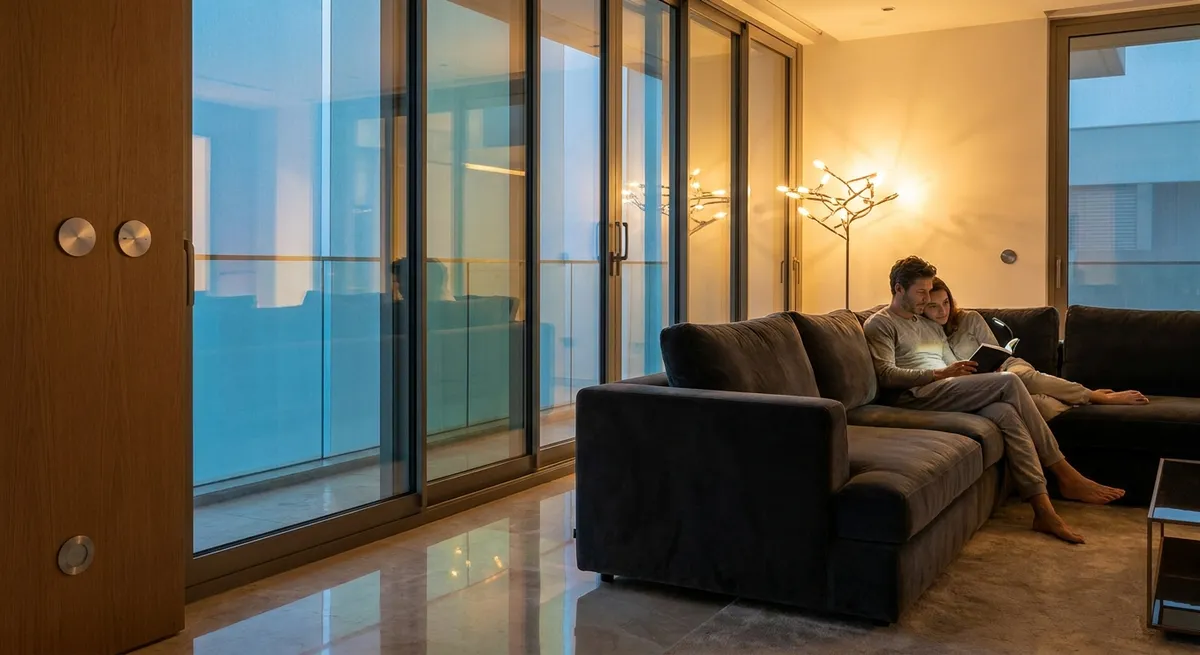
Thermally broken aluminum, fiberglass, and high-quality composite frames use internal insulating sections to interrupt heat flow. This quiet detail has visible consequences: fewer cold drafts near windows, less condensation along edges, and more comfortable seating arrangements near large expanses of glass. In cold climates especially, a properly insulated frame reduces surface temperature differentials that can create a subtle but persistent sense of discomfort.
For large architectural windows and expansive glass walls, insist on frame systems that publish clear performance metrics—not just aesthetic claims. In well-designed systems, the frame is an ally, not a liability, in your overall energy strategy.
Exclusive Insight 4: Dynamic Shading and Glazing as a Responsive System, Not a Static Choice
Static windows, no matter how advanced, are always a compromise between seasons and times of day. The next tier of energy-aware refinement embraces responsiveness: integrating either dynamic glazing or thoughtfully orchestrated shading into the window strategy.
Electrochromic or “tunable” glass can darken in response to sun exposure, reducing cooling loads and glare without obstructing views. While still a premium investment, it can be particularly compelling for large south- and west-facing elevations with minimal overhangs. Alternatively, when combined with architecturally integrated exterior shading (such as brise-soleil, deep overhangs, or automated louvers), standard high-performance glass can behave almost like a living system—adapting as the sun moves.
The true sophistication lies not just in any one technology but in coordination: glazing specifications, shading devices, and interior treatments working together so that comfort remains constant even as exterior conditions shift.
Exclusive Insight 5: Daylight Quality as a Quiet Energy Asset
Energy efficiency discussions often focus narrowly on heating and cooling loads. A more holistic perspective recognizes that superior daylight quality can meaningfully reduce lighting energy while enhancing wellbeing and perceived luxury.
High-performance windows with carefully chosen VT values, minimal visual distortion, and thoughtfully managed glare make rooms feel naturally “complete” during daytime hours. Occupants intuitively use artificial lighting less when spaces feel evenly and comfortably lit. In premium designs, this often means:
- Higher VT on north and shaded elevations for soft, diffuse light
- Slightly lower VT or more selective coatings where direct sun is intense
- Frame profiles and mullion patterns that preserve daylight penetration rather than fragment it
The outcome is a home that feels calmly illuminated rather than intermittently bright. This nuanced daylight management is an energy decision wrapped inside an aesthetic one, reinforcing the idea that efficiency and elegance are not competing values but intertwined.
Conclusion
Energy-efficient windows are no longer about simply “tightening the envelope.” For homeowners with a refined eye and a long-term perspective, they are an opportunity to choreograph comfort, light, and quiet with precision. By looking beyond simplistic labels and embracing spectrally selective coatings, orientation-specific glazing, thermally sophisticated frames, dynamic shading strategies, and curated daylight quality, you transform windows into a coherent performance system.
The result is a home that feels consistently composed—cool without harshness, warm without stuffiness, bright without glare. In this context, energy efficiency is not a sacrifice; it is an upgrade in how your home behaves, feels, and quietly supports the way you live every day.
Sources
- U.S. Department of Energy – Energy-Efficient Windows - Authoritative overview of window performance metrics, glazing, and frame technologies
- Efficient Windows Collaborative – Window Selection Guidance - Detailed guidance on choosing windows by climate, orientation, and performance rating
- Lawrence Berkeley National Laboratory – Windows & Daylighting - Research-based insights on advanced glazing, spectrally selective coatings, and daylight performance
- ENERGY STAR – Residential Windows, Doors, and Skylights - Federal efficiency criteria and labeling information for high-performance windows
- National Renewable Energy Laboratory – Dynamic Glass Technologies - Technical overview of electrochromic and dynamic glazing and their energy impacts
Key Takeaway
The most important thing to remember from this article is that this information can change how you think about Energy Efficiency.