There is a particular kind of luxury that never announces itself with logos or ornament. It is the quiet assurance of a home that holds its temperature, softens exterior noise, and welcomes daylight without sacrificing comfort. For discerning homeowners, windows are no longer simply openings in a wall; they are precision instruments of energy performance, visual clarity, and long-term value. When approached thoughtfully, a window upgrade becomes less a renovation and more a refinement of how your home lives, breathes, and feels—season after season.
Below are five exclusive, often-overlooked insights that matter profoundly when energy efficiency is as important as aesthetics.
1. Beyond the Sticker: Reading Performance Like a Connoisseur
Energy labels on windows can feel like nutrition facts on a wine bottle—informative, but only to the practiced eye. For a refined upgrade, it is not enough to know that a window is “efficient”; you must understand how and why.
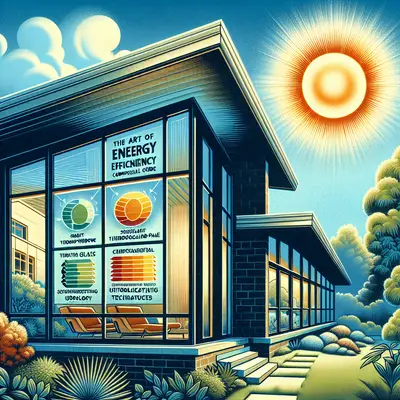
Pay particular attention to U-factor and Solar Heat Gain Coefficient (SHGC). U-factor measures how readily a window transmits heat; a lower value indicates better insulation. SHGC reflects how much solar radiation the glass admits; optimized values vary by climate. In colder regions, a slightly higher SHGC can support passive solar gain, gently warming interior spaces. In hotter climates, a lower SHGC preserves cool interiors and reduces strain on HVAC systems.
Visible Transmittance (VT) is another nuanced metric worth considering. A well-balanced VT allows generous daylight in without the harsh glare or thermal penalty often associated with large panes of glass. When you treat these numbers not as bureaucratic labels but as part of a curated performance profile, you move from simply buying windows to commissioning the right envelope for your architecture and lifestyle.
2. Invisible Architecture: Gas Fills, Spacers, and the Art of the Edge
The elegance of a high‑performance window is often defined in places you will never see. Between panes, inert gas fills—typically argon or, at the upper end, krypton—significantly reduce conductive heat transfer compared to regular air. Argon delivers excellent performance at a rational cost; krypton is often reserved for thinner, premium units or when performance targets are particularly ambitious.
Equally important is the spacer system—the slim element separating the panes around the perimeter. Traditional aluminum spacers conduct heat, undermining the very glazing they support. Warm-edge spacers, constructed from stainless steel, composite, or advanced polymers, create a subtle yet substantial improvement in thermal performance, reducing interior condensation and helping maintain more consistent glass temperatures.
Thoughtful homeowners recognize that efficiency is not only about the center of the glass but also about the edges, where thermal bridges often lurk. When reviewing options, look beyond glass type alone and insist on detailed specifications for gas fills and spacer technology. The result is a window that performs with quiet discipline in every square inch.
3. Light as a Design Tool: Spectrally Selective Coatings and Daylight Tuning
Not all sunlight is created equal. A refined window strategy treats light as something to be curated, not merely admitted or blocked. This is where spectrally selective low‑emissivity (low‑E) coatings become indispensable.
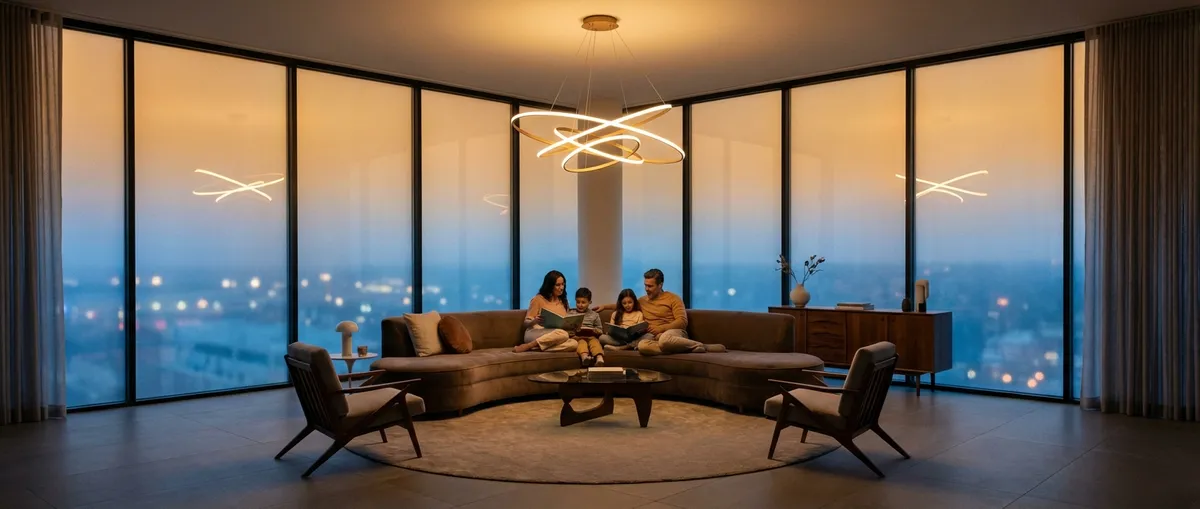
Unlike earlier generations of tinted glass that darkened interiors, modern spectrally selective coatings can filter out much of the infrared heat while allowing a high proportion of visible light to pass through. The effect is a luminous, comfortable interior that feels bright without becoming thermally volatile. In practice, this means you can maintain generous window areas—floor‑to‑ceiling glass in a sitting room, for example—without accepting the usual trade‑offs of overheating or fading finishes.
Advanced homeowners may even consider zone-specific glazing: a higher-gain glazing on south-facing elevations in a colder climate and more solar‑blocking formulations on western exposures prone to late‑day heat. This nuance transforms windows from generic products into tailored daylight instruments, reinforcing both energy efficiency and visual serenity.
4. The Frame as a Thermal Instrument, Not an Afterthought
Glass often receives all the attention, yet the frame is where design integrity and thermal discipline converge. A high‑performance unit with mediocre framing behaves like a tailored coat with unfinished seams: capable, but not truly refined.
Wood, when properly engineered and clad, offers excellent insulation and a tactile warmth that resonates with traditional and transitional architectures. Fiberglass is dimensionally stable and inherently efficient, making it exceptionally well-suited to larger expanses of glass and contemporary lines. High‑end vinyl and composite frames can also deliver strong performance, particularly when multi‑chambered or reinforced to reduce thermal bridging.
Look for frames with integrated thermal breaks—barriers that disrupt the path of heat transfer through the material. In metal systems (such as aluminum), these breaks are essential to prevent rapid heat loss and interior condensation. Consider, too, the proportionality of the frame: slender, thermally optimized profiles can maximize glass area, enhance daylight, and maintain a crisp architectural rhythm while still meeting demanding energy targets.
5. Whole-Home Synergy: Windows as Part of an Energy Ecosystem
A sophisticated window upgrade does not exist in isolation. Its true performance is revealed when it harmonizes with your home’s broader energy ecosystem—insulation, mechanical systems, shading strategies, and even landscape design.
Well-chosen windows can allow you to recalibrate HVAC sizing, particularly in renovations where leaky or single-pane units are replaced with advanced glazing and insulated frames. The result may be a smaller, quieter system operating more efficiently and cycling less often, preserving both energy and comfort. Similarly, pairing high-performance windows with exterior shading devices, deep overhangs, or thoughtfully placed deciduous trees can further reduce cooling loads and enhance visual comfort.
Smart controls—such as automated shades responding to solar position or climate—can elevate this synergy even further. In winter, shades can open to admit warmth and light; in summer, they can close to prevent heat gain, all while your windows hold the line on conduction and air leakage. The most satisfying energy-efficient homes are those in which the windows participate in a wider choreography of comfort, rather than simply standing as upgraded components.
Conclusion
Energy-efficient windows are no longer a quiet concession to utility bills; they are a central component of a cultured, high‑performing home. When you look beyond marketing language to the underlying physics—gas fills, spacers, coatings, frame systems, and whole‑home synergy—you begin to see windows as enduring infrastructure, not décor.
For the homeowner who values both refinement and responsibility, a carefully considered window upgrade is an investment in daily experience: steadier temperatures, more gracious light, calmer interiors, and an envelope that performs with quiet excellence for decades. The luxury is not loud—but once you live with it, you will not wish to return to anything less.
Sources
- [U.S. Department of Energy – Energy-Efficient Window Attachments](https://www.energy.gov/energysaver/energy-efficient-window-attachments) – Overview of how window technologies and attachments influence energy performance in homes
- [ENERGY STAR – Residential Windows, Doors and Skylights](https://www.energystar.gov/products/residential_windows_doors_and_skylights) – Technical criteria and performance metrics for high-efficiency residential fenestration products
- [Efficient Windows Collaborative (National Fenestration Rating Council)](https://www.efficientwindows.org/selection.php) – Detailed explanations of U-factor, SHGC, visible transmittance, and climate-specific selection guidance
- [Lawrence Berkeley National Laboratory – Low‑Emissivity Coatings](https://windows.lbl.gov/technologies/glazings/low-emissivity-coatings) – Research-based discussion of low‑E and spectrally selective glazing technologies
- [U.S. Environmental Protection Agency – Properly Sized HVAC Equipment](https://www.epa.gov/indoor-air-quality-iaq/properly-sized-hvac-equipment) – How improvements to the building envelope, including windows, can influence HVAC sizing and performance
Key Takeaway
The most important thing to remember from this article is that this information can change how you think about Energy Efficiency.