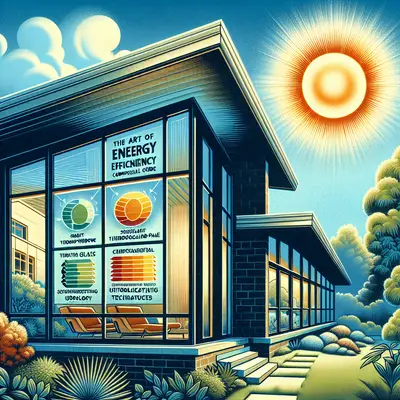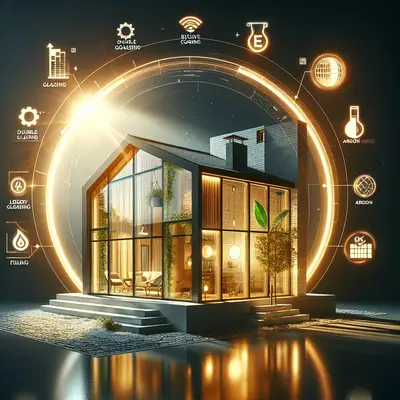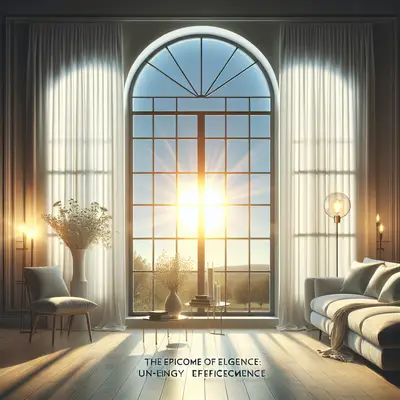
Energy efficiency is no longer a purely technical specification; it is a design language that speaks quietly of discernment, comfort, and long-term intelligence. For the homeowner contemplating a window upgrade, the question is not simply how much will I save, but what caliber of environment will I inhabit over the next decade or two. Windows, when chosen with care, become precision instruments—regulating temperature, sculpting daylight, and refining acoustics, all while preserving the architectural intent of your home.
Below are five exclusive, often-overlooked insights that sophisticated homeowners appreciate when orchestrating a truly elevated, energy-conscious window strategy.
Insight 1: The “Comfort Envelope” Matters More Than the Utility Bill
Many homeowners evaluate windows purely on projected energy savings, yet the more transformative metric is the comfort envelope—the zone near your windows where temperature, light, and drafts feel seamlessly controlled.
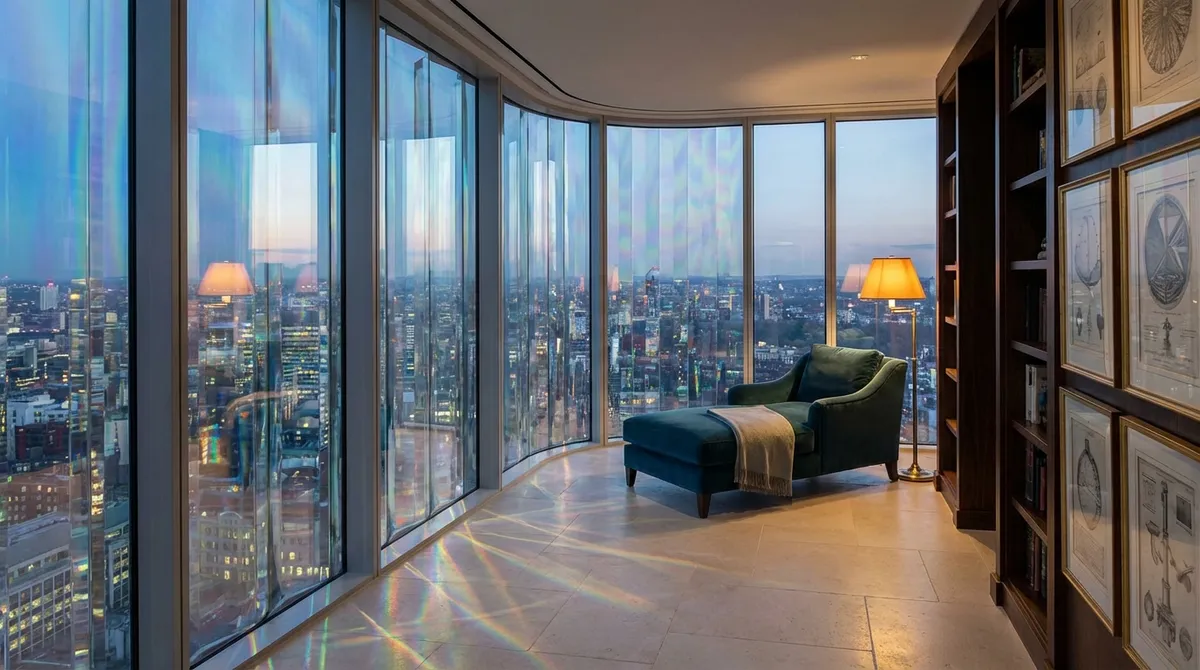
High-performance glazing, low-conductivity frames, and expertly sealed installations reduce radiant chill in winter and solar overload in summer. This means the space near your windows is no longer off-limits during extreme weather: reading chairs can be placed beside floor-to-ceiling glass; dining tables can be oriented toward the view instead of away from it.
Moreover, stable interior surface temperatures reduce the psychological sense of “draftiness,” even when the air is still. Advanced low-E coatings and insulated glass units (IGUs) allow you to enjoy expansive glass without the familiar penalty of cold zones or overheated corners. In premium interiors, this shift in usable floor area can feel as meaningful as adding an entire room.
Insight 2: Orientation-Specific Glazing Turns Your Façade Into an Energy Strategy
Treating the entire house as if every façade receives the same sun is a common, and costly, simplification. Sophisticated window design recognizes that north, south, east, and west exposures each demand distinct energy responses.
On south-facing elevations in many climates, high-performance low-E coatings can admit warming winter sun while rejecting summer heat, working in concert with overhangs or shading structures. West-facing windows often benefit from more assertive solar control glass, as afternoon sun tends to be harsher and more difficult to manage. North-facing windows, which rarely see direct sun, may prioritize visible light and clarity over aggressive solar control, yielding softer, more even daylight for workspaces or studios.
By calibrating glazing specs to orientation—rather than deploying a single “default” product—you convert your entire building envelope into a coordinated, energy-literate system. This reduces peak loads on HVAC systems and subtly reshapes the character of each room according to its exposure and function.
Insight 3: Frame Architecture Is the Quiet Hero of Thermal Performance
Glass often takes center stage in energy discussions, but for refined performance, frame architecture is equally critical. The difference between a mediocre and an exceptional frame can determine how well your investment in advanced glazing performs day to day.
Aluminum frames, for instance, can be engineered with thermal breaks—insulating barriers within the metal—to mitigate conductivity and prevent interior surfaces from feeling cold to the touch. Fiberglass frames offer dimensional stability and low thermal expansion, preserving tight seals over time and reducing the likelihood of air infiltration. High-end wood-clad systems combine the tactile warmth of interior timber with durable, low-maintenance exterior finishes, giving both aesthetic and thermal benefits when properly constructed.
Look for frames with insulated cavities, multi-chamber designs, and documented thermal performance (often expressed as part of the overall window U-factor and condensation resistance rating). Well-designed frames not only improve efficiency but also preserve interior finishes by reducing condensation risk at the edges of glass—an essential detail for long-term elegance.
Insight 4: Daylight Quality Can Reduce Energy Use More Than You Expect
A nuanced approach to daylight is one of the most powerful yet underleveraged routes to energy efficiency. It is not simply about “more light,” but about light that is usable, comfortable, and well-distributed throughout the day.
High-quality glazing with appropriate visible transmittance (VT) can make spaces feel luminous without glare, reducing the need for artificial lighting during daylight hours. Slightly lower VT glass may be preferred where intense solar exposure is present, producing a more balanced contrast ratio and less need for blinds that remain perpetually closed.
By pairing well-chosen glazing with reflective interior finishes and thoughtful window placement, homeowners can rely more on daylighting strategies and less on overhead fixtures. Over time, this not only lowers electricity costs but contributes to a calmer, more natural interior rhythm—one where spaces transition gracefully with the changing sky rather than battling it.
Insight 5: Certification Labels Are a Starting Point, Not the Final Word
Energy labels such as ENERGY STAR® or NFRC ratings are indispensable, but they are best seen as the entrance to a more sophisticated evaluation, not its conclusion. A cultivated approach looks beyond basic compliance to the specific performance metrics that align with your climate, architecture, and lifestyle.
U-factor indicates how well a window insulates; solar heat gain coefficient (SHGC) describes how much solar heat passes through; visible transmittance (VT) shows how much daylight you receive. The ideal combination of these figures is highly contextual—what is exemplary in a cold northern climate may be suboptimal in a hot, sunny region.
Discerning homeowners will request full performance data for each window configuration (frame, glazing package, size) and consider performance modeling where appropriate. By using labels as a foundation, and then tailoring selections according to exposure, shading, and interior use, you obtain windows that feel custom-tuned to your home rather than generically suitable.
Conclusion
Energy-efficient windows, at their most refined, do more than trim utility bills—they choreograph comfort, light, and quiet into a cohesive experience. When you attend to comfort envelopes, orientation-specific glazing, advanced frame architecture, daylight quality, and deeper performance data, you move beyond incremental upgrades into a realm of deliberate, high-caliber design.
In that space, windows cease to be mere openings in a wall and become meticulously engineered interfaces between your home and its environment—luminous, composed, and effortlessly efficient for years to come.
Sources
- [U.S. Department of Energy – Energy-Efficient Windows](https://www.energy.gov/energysaver/energy-efficient-windows) - Overview of window efficiency concepts, including frames, glazing, and climate considerations
- [ENERGY STAR – Most Efficient Windows Criteria](https://www.energystar.gov/products/residential_windows_doors_and_skylights/key_product_criteria) - Technical performance thresholds and labeling details for high-efficiency windows
- [National Fenestration Rating Council (NFRC)](https://www.nfrc.org/windows-doors-skylights) - Explanation of U-factor, SHGC, and VT, and how they are measured and certified
- [Lawrence Berkeley National Laboratory – Windows and Daylighting](https://windows.lbl.gov/) - Research on window performance, daylighting strategies, and building energy impacts
- [Efficient Windows Collaborative (now part of NFRC)](https://www.efficientwindows.org/) - Climate-specific guidance on choosing efficient windows and interpreting performance metrics
Key Takeaway
The most important thing to remember from this article is that this information can change how you think about Energy Efficiency.