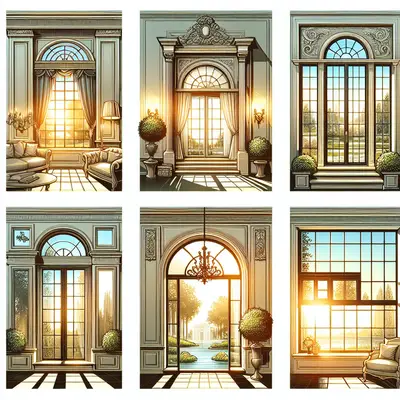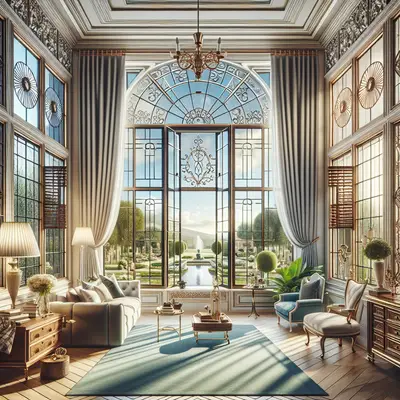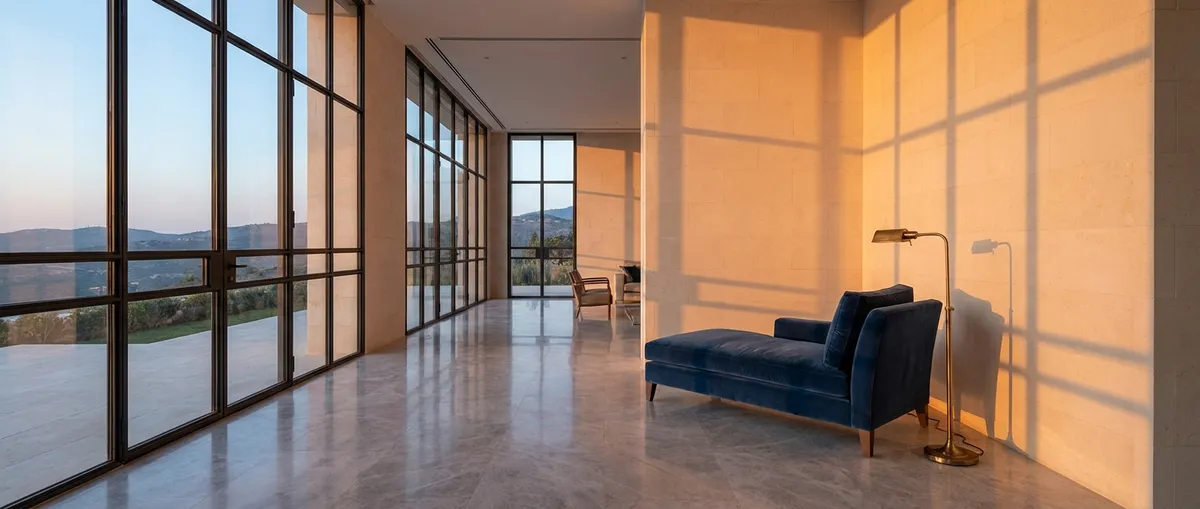
Windows are no longer mere apertures in a wall; they are instruments of light, proportion, and emotional tone. For the discerning homeowner, selecting window types is less about “standard options” and more about orchestrating a visual and sensory experience that feels intentional in every room. The right combination of profiles, operations, and glass can quietly signal refinement while transforming daily rituals—morning coffee, evening reading, weekend gatherings—into elevated moments.
This guide explores how to curate window types with a collector’s eye, pairing aesthetics with performance. Woven throughout are five exclusive insights that sophisticated homeowners often overlook—but architects and high‑end builders quietly rely on.
Reading the Room: Matching Window Types to Spatial Character
Every room in a well-composed home has a distinct temperament—formal, contemplative, convivial—and the window type should reinforce that identity rather than fight it.
In formal living rooms and dining spaces, tall casement or French casement windows create a sense of vertical elegance and controlled symmetry. Their clean lines and hinge operation allow for uninterrupted glass and precise ventilation. In contrast, family rooms and kitchens often benefit from wide, sliding or gliding windows that frame horizontal vistas and visually expand entertaining areas toward terraces or gardens.
Bedrooms are best served by operable units that balance privacy, quiet, and airflow. Tilt-and-turn windows, popular in European design, offer flexible opening modes—tilting inward for gentle ventilation and turning fully for deep fresh-air exchange—while maintaining a composed, almost gallery-like appearance when closed. In more intimate spaces such as reading nooks or home offices, a carefully placed awning window high on the wall can admit daylight and fresh air without compromising usable wall space for bookshelves or art.
The most sophisticated interiors treat window types as part of the room’s language: if the architecture is calm and linear, the windows should echo that order; if the home celebrates curves and organic forms, arched or custom-shaped units can provide a subtle counterpoint that ties the exterior and interior narratives together.
Exclusive Insight #1: Window Operability Quietly Shapes Daily Rituals
Most homeowners focus on how a window looks from across the room, not how it behaves in use. Yet the type of operation—casement, awning, double-hung, slider, tilt-and-turn—subtly choreographs how you interact with your home every single day.
Consider the kitchen: a casement above a deep farmhouse sink can be difficult to reach and operate, while an awning window with a low-profile crank allows effortless opening even when the counter is set for guests. In a reading alcove, a side-hinged casement might create drafts directly on seating, whereas a high awning window gently washes the space with air from above.
In coastal or urban environments, operability becomes a tool for managing noise, wind, and air quality. A tilt function can allow ventilation on blustery days without the rattling or water intrusion that can occur with traditional hung windows left partially open. When thoughtfully specified, window operation becomes an invisible form of hospitality—making everyday movements feel smoother, quieter, and more intuitive.
Framing the Outdoors: Compositional Strategies with Window Types
The most memorable homes use window types to choreograph specific views as though they were large-scale artwork. Fixed picture windows, when used judiciously, are unparalleled for this purpose. Without the visual interruption of sashes or screens, they transform landscape, skyline, or courtyard vignettes into living canvases.
However, relying exclusively on picture windows can make a home feel static and overly sealed. Pairing a large fixed central unit with slim flanking casements or awnings delivers the best of both worlds: an uncompromised view with precise control of ventilation. In more traditional architecture, double-hung or single-hung windows grouped in twos or threes can create rhythmic façades while still allowing for tailored interior sightlines.
Bay and bow windows remain powerful tools for sculpting interior volume. A bay with operable flanking casements can extend a breakfast area into the garden, while a shallow bow with fixed center panels is ideal for showcasing a carefully composed landscape. Clerestory windows—high on the wall, often fixed or awning—introduce daylight without sacrificing privacy, ideal for urban settings where neighboring buildings sit close.
The luxury is not in the size alone, but in the precision: where the mullions fall, how the muntin patterns (if any) align with interior axes, and how the meeting rails or hardware sit relative to eye level when you are actually in the room.
Exclusive Insight #2: Align Sightlines to Seating, Not Just to Floors
Many window schedules are drafted with only exterior symmetry in mind—clean grids and balanced façades—but the interior experience is dictated by where mullions and rails intersect your natural viewpoints.
A refined approach starts from inside-out: identify habitual seating positions (sofa backs, dining chairs, a favored club chair in the corner) and align key horizontal elements of the windows to the seated eye level. This ensures that muntin bars, meeting rails, and hardware do not cut awkwardly through the horizon line or obscure a particularly compelling part of the view.
In dining rooms and home libraries, this might mean raising the sill slightly so the table edge or bookcase tops visually align with the lower window frame, creating a composed, almost tailored relationship between furniture and glazing. Conversely, in main living spaces, lowering the sill to create a “walk-out” visual connection may be ideal, particularly when the room opens to a terrace or garden.
The result is an environment that feels effortlessly balanced. Guests will not necessarily notice why the space feels so comfortable—but they will feel it.
Performance with Poise: Choosing Types for Climate and Quiet
Aesthetics may drive the initial conversation, but high-end window design is equally about performance. Different window types inherently behave differently in demanding climates or noisy environments, and those nuances matter in a premium home.
Casement and awning windows generally seal more tightly than traditional sliding or double-hung units, because the sash compresses against the frame like a door. In windy or exposed locations, this compression seal—paired with high‑performance weatherstripping and multi-point locks—provides superior resistance to drafts and water intrusion. Tilt-and-turn systems, with their robust hardware and deep profiles, can offer exceptional airtightness and sound attenuation when specified with laminated or acoustic glazing.
In hot or mixed climates, operable upper windows (such as awnings or tilt functions near the ceiling) can serve as passive exhaust points for rising warm air, reducing dependence on mechanical cooling. In cold climates, fixed picture windows paired with well-placed operable units minimize potential air leakage while maximizing winter solar gain—especially when combined with low‑e coatings selected for the specific orientation of each elevation.
The most successful premium installations treat each wall as a microclimate and assign window types accordingly, rather than repeating a single default solution around the entire home.
Exclusive Insight #3: Mixing Window Types Strategically Elevates Resale Appeal
Uniformity feels safe, but a subtly varied window palette—when handled with restraint—can actually enhance a property’s perceived value. Buyers are increasingly attuned to both design nuance and energy performance; a home that visibly demonstrates thoughtful differentiation tends to stand out.
For example, specifying ultra-quiet, laminated casements in street-facing bedrooms, expansive fixed panels in main living areas, and modest but highly operable awnings in utility spaces signals that the home has been curated room by room. On the exterior, carefully grouping similar types on each elevation maintains visual cohesion even as different operations serve distinct interior needs.
Appraisers and sophisticated buyers may not itemize every decision, but they often recognize and reward homes that feel architect-designed rather than “plan book standard.” Well-considered variation in window types is a subtle but powerful way to communicate that level of intentionality.
Detailing Matters: Profiles, Hardware, and Edge Conditions
The same window type can feel entry-level or bespoke depending on how its details are handled. Slim sightlines, crisp profiles, and carefully selected hardware turn a functional element into an object of quiet luxury.
In contemporary homes, minimal-frame fixed and casement windows with narrow mullions and large panes create the desired gallery-like calm. For transitional or traditional architecture, slightly more articulated profiles—ogee or bevel details, for example—can echo millwork and door casings without veering into pastiche. Matching or intentionally contrasting the finish of window hardware with interior metals (faucets, lighting, door levers) creates visual continuity that reads as custom.
Edge conditions matter as much as the window itself. Deep interior returns, plaster-in frames, and integrated shades or pockets can make a window feel seamlessly embedded in the architecture rather than “applied” to it. In some luxury projects, sills are treated as furniture-grade elements in stone or solid wood, inviting use as a perch for books, plants, or even seating in thick-walled conditions.
Exclusive Insight #4: Hardware Choice Can Quietly Signal the Home’s Design Ethos
Most homeowners devote more attention to door handles than to window hardware, yet windows often represent a larger visual field. A refined hardware choice—both in design and placement—can subtly telegraph the overall character of the home.
Low-profile, architecturally spare handles work beautifully in modern spaces where glass walls recede and views dominate. In more classical or heritage-inspired projects, understated but weighty handles in bronze, unlacquered brass, or blackened steel deliver a sense of permanence and tactility that aligns with the overall palette.
Equally important is consistency: repeating a hardware style or finish across different window types (casement, tilt-and-turn, and even sliders where possible) creates a harmonious visual rhythm. When the hand-feel of each lever or lock is similarly solid and deliberate, the entire home reads as more considered and elevated—even closing a window becomes a small, satisfying ritual.
Sustainability with Subtlety: Window Types as Long-Term Stewards
True luxury is increasingly synonymous with longevity and responsible performance. The choice of window type influences maintenance requirements, material options, and adaptability over time.
Fixed units generally demand the least maintenance and offer the longest service life, but should be balanced with enough operable units for healthy ventilation. Certain operations, like tilt-and-turn or high-quality casements, can handle larger sash sizes without the sagging or sticking sometimes associated with oversized double-hungs or bargain sliders. This means fewer, larger openings that remain graceful in operation for decades.
Material selection intersects with type. Aluminum-clad wood casement and awning windows, for example, combine the warmth of interior wood with a durable, low-maintenance exterior. Fiberglass frames, often used in casement and fixed units, are dimensionally stable and well-suited to extreme temperature swings. Even within vinyl product lines, some operations are engineered to maintain better seals and structural integrity over time.
In a market where sustainability is an expectation rather than a novelty, specifying window types that minimize future replacement, optimize energy performance, and age gracefully can distinguish your home as both sophisticated and responsible.
Exclusive Insight #5: Plan for Window Cleaning and Service as Part of the Design
Maintenance is rarely discussed in design meetings, yet in a home with extensive glazing it becomes a practical luxury issue. Thoughtful selection of window types can dramatically improve the ease and safety of cleaning and servicing.
Tilt-and-turn windows, for instance, allow interior access to both faces of the glass on upper levels, eliminating the need for exterior ladders or specialized crews for routine cleaning. Awning and casement windows with restrictors or stay arms can be safely opened for cleaning without overextending beyond reach. In large fixed compositions, integrating discreetly operable sections at strategic points provides not only ventilation but also potential cleaning access for adjacent panes.
In tall stairwells and double-height spaces, consider whether certain fixed units should be reachable from interior catwalks, landings, or built-in platforms. Even the simple decision to standardize on easy-clean or low-maintenance glass coatings for hard-to-access areas becomes part of a refined, long-term comfort strategy.
When maintenance is embedded in the design, the home continues to look and perform at a high level with minimal friction—an often overlooked but very real dimension of luxury.
Conclusion
A sophisticated window strategy is never about a single “best” type; it is about composing the right ensemble for each room, each wall, and each daily ritual. By understanding how operability, sightlines, performance, detailing, sustainability, and maintenance interlock, you can transform windows from background infrastructure into a defining feature of your home’s character.
The most distinguished residences are unified not by uniform window types, but by coherent intent. When every opening is curated—with the same care you might devote to art, furniture, or landscape—the result is a home that feels effortless, elevated, and enduringly comfortable.
Sources
- [U.S. Department of Energy – Energy-Efficient Window Attachments and Design](https://www.energy.gov/energysaver/design/windows-doors-and-skylights) – Overview of window design considerations, energy performance, and orientation strategies.
- [Efficient Windows Collaborative (now part of the National Fenestration Rating Council)](https://www.efficientwindows.org/types-of-windows/) – Detailed explanations of common window types and their performance characteristics.
- [American Architectural Manufacturers Association (AAMA) – Window and Door Basics](https://www.aamanet.org/pages/window-door-basics) – Technical background on operation types, performance, and industry standards.
- [This Old House – Choosing Energy-Efficient Windows](https://www.thisoldhouse.com/windows/21015193/choosing-energy-efficient-windows) – Practical guidance on selecting high-performance windows for different climates and applications.
- [Architecture 2030 – Windows, Daylighting, and Energy Use](https://architecture2030.org/buildings_problem_why/) – Context on the role of windows and building envelopes in overall energy consumption and climate impact.
Key Takeaway
The most important thing to remember from this article is that this information can change how you think about Window Types.