Windows are no longer mere apertures in a wall; they are architectural instruments that choreograph light, comfort, and privacy with quiet precision. For homeowners pursuing a refined upgrade—not just a routine replacement—the choice of window type is a deliberate act of design. The frame profiles, opening mechanics, glazing compositions, and sightlines together define how a space feels, performs, and endures.
This guide explores the major window types through a more curated lens, while highlighting five exclusive insights that sophisticated homeowners should consider before committing to any upgrade.
Reading the Room: Matching Window Types to Architectural Character
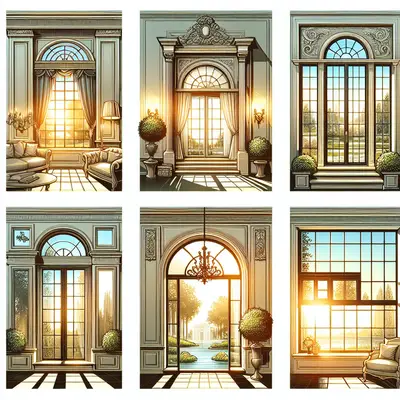
Every window type carries an architectural “accent.” Thoughtful selection begins with understanding how these accents interact with your home’s existing language.
Casement windows, hinged at the side and operated by a crank, offer clean vertical lines and expansive, uninterrupted glass—ideal for contemporary or transitional homes that favor minimal mullions and crisp geometry. Their ability to seal tightly when closed also makes them a favorite in performance-forward, energy-conscious designs.
Double-hung windows, with two operable sashes that slide vertically, are the quiet backbone of many historic and traditional residences. They can preserve period-appropriate profiles while integrating modern performance glass, making them an elegant bridge between heritage and innovation.
Awning windows, hinged at the top and tilting outward, introduce a subtle, horizontal rhythm that works beautifully in mid-century or modern compositions. Their ability to shed rain while open makes them a discreet yet functional choice in climates where gentle ventilation is desired year-round.
Sliding windows, with sashes that move horizontally, offer wide views and low visual complexity—useful in longer, lower wall elevations or where furniture placement competes with traditional swing paths. Picture windows, by contrast, are the purest expression of view: large, fixed panes that frame landscape as art, especially powerful when paired with slimmer-framed operable units nearby.
Exclusive Insight #1: Treat window type as a design vocabulary, not an isolated choice. Commit to a coherent “language” of forms—vertical (casement, double-hung), horizontal (awning, slider), or picture-dominant—and repeat it throughout the home for a calm, high-end aesthetic.
Performance as Luxury: How Operating Styles Shape Comfort
The operating style of a window does more than determine how it opens; it influences air movement, sealing integrity, maintenance demands, and even perceived quietness.
Casement and awning windows, which press firmly into a continuous compression seal when closed, can achieve superior air and water tightness compared with many sliding or double-hung options. This contributes to more stable indoor temperatures, fewer drafts, and a quieter interior—subtle qualities that translate directly into a more luxurious daily experience.
Double-hung windows excel in nuanced ventilation control. Opening both the top and bottom sashes encourages natural convection, drawing warm air out the top while cooler air enters below. In certain climates and seasons, this can reduce reliance on mechanical cooling while fostering a more “alive” indoor environment.
Sliding windows can feel effortless in day-to-day use, especially in wide openings where a crank mechanism might be cumbersome. However, their track-based operation can demand more attentive cleaning in dusty or coastal environments, and their performance depends heavily on hardware quality and precise installation.
Fixed picture windows, while inoperable, deliver the highest potential for airtightness and can support larger glass areas, enabling grand views without the framing interruption of operable sashes. By pairing picture windows with carefully placed casements or awnings, you can separate the “view” function from the “ventilation” function, optimizing each.
Exclusive Insight #2: Think in layered roles—view windows, vent windows, and acoustic windows. Assign each opening a primary role and choose the window type that performs that role best, instead of expecting every unit to do everything.
Materials, Profiles, and the Art of the Slim Sightline
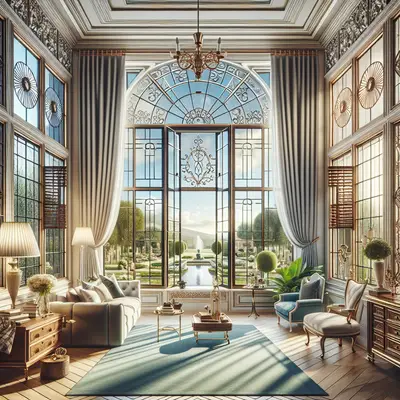
Beyond the basic type, the frame material and profile geometry define how refined—or visually heavy—your windows appear. At a premium level, the objective is usually to maximize glass while maintaining strength, durability, and tactile quality.
Wood remains the benchmark for warmth and authenticity, particularly in architecturally significant homes. High-quality wood-clad windows (wood interior, metal exterior) allow you to enjoy the richness of stained or painted wood indoors, while the exterior receives the protection of aluminum or fiberglass. For traditional façades, carefully proportioned muntins and sashes can maintain historical integrity without compromising performance.
Fiberglass frames offer exceptional dimensional stability and slim profiles, often closely mimicking the look of painted wood but with lower maintenance. They expand and contract at rates closer to glass than vinyl or aluminum alone, which can contribute to better long-term seal performance.
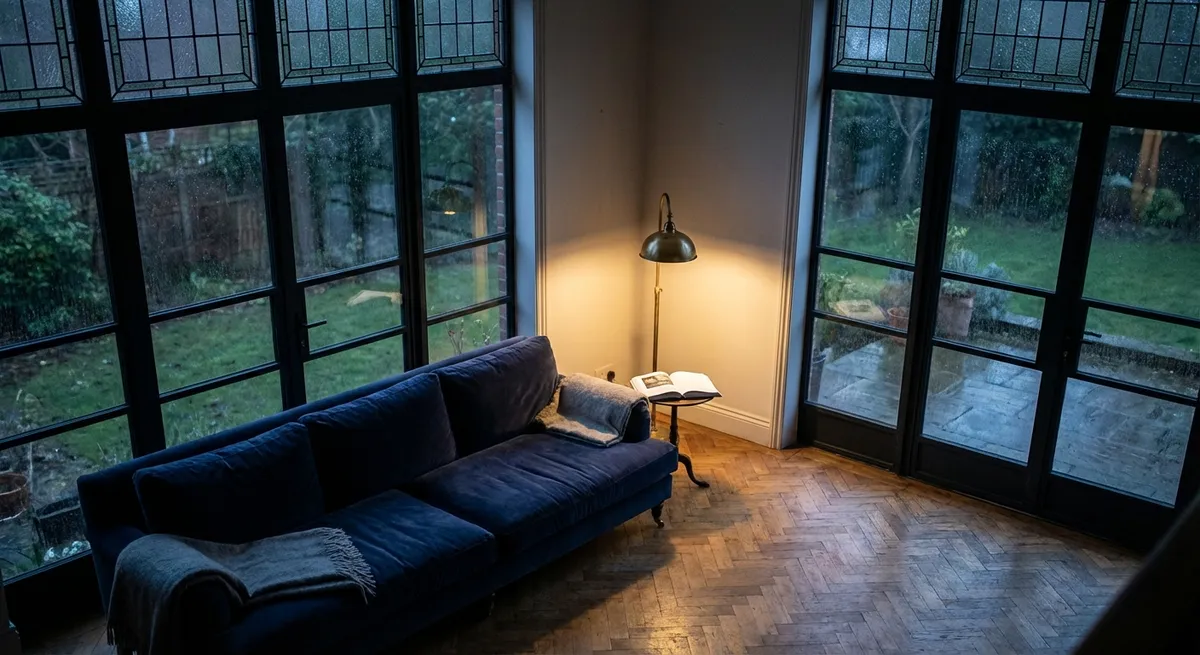
Aluminum, especially in thermally broken, architect-grade systems, delivers the thinnest sightlines and a distinctly modern aesthetic. Large expanses of glass, such as floor-to-ceiling picture windows and expansive sliders, often rely on high-quality aluminum systems for structural integrity with minimal visual intrusion.
Vinyl, when executed at a high specification, can be an economical yet capable option, particularly in more modest openings. However, for a truly elevated aesthetic, homeowners often reserve vinyl for less prominent elevations or secondary spaces, while selecting more refined materials in public or view-centric rooms.
Exclusive Insight #3: Specify sightline targets, not just materials. When meeting with a window specialist, ask about frame-to-glass ratios and visible frame widths. Slimmer, well-engineered profiles can transform the perceived sophistication of even a familiar window type.
Curated Configurations: Beyond Single Units to Composed Assemblies
While most homeowners think in terms of individual windows—“a casement here, a double-hung there”—the most distinguished installations consider windows as composed assemblies. The interplay of fixed and operable units can create tailored vistas and more nuanced functionality.
For instance, a central fixed picture window flanked by narrow casements can provide both expansive view and controlled ventilation, without breaking the continuous glass field across the primary sightline. Stacked awning windows beneath a high picture window can invite daylight deep into a room while maintaining privacy from the street below.
Bay and bow window configurations, which project beyond the plane of the wall, sculpt interior niches for seating, reading, or display. A carefully considered mix of fixed and operable units within these projections can accentuate architectural interest while supporting cross-ventilation and daylight layering.
Corner windows—either as single, structurally engineered glass-to-glass units or as tightly joined assemblies—dissolve the boundary between interior and exterior at pivotal vantage points. When executed with slender frames and consistent finishes, they signal a level of design intent that immediately elevates the perception of the entire space.
Exclusive Insight #4: Design compositions, not just openings. Ask your designer or window consultant to provide elevation studies that show multi-unit groupings, bay/bow concepts, and corner treatments. The same wall opening can feel entirely different when curated as an assembly rather than a single window.
Intelligent Glazing Choices: Aligning Window Types with Glass Strategy
Different window types interact with glazing technology in distinct ways, and ignoring that interplay can leave performance potential on the table. A sophisticated upgrade aligns glass selection with orientation, window type, and room function.
South- and west-facing picture windows often benefit from high-performance low-emissivity (low-E) coatings engineered to manage solar heat gain without flattening natural light. Tall, fixed glass can be specified with higher-performance coatings because you are not compromising the tactile experience of touching or opening the unit.
Operable windows—casements, awnings, double-hungs—may prioritize a balanced low-E configuration that preserves natural color rendering and comfortable interior temperatures while still allowing for frequent tactile interaction. For bedrooms or urban-facing rooms, acoustic glazing (laminated or specially spaced double- or triple-pane units) can be strategically paired with window types that seal more tightly, maximizing sound control.
In coastal or storm-prone regions, impact-rated glass often pairs best with robust frame systems, such as reinforced casements or fixed units, that can accommodate heavier glazing while maintaining smooth operation. Here, the operating style and hardware quality become particularly critical to long-term ease of use.
Exclusive Insight #5: Build a glazing “palette” by orientation and use, then match window types to that palette. For example: advanced low-E and larger fixed units to the south for view and efficiency, acoustic-optimized casements in street-facing bedrooms, and modest, privacy-friendly awnings in bathrooms and secondary spaces.
Conclusion
Thoughtful window selection is not about chasing a single “best” type; it is about orchestrating a suite of window types that resonate with your home’s architecture, your daily rituals, and your performance expectations. The nuanced differences between casement and double-hung, picture and awning, fixed and operable, become powerful tools when considered through the lenses of sightline, comfort, acoustic calm, and compositional harmony.
By treating window types as part of a curated architectural narrative—supported by intelligent glazing choices and refined frame profiles—you transform a practical upgrade into an enduring elevation of your living environment. The result is a home that feels quieter, brighter, more composed, and unmistakably intentional.
Sources
- [U.S. Department of Energy – Energy-Efficient Windows](https://www.energy.gov/energysaver/design/energy-efficient-windows) - Overview of window types, frames, and glazing options with a focus on performance
- [Efficient Windows Collaborative – Window Selection](https://www.efficientwindows.org/selection.php) - Detailed guidance on choosing window types and glazing configurations for different climates and orientations
- [National Park Service – Preservation Brief 9: Repair of Historic Wooden Windows](https://www.nps.gov/articles/preservation-brief-9.htm) - Insight into architectural character and appropriate window types in traditional and historic homes
- [Cardinal Glass Industries – Low-E Glass Technology](https://www.cardinalcorp.com/technologies/coated-glass/) - Technical background on modern low-emissivity coatings and their impact on comfort and energy use
- [Lawrence Berkeley National Laboratory – Windows and Building Envelope Research](https://windows.lbl.gov/) - Research-based information on window performance, glazing systems, and advanced window technologies
Key Takeaway
The most important thing to remember from this article is that this information can change how you think about Window Types.