Windows are no longer mere apertures; they are architectural instruments that choreograph light, views, privacy, and performance. For the discerning homeowner, the choice of window type is less about filling a wall opening and more about curating an experience—how the home feels at dawn, how it frames a skyline, how it hushes the outside world.
This guide explores refined window types through a premium lens and highlights five exclusive insights that often escape standard renovation advice, yet prove invaluable when orchestrating a truly elevated upgrade.
Reframing the Classics: Casement, Awning, and Double-Hung with Intention
Casement, awning, and double-hung windows are frequently treated as basic checkboxes, yet in a sophisticated home they form a deliberate, layered language.
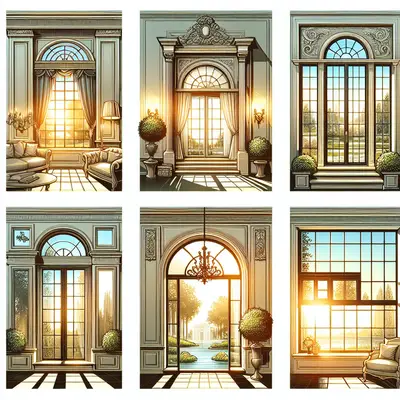
Casement windows, hinged at the side and opening outward, excel where uninterrupted views and tight weather seals are priorities. Their compression seals can outperform many sliding and double-hung configurations in air tightness, making them especially suitable for coastal or wind-exposed sites. Awning windows, hinged at the top, introduce ventilation even during soft rain, ideal above bathtubs, kitchen counters, and clerestory applications where privacy and light are paramount.
Double-hung windows remain synonymous with traditional architecture, but premium lines now pair historical sightlines with modern innovations: tilt-in sashes, low-profile balances, integrated screens, and finely proportioned muntin profiles. Specifying unequal sash heights can subtly elongate a façade, while pairing double-hungs on the street elevation with casements at the rear allows you to honor architectural heritage without compromising performance.
Exclusive Insight #1: Treat window types as a façade composition, not a single decision. Mix casement or awning windows on performance-critical elevations (facing prevailing wind or extreme weather) and reserve double-hung or specialty units for architectural harmony where conditions are gentler. The façade becomes a tailored ensemble rather than a uniform grid.
Picture, Floor-to-Ceiling, and Corner Windows: Curating Views with Discipline
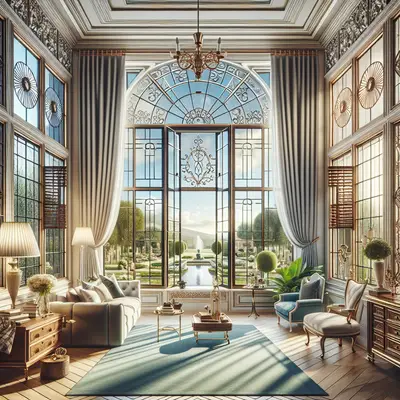
Large picture windows and floor-to-ceiling glazing carry an aura of quiet luxury, but their success hinges on curation rather than sheer size. A well-positioned picture window can feel like a framed landscape painting; poorly placed, it becomes an energy liability or a source of glare.
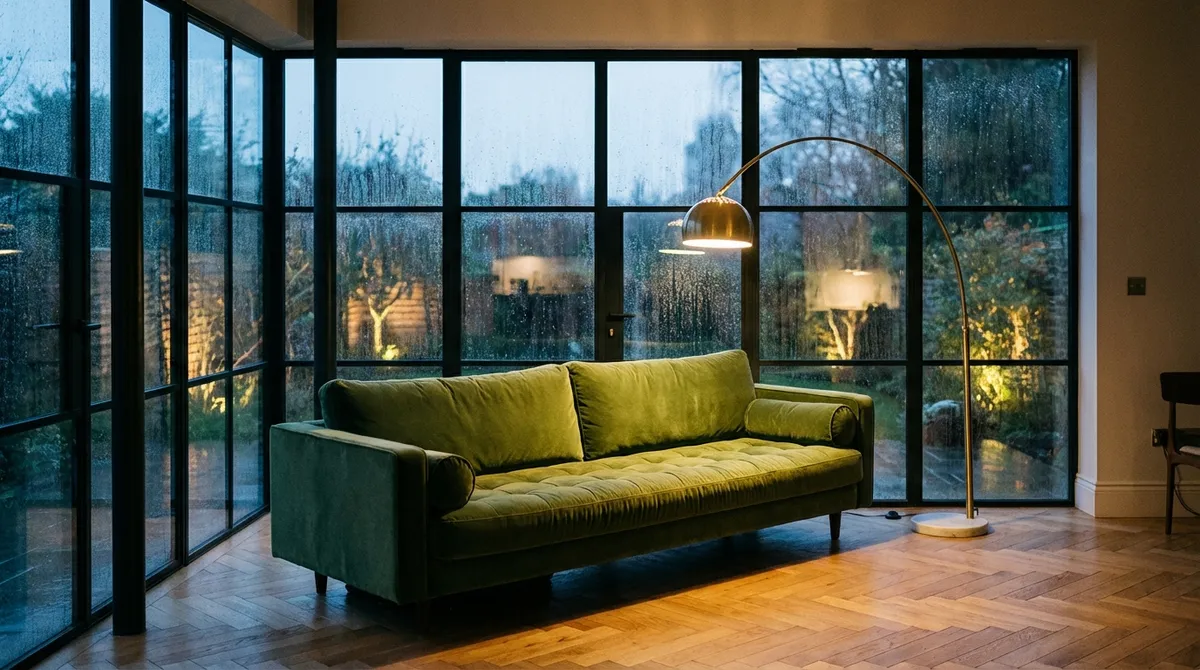
Floor-to-ceiling windows demand disciplined alignment with structural lines—headers, mullions, and floor levels should appear intentional, not improvised. Corner windows, where glass meets with minimal structure, offer a particularly elevated gesture, dissolving the boundary between interior and exterior. In refined design, the corner window is rarely about maximum exposure; it is about orchestrating sightlines—capturing the apex of a view while discreetly excluding driveways, neighbors, or service zones.
Modern coatings (low-E, spectrally selective tints) allow these expanse windows to remain luminous without overheating rooms or bleaching finishes. When specified correctly, they serve daylight, comfort, and artful privacy simultaneously.
Exclusive Insight #2: Design for “primary” and “secondary” views, not just bigger glass. Reserve large picture or corner windows for primary view axes (garden focal points, water, skyline) and use more controlled openings elsewhere to modulate privacy, storage, and wall space for art or cabinetry. The luxury is in what you choose not to expose.
Specialty Forms: Arched, Geometric, and Custom Profiles as Signature Elements
Arched, elliptical, and bespoke geometric windows introduce a level of craftsmanship that instantly differentiates a residence. They function as architectural punctuation: a half-round window crowning a bank of French doors, a delicate eyebrow dormer elevating a roofline, or a slim vertical slot window tracing a staircase.
These specialty forms are most effective when they echo proportions already present in the architecture—roof pitch, column spacing, or door heights. Advanced fabrication now allows even complex shapes to benefit from high-performance glazing, warm-edge spacers, and insulated frames, so you need not trade aesthetics for comfort.
Placed strategically—over a soaking tub, at the end of a gallery, or above a double-height entry—specialty windows can choreograph subtle moments of light that shift through the day. The effect is less theatrical and more quietly ceremonial: morning light that grazes a textured wall, or a crescent of moon visible from bed.
Exclusive Insight #3: Use specialty window shapes as “light signatures,” not random ornament. Before selecting a form, identify a daily ritual—entering the home, ascending stairs, morning coffee—and position the specialty window to elevate that specific moment. The shape then becomes meaningful, not merely decorative.
Sliding, Folding, and Lift-and-Slide: Transition Systems for Sophisticated Indoor–Outdoor Living
Sliding, multi-slide, and folding (bi-fold) doors occupy a category of their own: they function as operable walls rather than conventional windows. In a refined environment, the objective is seamlessness—smooth thresholds, uninterrupted flooring, and sightlines that continue from interior to terrace without visual clutter.
Standard sliders often compromise on frame bulk and hardware refinement. Premium solutions—lift-and-slide systems, slim-frame aluminum or steel, and thermally broken profiles—provide expansive openings without forfeiting structural integrity or energy performance. The lift-and-slide mechanism in particular allows large panels to glide almost weightlessly, while robust weather seals engage once the panel is lowered into place.
For temperate climates, folding systems can completely dissolve a wall, whereas mixed climates may benefit more from large-scale sliders that retain better air and water resistance. Integrating recessed tracks, flush sills with proper drainage, and pocketing panels that disappear into adjacent walls elevates the experience well beyond standard patio doors.
Exclusive Insight #4: Select your transition system based on “open” and “closed” performance, not spectacle alone. Consider how the wall will function 90% of the time—closed. Evaluate thermal performance, sound control, and frame sightlines when shut, then ensure the drama of the opening complements, rather than compromises, everyday comfort.
Quiet Performance: Materials, Frames, and Glazing That Transform Window Types
Across all window types, the true mark of a premium installation lies in the materials and glazing choices beneath the aesthetics.
Wood-clad units deliver tactile warmth and can be tailored with custom stains and profiles, while aluminum-clad exteriors offer durability and crisp lines. Fiberglass frames provide notable dimensional stability and energy efficiency, resisting warping over time—an advantage for large or dark-colored units. High-end aluminum, when thermally broken, can achieve excellent performance while enabling ultra-slim frames.
Glazing is where performance becomes almost invisible art. Double- or triple-pane units with inert gas fills, low-E coatings tuned to climate, and laminated glass for acoustic control turn even a large expanse window into a serene, comfortable surface. In urban or flight-path locations, pairing laminated glass with compression-seal window types (often casements or fixed units) can dramatically reduce ambient noise without any visual compromise.
Exclusive Insight #5: Prioritize “sensory performance” as highly as visual design. When evaluating window types, ask not only about U-factor and visible transmittance, but also acoustic ratings, interior surface temperatures, and how the glass will feel to sit beside at night in winter. The most luxurious windows are those you barely notice—because the room simply feels correct.
Conclusion
Selecting window types for a cultivated home is less a technical task and more an act of architectural authorship. Casements, picture windows, specialty shapes, and transition systems each contribute a distinct note to the composition, but true refinement emerges when they are orchestrated—to frame chosen views, support daily rituals, and deliver quiet, unwavering comfort.
By attending to façade composition, view hierarchy, light signatures, transition performance, and sensory quality, homeowners move beyond conventional upgrades into a realm where every window becomes a deliberate, enduring gesture of design.
Sources
- [U.S. Department of Energy – Efficient Windows](https://www.energy.gov/energysaver/design/energy-efficient-home-design/energy-efficient-windows) - Overview of window types, frame materials, and energy performance considerations
- [Efficient Windows Collaborative (Berkeley Lab)](https://windows.lbl.gov/efficient-windows-collaborative) - Technical guidance on window performance, glazing, and climate-specific recommendations
- [National Association of Home Builders – Windows and Doors](https://www.nahb.org/advocacy/industry-issues/building-products/windows-and-doors) - Industry perspective on window products, trends, and performance standards
- [Marvin – Window Types and Styles](https://www.marvin.com/windows) - Examples of premium window types, specialty shapes, and high-end material options
- [Andersen Windows – Patio and Big Doors](https://www.andersenwindows.com/windows-and-doors/doors/patio-doors/) - Reference for sliding, multi-slide, and folding systems and their performance characteristics
Key Takeaway
The most important thing to remember from this article is that this information can change how you think about Window Types.