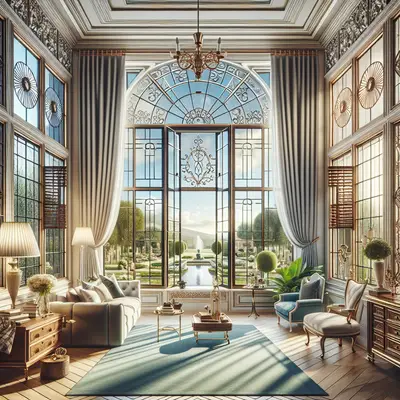
Windows do more than admit light; they script how a room feels, functions, and performs. For the homeowner pursuing a refined upgrade, the choice of window type is less about “what fits the opening” and more about “what elevates the experience.” When form, engineering, and material discipline are aligned, the result is not simply a new view—but a quieter, more composed, and more valuable home.
This guide explores key window types through a sophisticated lens and highlights five exclusive insights that often escape standard showroom conversations.
Reading a Room Through Its Windows
Before comparing profiles and frames, it helps to regard each room as a distinct ecosystem. A kitchen with constant activity, a north-facing study, and a south-facing living room do not need the same window behavior.
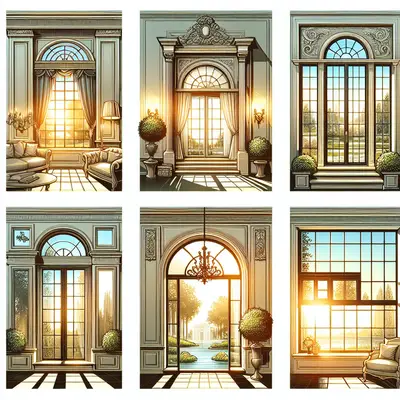
Casement windows, with side-hinged sashes that swing outward, offer a crisp, tailored look and excellent sealing—ideal for areas where performance and ease of operation matter. Double-hung windows introduce a more traditional vertical rhythm, allowing ventilation from both top and bottom sash, which can be quietly effective in older homes being carefully modernized. Picture windows frame views with a gallery-like stillness, turning a landscape into a feature wall while maximizing daylight. Sliding windows, meanwhile, tend to feel understated and contemporary, with large glass areas and minimal visual interruption.
The refined decision is less about trends and more about a room-by-room choreography: which windows should perform, which should frame, and which should virtually disappear.
Matching Window Types to Architectural Intent
Every architectural style has a visual grammar, and window types either reinforce or disrupt it. Respecting that language elevates both curb appeal and interior coherence.
In homes with symmetrical façades—Georgian, Colonial, or certain Neoclassical forms—double-hung windows preserve a vertical cadence that feels historically grounded yet easily upgraded with modern glazing. In more modernist or transitional designs, casement and fixed (picture) windows echo the clean, linear geometry that contemporary architecture favors, with lean frames and expansive glass.
For mid-century or minimalist homes, large sliders and fixed panels can create near-seamless thresholds between interior and exterior, especially facing gardens, patios, or pools. Arched or specialty-shape windows (segmental arches, circles, trapezoids) can be used sparingly as architectural punctuation rather than default statements, reinforcing a signature line of the home instead of competing with it.
When type and architecture are aligned, the home reads as considered rather than merely renovated.
Performance by Design: How Type Influences Comfort
Beyond appearance, different window types inherently perform differently. Treating performance as an aesthetic in its own right leads to better long-term satisfaction.
Casement windows typically offer some of the best air sealing when closed, because the sash compresses into the frame. This can significantly reduce drafts and improve energy performance, an effect that becomes particularly noticeable in windy or colder climates. Awning windows, hinged at the top, can be opened even in light rain, offering controlled ventilation with minimal risk of water ingress—suited to bathrooms, laundry rooms, and higher levels where privacy and airflow both matter.
Picture windows do not open, but this “limitation” can be a strategic advantage: they can achieve outstanding thermal performance and noise reduction when specified with high-quality glazing and frames, effectively becoming acoustic and thermal shields. Sliding and single-hung windows are often specified for their simplicity and cost-effectiveness, but premium variants with advanced weatherstripping, insulated frames, and high-spec glass can quietly narrow the performance gap.
The refined approach is to mix types intentionally: high-performance operable windows where comfort requires it; fixed windows where views and insulation are paramount.
Material, Profile, and the Art of the Narrow Sightline
Window type is only part of the story; the frame material and profile dramatically influence the visual and tactile experience.
Aluminum and fiberglass frames can achieve slimmer profiles with remarkable rigidity, creating that coveted “barely-there” border around the glass. In modern or view-driven spaces, narrow sightlines allow the landscape and daylight to dominate, especially in large picture or casement configurations. Wood, by contrast, brings warmth and depth that is especially compelling in traditional or transitional interiors. When paired with an exterior aluminum or fiberglass cladding, wood interiors can maintain their tactile charm while the exterior remains low-maintenance and weather-resilient.
Vinyl, when specified at a premium level, can offer excellent thermal performance and color-stable finishes, particularly in neutral palettes. However, bulkier profiles can visually “weigh down” smaller openings, so pairing vinyl with larger window types often yields a more graceful result.
Ultimately, the art lies in proportion: a slender casement in a tall opening, a broad fixed panel with an almost vanishing frame, or a carefully profiled double-hung in a traditional façade. The frame should feel intentional, not merely present.
Five Exclusive Insights for the Discerning Homeowner
Beneath the surface of style and specifications, a handful of subtler considerations often define the difference between “new windows” and a truly elevated upgrade:
Ventilation Strategy Matters as Much as Glass Performance
Rather than simply “adding operable windows,” think in terms of cross-ventilation paths. Pair operable casements or awnings opposite one another (or opposite a fixed window grouping) to draw air through the home, especially along prevailing wind directions. In mild seasons, a well-planned ventilation pattern can reduce mechanical cooling needs and make spaces feel freshly “washed” with outdoor air.
The Quiet Power of Layered Window Types in One Opening
A single large opening can host multiple types. For example, a central fixed picture window flanked by narrow operable casements. This arrangement frames a view as a focal panel while preserving flexible airflow. In more traditional contexts, a row of double-hung windows with a transom band above can visually lift the ceiling and amplify daylight without sacrificing operability.
Sill Height Is a Design Decision, Not a Default
Many homes default to “standard” sill heights, but varying this dimension with the right window type can transform a room. Lower sills with tall fixed or casement windows create a near-immersive connection to gardens or courtyards. Higher sills with awnings or sliders can protect privacy in urban settings while still admitting generous light. Pairing sill height with furniture plans—especially in living rooms, home offices, and bedrooms—ensures that windows support, rather than fight, the way the room is actually used.
Acoustic Priorities Should Guide Type Selection
In noise-exposed settings—near roads, rail lines, or dense neighborhoods—fixed windows combined with strategically placed casements or tilt-turn units often offer superior acoustic control. The compression seal of a casement or tilt-turn window, paired with laminated glass in fixed panels, can markedly reduce sound transmission. Using fewer but more thoughtfully placed operable units in key rooms limits points of acoustic leakage while preserving functionality.
Window Types Can Pre-Empt Future Technology and Shading
Certain window types accommodate external shading systems, integrated blinds, or even future automation more gracefully. Large fixed and casement groupings pair well with exterior shading devices or interior motorized shades. Tilt-turn windows—common in high-performance European-style systems—can accommodate advanced seals and multi-point locks that future smart hardware can leverage. Choosing types and frame systems that anticipate these upgrades protects your investment and keeps the envelope adaptable.
Curating a Cohesive Palette of Window Types
The most sophisticated homes rarely rely on a single window type, yet they also avoid visual chaos. The key is to establish a “primary language” and then introduce secondary types with intent.
For example, a home might rely predominantly on slim-profile casement and picture windows, reserving specialty shapes for stairwells or focal gables. Another might lean on double-hung units on the front elevation for historical continuity while employing expansive sliders and fixed panels at the rear to open onto a terrace or garden. Interior consistency—aligning head heights, mullion lines, and finishes—matters as much as exterior balance.
Think of your window types as a curated collection rather than a catalogue order: each piece chosen for what it contributes to light, view, comfort, and architecture. When this curation is deliberate, the result is a home that feels composed from every vantage point.
Conclusion
Selecting window types is an exercise in quiet precision. It is about orchestrating light, view, air, and sound so that each room performs exactly as it should, while the whole home reads as coherent and elevated. When you look beyond basic styles and consider architecture, performance, materials, and future adaptability together, your windows cease to be mere openings. They become the subtle signatures that define how your home is experienced—day after day, season after season.
Sources
- [U.S. Department of Energy – Energy-Efficient Window Attachments](https://www.energy.gov/energysaver/energy-efficient-window-attachments) - Explains performance characteristics and strategies for improving window efficiency
- [Efficient Windows Collaborative – Window Selection Guidance](https://www.efficientwindows.org/selection.php) - Offers detailed information on window types, climate considerations, and performance metrics
- [National Park Service – Preservation Brief 9: The Repair of Historic Wooden Windows](https://www.nps.gov/tps/how-to-preserve/briefs/9-wooden-windows.htm) - Provides insight into architectural character and appropriate window choices in traditional and historic contexts
- [Lawrence Berkeley National Laboratory – Windows and Daylighting](https://windows.lbl.gov/) - Covers research and tools related to window performance, comfort, and daylighting
- [American Architectural Manufacturers Association (AAMA) – Window and Door Performance Standards](https://aamanet.org/pages/standards) - Outlines industry standards that inform durability, acoustic, and weather performance for different window types
Key Takeaway
The most important thing to remember from this article is that this information can change how you think about Window Types.