Windows are not merely apertures in a wall; they are the lenses through which your home edits light, frames landscape, and manages comfort. Choosing the right window type is less about chasing trends and more about orchestrating proportion, performance, and quiet luxury. For the homeowner who thinks in terms of atmosphere rather than square footage, the selection of window types becomes a form of architectural authorship.
This guide moves beyond basic “double‑hung versus casement” comparisons and instead examines how window types behave in a refined home—how they stage light, negotiate views, and contribute to a serene, efficient interior. Along the way, you will find five exclusive insights that sophisticated homeowners often recognize instinctively, but rarely see named.
The Character of Operation: How Opening Style Shapes the Room
At a glance, window types appear to be defined by mechanics—sliding, swinging, tilting. In a cultivated space, however, the method of operation subtly dictates both the room’s rhythm and its daily rituals.
Casement windows, hinged at the side and opening outward, behave like modern apertures. Their clean lines and uninterrupted glass planes often suit contemporary or transitional architecture. Because the sash presses against the frame when closed, casements tend to seal more tightly, supporting higher energy performance and reducing drafts. They also excel when you want to “pull in” breezes from specific directions, making them ideal for rooms that rely on passive ventilation in shoulder seasons.
Double‑hung windows, with two operable sashes that slide vertically, carry a more classical cadence and can be elegantly detailed in traditional homes. Their true strength lies in balanced ventilation: lowering the top sash while raising the bottom subtly encourages warm air to exit above while cooler air enters below. However, their multiple meeting rails and sashes introduce more potential leakage points, so quality of construction becomes paramount to preserve comfort and quiet.
Sliding windows offer horizontal movement and minimal intrusion into exterior spaces such as balconies or narrow side setbacks. While often associated with more utilitarian designs, a finely proportioned slider in a slim, high‑end frame can read as understated and architectural—especially in long, low living areas where a horizontal emphasis reinforces the room’s geometry.
Awning and hopper windows—hinged at the top or bottom—serve beautifully in secondary roles: clerestory bands over larger fixed windows, accent lights in spa‑like bathrooms, or discreet openings for cross‑ventilation even during light rain. When composed thoughtfully, these “supporting actors” can significantly elevate the sophistication of a glazing scheme.
Exclusive Insight #1: In refined homes, the method of opening is chosen as much for how it choreographs daily movement and ventilation rituals as for how it looks on a floor plan.
Framing the View: Fixed, Picture, and the Art of Stillness
Some windows do not open at all—and that is their luxury. Fixed and picture windows exist to do one thing exquisitely well: frame light and view with minimal distraction.
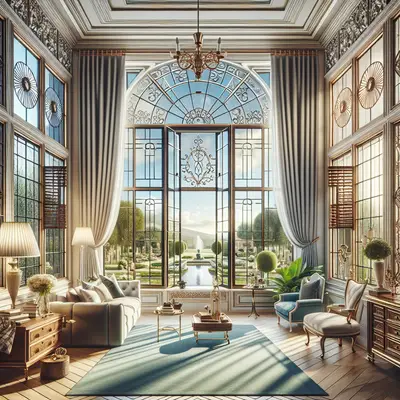
A picture window, traditionally large and minimally divided, creates a deliberate sense of stillness. It invites the exterior to function as a curated tableau—ocean, city skyline, or a single sculptural tree. In a premium context, the magic lies in proportion. A window that is slightly too small feels apologetic; one that is slightly too large can overpower the furnishings and compress the sense of intimacy. Pairing a large fixed unit with slender operable flankers (casements or awnings) often strikes a balance between cinematic views and practical ventilation.
Transom and clerestory windows—fixed glazing placed high on the wall—offer a different type of refinement. Instead of granting a direct view, they wash ceilings and upper walls with ambient light, softening shadows and visually “lifting” the room. Used well, they allow for privacy at eye level while still giving a space that coveted, gallery‑like glow.
In homes where privacy is paramount (think urban lots or tight setbacks), strategically placing tall, narrow fixed windows can invite sky and foliage in without exposing the interior to neighboring views. Obscure or frosted glazing can transform such windows into luminous surfaces, turning daylight into an architectural material in its own right.
Exclusive Insight #2: Fixed windows are not a cost‑cutting compromise; in luxury design, they are often the most intentional and disciplined choice, used where quiet visual drama matters more than operability.
Crafting Architectural Identity: Specialty Shapes and Configurations
Beyond the standard rectangles lies a realm where window types become architectural signatures. Specialty shapes and carefully layered configurations allow a façade to develop its own vocabulary—sometimes bold, sometimes whisper‑quiet.
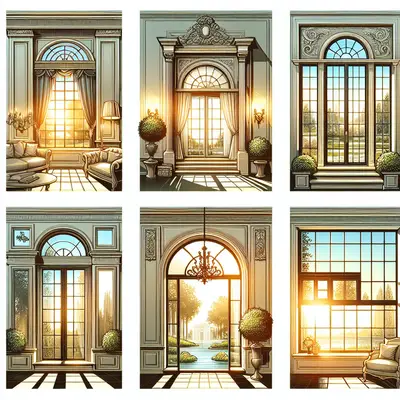
Arched, circular, or segment‑top windows can suggest heritage, but when executed with thin, contemporary frames, they provide a striking, modern counterpoint to otherwise rectilinear architecture. The key is restraint: a single, perfectly placed arched window over an entry or stair can be more compelling than a façade crowded with decorative shapes.
Bay and bow windows, which project beyond the wall line, serve as both optical and spatial luxuries. They borrow a sliver of the outdoors to expand the room’s interior footprint, creating reading niches, breakfast banquettes, or contemplative window seats. Structurally, they require more careful engineering, and in high‑performance homes, attention to insulation and air sealing beneath the projection is non‑negotiable. The reward: a gently unfolding panorama that changes character throughout the day.
Multi‑panel assemblies—such as stacked vertical windows or rhythmic columns of narrow casements—can turn an ordinary wall into a glazed composition. The repetition and spacing of mullions often contribute more to perceived sophistication than any single oversized pane. In refined projects, designers frequently echo interior alignments (like kitchen islands or stair strings) with mullion lines, creating a subtle harmony between inside and out.
Exclusive Insight #3: The most memorable homes often rely on one or two signature window configurations, repeated with intention, rather than a collage of unrelated shapes and sizes.
Atmosphere and Performance: Matching Window Types to Climate and Comfort
Even the most exquisite window fails if it compromises comfort. Window types interact differently with climate, orientation, and local conditions, and a refined upgrade strategy respects these nuances as much as aesthetics.
In windy or exposed locations—coastal homes, hilltops, open plains—casement and awning windows typically outperform sliders and double‑hungs in air‑tightness because the wind pressure pushes the sash more firmly into the seal. In calmer or milder climates, the difference may be less pronounced, allowing more freedom to prioritize historic character or interior ergonomics.
In hot, sun‑intense regions, large south‑ or west‑facing picture windows must be paired with the right glazing (low‑E coatings, solar‑control glass) and thoughtful shading (overhangs, louvers, exterior screens). Without mitigation, those expansive panes can introduce glare and heat gain at odds with an otherwise serene interior. In cooler climates, north‑facing windows are often the most forgiving, providing soft, stable light that flatters materials and colors.
Certain rooms justify specific window behaviors. In a primary bathroom, tilt‑and‑turn windows common in European design allow for secure venting at the top tilt position, reducing steam build‑up while preserving privacy. In kitchens, where counter heights and upper cabinets compete for wall space, a long, low awning band can deliver ventilation and daylight across the work surface without requiring drastic cabinet reconfiguration.
Acoustic comfort is another layer often overlooked. While glass composition and frame design do most of the sound‑insulating work, some window types are easier to specify with advanced acoustic options (laminated glass, triple glazing) and robust seals. Fixed units tend to be the quietest by nature; strategically using them along noisy exposures and reserving operable windows for more sheltered orientations can materially change the soundscape of a home.
Exclusive Insight #4: The most successful window upgrades assign different window types to different façades and rooms, treating the home as a micro‑climate map rather than copying one solution everywhere.
The Subtle Luxury of Integration: Pairing Window Types with Materials and Details
Ultimately, the sophistication of a window upgrade is rarely about any single product choice; it rests on harmony between window type, frame material, and interior detailing.
Slim aluminum or aluminum‑clad frames celebrate large picture and fixed windows, emphasizing clean sightlines and uninterrupted views. They excel in modern compositions where mullions are minimized, and glass is allowed to dominate. However, in climates with dramatic temperature swings, thermal breaks and high‑performance glazing are essential to avoid condensation and discomfort.
Wood or wood‑clad units pair beautifully with traditional double‑hung or French casement configurations, adding depth and tactile warmth. The richness of a finely finished interior wood frame—walnut, white oak, or a carefully selected paint color—turns the window into part of the room’s millwork story rather than a mere opening in the wall. In such spaces, muntin patterns (true divided lites or simulated) should align thoughtfully with interior paneling, shelving, or door transoms to avoid visual noise.
For transitional homes, pairing fixed picture windows with operable casements in identical, slim‑profile fiberglass or composite frames can produce a balanced, quietly luxurious effect: crisp profiles, strong performance, and very low maintenance. Strategically placing hardware—choosing finishes that echo door levers or cabinet pulls—adds another layer of refinement, especially when handles and locks are visible from key sightlines.
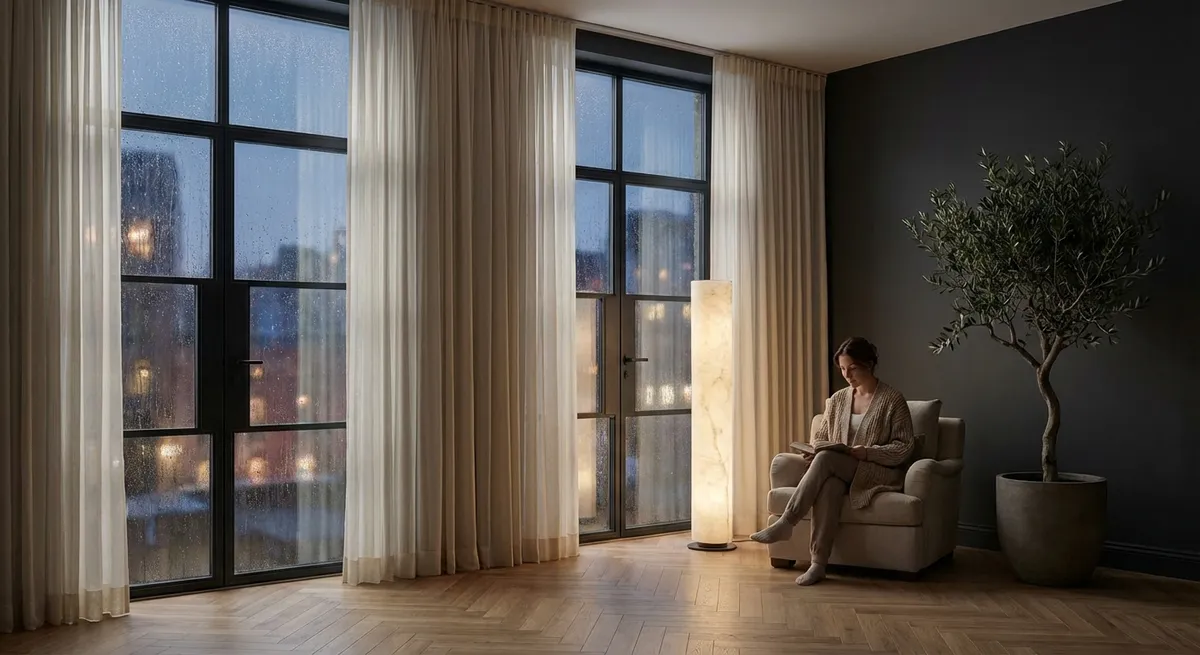
Finally, consider how window treatments will interact with each window type. Floor‑to‑ceiling drapery over large fixed units creates a hotel‑like softness, while delicately tailored Roman shades or interior shutters suit smaller double‑hungs or casements. Specifying window dimensions and positions with these treatments in mind avoids awkward overlaps and allows the room’s daylighting to feel curated, not improvised.
Exclusive Insight #5: In elevated projects, window type is selected only after the frame material, hardware, and soft furnishings are considered together—because the true luxury is not the window itself, but how quietly it disappears into a cohesive interior.
Conclusion
Choosing window types for a refined home is less a technical exercise and more a design dialogue: between interior and exterior, light and shadow, openness and privacy. Casements, double‑hungs, sliders, fixed units, bays, and specialty shapes each bring distinct behaviors, atmospheres, and efficiencies to a space.
For the discerning homeowner, the goal is not to find a single “best” window type, but to orchestrate a family of types—each selected for what it does exceptionally well in its specific context. When operation, proportion, material, and performance are considered together, windows stop being mere products and become instruments of quiet, enduring luxury.
Sources
- [U.S. Department of Energy – Windows, Doors and Skylights](https://www.energy.gov/energysaver/windows-doors-and-skylights) - Overview of window types, energy performance, and selection considerations by climate
- [Efficient Windows Collaborative (NFRC)](https://www.efficientwindows.org/types-of-windows/) - Detailed explanations of different window operating styles and their energy implications
- [U.S. Environmental Protection Agency – ENERGY STAR Windows](https://www.energystar.gov/products/building_products/residential_windows_doors_and_skylights) - Guidance on high‑performance window selection and certification
- [University of Minnesota Extension – Window Options for Energy Efficiency](https://extension.umn.edu/energy-efficiency/window-options-energy-efficiency) - Educational resource on window configurations, glazing choices, and comfort
- [Marvin Windows & Doors – Types of Windows](https://www.marvin.com/windows) - Manufacturer catalog illustrating a wide range of window types, shapes, and design applications
Key Takeaway
The most important thing to remember from this article is that this information can change how you think about Window Types.