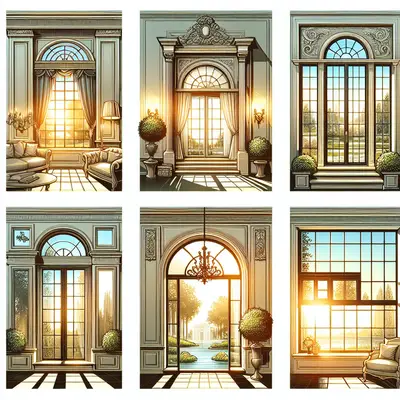
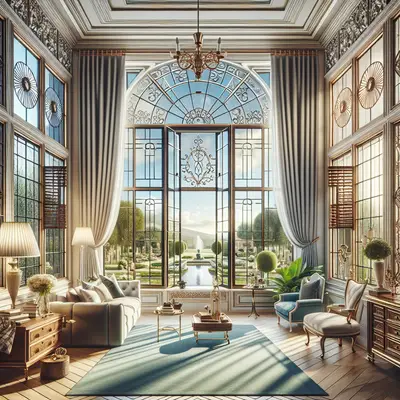
The most memorable homes rarely shout for attention; they edit it. Nowhere is this more evident than in the way they handle light, sightlines, and privacy through thoughtfully chosen windows. The right window type is not simply a functional decision—it is a quiet declaration of how you intend to live, entertain, and experience your space over time.
Below, we explore window types through a more discerning lens, with five exclusive insights for homeowners who see windows as architectural instruments rather than mere openings in a wall.
Reading a Room Through Its Windows
Before comparing window types, it helps to view each room as a set of deliberate experiences: arrival, movement, rest, and retreat. Windows then become the choreography between interior life and the outside world.
Picture a reading nook: a tall, narrow casement window might invite a gentle vertical rhythm of light, while a low, wide picture window changes the posture of the space entirely, grounding the view and inviting lounging rather than perching. In a primary suite, a sequence of smaller, higher windows can suggest a cocoon, while expansive floor-to-ceiling sliders signal openness and connection.
Thinking this way shifts the question from “Which windows are best?” to “Which window types serve the story of this room?” The answer is rarely one-size-fits-all. A refined home often employs two or three complementary window types, each chosen to support a particular mood, function, and view.
How Different Window Types Quietly Shape the Experience
Most homeowners know the basic labels—double-hung, casement, slider—but fewer understand the subtle behavioral differences each type introduces into a room.
Casement windows, hinged at the side, behave almost like adjustable sails. Opened partially, they can catch breezes and direct airflow, making them ideal for rooms where you want controlled ventilation without a wide sash obstructing the view. Their clean lines also pair beautifully with both modern and transitional architecture.
Double-hung windows bring a more traditional rhythm, with two moveable sashes that slide vertically. Their strength lies in versatile ventilation—opening both top and bottom allows warm air to escape while cooler air enters—while preserving symmetry on historic or classic façades.
Sliding windows offer a horizontal glide and minimal projection—useful in tight exterior spaces such as patios or walkways. Picture windows, fixed and non-operable, function as luminous frames: they do not ventilate but offer the purest distilled view and maximal thermal performance when paired with advanced glazing.
For more expressive architecture, specialty shapes—arched, circular, trapezoidal—can punctuate rooflines, stairwells, and entry halls with a sense of custom refinement. The most elevated designs mix operable and fixed units in composed groupings, prioritizing clarity of sightlines and proportional harmony over strict uniformity.
Five Exclusive Insights for the Discerning Homeowner
1. Prioritize “View Architecture” Before Window Type
Instead of starting with product catalogs, begin with a simple exercise: stand in each room and mark three priorities—what you want to see, what you want to soften, and what you prefer to obscure.
For example, a perfectly framed tree canopy may call for a generous picture window, while a less desirable side-yard view is better served by tall, narrow casements with translucent glass. Once you’ve defined the “view architecture,” window types become tools to execute that vision rather than arbitrary selections.
This approach often leads to combinations—fixed windows flanked by operable casements, or a large picture window anchored with a low awning window beneath for airflow—yielding both aesthetic and functional advantages.
2. Match Operation Style to How the Space Is Actually Used
Window decisions are frequently made from a floor plan, not from within the life of the room. A more refined method is to ask: how will you physically interact with these windows?
In a kitchen, a double-hung window centered over a deep farmhouse sink may be awkward to reach, whereas a single-lever casement or awning window allows easy operation with one hand. In a bedroom where furniture will sit beneath the sill, a slider or single-hung window may be more practical than an outswing casement that conflicts with exterior landscaping or a balcony railing.
In tight urban lots, tilt-and-turn windows (popular in European design) offer sophisticated flexibility—tilting inward at the top for secure ventilation or fully swinging inward for wide-open access—ideal where exterior clearance is limited but high performance and nuanced control are desired.
3. Use Window Types to Deliberately Engineer Privacy
Privacy is often treated as an afterthought, solved hastily with blinds or heavy drapery. Elevated design handles privacy at the window-type level.
High clerestory windows—long, horizontal openings near the ceiling—can fill a bathroom or hallway with soft, ambient light while avoiding direct sightlines. In side-yard conditions, slender vertical casements or awning windows placed higher on the wall preserve privacy while still inviting air and light.
For rooms that straddle public and private—such as home offices facing the street—fixed windows combined with integrated shades or laminated privacy glass can deliver a tailored solution: views when you want them, and a serene, cocooned environment when you do not.
4. Think in Compositions, Not Singles
Sophisticated window design rarely relies on isolated units spaced evenly along a wall. Instead, it favors compositions—groupings that read as one considered opening.
A generous living room façade might pair a central picture window with narrow, operable casements or tilt-and-turn units on either side, creating a framed panorama with the option for subtle ventilation. In a stairwell, stacking a series of smaller fixed windows can create a cinematic progression of views as you move from floor to floor.
These compositions also enable performance tuning. Fixed windows, which generally offer better thermal performance and fewer air leaks, can be used for the largest spans of glass, while smaller operable units handle ventilation needs. The result: a space that feels expansive yet controlled, luxurious yet efficient.
5. Elevate Performance by Pairing Type with Advanced Glazing
Not all window types are equal in their capacity to carry advanced glazing, and not all glass performs the same. Once you’ve determined where you want openness and where you prefer enclosure, consider how glass technology can enhance each window’s role.
Large picture windows are prime candidates for high-performance double or triple glazing with low-emissivity (Low-E) coatings and gas fills, because they remain closed and can be optimized for thermal comfort and condensation resistance. Operable windows—casements, tilt-and-turn, awnings—can be specified with similar coatings but require careful attention to hardware and seals to maintain performance.
In sun-exposed spaces, spectrally selective coatings can reduce heat gain while preserving clarity, ensuring that a wall of glass still feels crisp rather than tinted or dull. Meanwhile, laminated or acoustic glass in bedrooms, media rooms, or urban environments can dramatically quiet the interior without compromising design intent.
Aligning window type with the right glazing strategy transforms windows from potential weak points into high-performing architectural assets.
Curating a Cohesive Language of Openings
When you step back from individual choices, the most compelling homes reveal a consistent “window language”—a rhythm of proportions, operations, and alignments that feels composed rather than improvised.
That language might be tall, slender casements paired with generous fixed panels for a quietly modern aesthetic; or classic double-hung windows on the front façade complemented by more expansive sliders and picture windows at the rear, where the home opens to gardens or views. What matters is not strict uniformity, but a recognizable logic.
Approaching window types with this level of intent does more than refine appearances. It improves comfort, enhances acoustic and thermal performance, and subtly choreographs how you move through and experience each room. In an era where light, silence, and privacy are true luxuries, windows chosen with care and sophistication become the signature elements that distinguish an ordinary renovation from a considered, enduring upgrade.
Conclusion
Selecting window types is no longer a basic, utilitarian decision. For homeowners who expect their spaces to feel as thoughtfully crafted as they look, windows are a primary design instrument. By starting with view architecture, aligning operation with daily habits, engineering privacy through placement, thinking in compositions, and marrying each type with advanced glazing, you transform windows from background elements into quiet, high-performing statements of intent.
The result is a home that not only looks refined from the street, but lives beautifully from within—every view framed, every breeze calibrated, every moment of light deliberately shaped.
Sources
- U.S. Department of Energy – Efficient Windows - Overview of window types and their energy performance considerations
- Efficient Windows Collaborative – Window Selection Guidance - Detailed information on how different window styles affect comfort, daylighting, and efficiency
- Lawrence Berkeley National Laboratory – Windows & Daylighting - Research-based insights on window technologies, glazing, and thermal performance
- Whole Building Design Guide (National Institute of Building Sciences) - Professional guidance on design considerations for windows in high-performance buildings
- American Architectural Manufacturers Association (FGIA) - Industry information on window products, performance ratings, and best practices for selection
Key Takeaway
The most important thing to remember from this article is that this information can change how you think about Window Types.