The most successful window upgrades rarely announce themselves. They don’t shout with gadgetry or obvious excess; they recalibrate the way a room feels—its light, its quiet, its proportions. For the discerning homeowner, window selection is less about choosing a product and more about curating a visual and sensory experience. The right window type becomes an architectural signature, subtle yet transformative.
Below, we explore how different window profiles shape your interiors—and share five exclusive, elevated insights that matter when you’re upgrading with intention rather than impulse.
Reading a Room: Matching Window Type to Architectural Character
Before comparing specs, it helps to “read” your home the way an architect would. Each architectural style carries its own visual rhythm, and window types either harmonize with that rhythm or interrupt it.
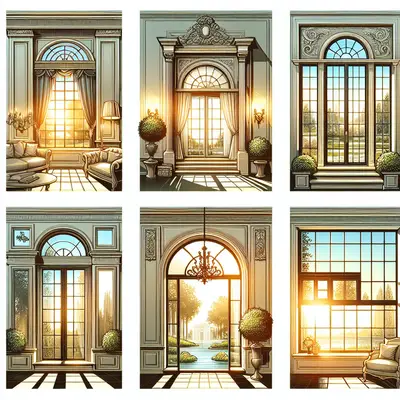
In a traditional or transitional home, double-hung and casement windows often feel innately correct. Their vertical emphasis reinforces classical proportions, and the familiar sash lines visually align with trim, wainscoting, and millwork. By contrast, expansive fixed panes and lift‑and‑slide configurations flatter modern or minimalist homes, emphasizing unbroken surfaces and clean horizontals.
Beyond style, ceiling height, wall length, and sightlines matter deeply. Tall ceilings typically reward vertically oriented windows or stacked combinations (such as a casement topped with a transom), which pull the eye upward and make use of vertical wall real estate. Long, low rooms often benefit from broader, more horizontal window types like sliders or broad picture windows, anchoring the space and reinforcing a panoramic feel.
The quiet luxury move is not to choose the “best” window type in the abstract, but the most architecturally honest type for each elevation. This approach yields a façade that feels intentional from the street and interior rooms that feel coherent rather than pieced together.
The Discipline of Daylight: How Different Window Types Sculpt Light
Not all window profiles deliver daylight in the same way. Two openings of identical size can feel radically different depending on how the sash moves, where the mullions fall, and how much frame interrupts the view.
Fixed picture windows, for example, are pure apertures: no moving parts, minimal frame, maximal light. They are ideal where ventilation is secondary but visual generosity is paramount—behind a soaking tub, framing a garden axis, or in a stairwell where a dramatic shaft of daylight can turn circulation space into a design moment. Casement windows, by contrast, are daylight “projectors.” When opened, they can scoop and direct breezes and light inward, particularly when hinged to catch prevailing winds.
Double-hung windows read as slightly more formal because of their balanced sash composition, but their central meeting rail and thicker profiles can fractionally reduce visible glass compared with an equivalently sized casement. Sliders, especially contemporary slim-frame versions, push glass area even further, enhancing lateral views that suit low-slung living rooms or indoor–outdoor spaces.
Glare management is another sophisticated consideration. East- and west-facing façades are prone to harsh, low-angle sunlight. Here, combining fixed units with operable awning or casement windows allows you to reserve the largest, most exposed areas for non-operable glass that can be optimized for solar control, while using smaller operable units strategically for ventilation. The result is rooms bathed in usable, diffuse light instead of fragile zones of overexposure.
Five Exclusive Insights for the Discerning Window Upgrade
1. Think in Compositions, Not Single Units
Homeowners often choose window types room by room, but the most refined results come from thinking in “compositions” across a wall or elevation. Pairing a large fixed unit with flanking casements, or stacking awnings beneath a tall picture window, creates rhythm and hierarchy.
A simple but elevated move: use fixed windows as the primary view frames and treat operable units as discreet, secondary elements. This preserves clean sightlines while still providing ventilation. For example, a dining room might use a broad fixed center panel with slender operable casements at the margins. When closed, the eye reads one elegantly continuous panorama; when open, the room breathes without visually cluttered mullions.
2. Choose Operation Based on How You Actually Live
Casement vs. double-hung vs. slider is more than a stylistic decision; it’s a lifestyle decision. In practice, many homeowners rarely open upper-story windows fully, using them only for tilt, crack, or seasonal airing. In such spaces—guest rooms, secondary bedrooms—tilt‑turn windows or awnings set high in the wall can be more practical and safer, especially in households with children.
In social spaces where people gather near the glass, such as kitchens and living rooms, consider how furniture meets the window. Casements above deep countertops can be difficult to reach and operate; here, sliders or double-hungs offer easier access. In rooms that open directly to terraces, lift‑and‑slide or folding systems can erase the boundary in a way traditional hinged doors never will. Matching operation style to actual patterns of use is a quiet luxury—nothing feels more premium than a window that operates exactly as you instinctively want it to.
3. Treat Frame Proportions as a Design Element
Most window shopping fixates on glass performance, but frame proportions subtly signal quality. The same window type can feel tailored and architectural or bulky and generic depending on the width of stiles, rails, and mullions.
Slimmer frame profiles in aluminum-clad or high‑end fiberglass can dramatically increase visible glass while keeping the aperture the same size. However, in certain traditional settings, slightly more substantial wood frames with carefully profiled edges can add weight and gravitas. The key is consistency: repeating similar frame proportions and mullion grids across all window types in the home creates a visual through-line, even if the operations (casement, awning, fixed) differ.
For a sophisticated upgrade, request frame dimension drawings from your window supplier and compare sightlines rather than just overall unit dimensions. This attention to the “negative space” between frames and walls is what separates a refined installation from a merely expensive one.
4. Use Specialty Window Types as Focal Points, Not Novelties
Arched, corner, and clerestory windows are often treated as indulgent extras, but deployed strategically, they can become the architectural heart of a room. A corner window, whether fixed or operable, dissolves the traditional boundary between two walls, creating a floating effect that makes even modest rooms feel more expansive. Similarly, a band of clerestory windows high on the wall can deliver gentle, privacy-preserving light while freeing lower walls for art, cabinetry, or bookcases.
The elevated strategy is restraint: choose one or two standout window moments in the home rather than scattering specialty shapes everywhere. A single, perfectly proportioned arched window centered on a landing or hallway can act like a piece of permanent architectural art, with simpler window types supporting it quietly in adjacent spaces.
5. Anticipate the Acoustic Personality of Each Window Type
Sound control is often discussed as a glass specification—laminated, triple-pane, varying thicknesses—but window type itself influences how sound behaves. Fixed units, with their uninterrupted seals and absence of moving parts, are naturally more resistant to sound transmission. In noise-sensitive façades facing busy streets or flight paths, emphasizing fixed windows and minimizing operable units can create discernibly calmer interiors.
When operable windows are necessary on noisy elevations, casements with high-quality multi‑point locking systems can compress gaskets more uniformly than some sliding configurations, resulting in fewer potential sound leaks. Tilt‑turn windows, popular in European markets, often perform exceptionally well acoustically when closed, thanks to robust hardware and deep frame profiles.
A nuanced approach might involve using fixed windows at ear height in bedrooms facing noise sources, with smaller, operable awnings higher on the wall for controlled ventilation. You still receive fresh air but protect the primary listening plane where you rest and relax.
Material, Maintenance, and the “Quiet Luxury” of Effortless Performance
Once you understand how window types influence space, the material conversation becomes more purposeful. Wood, fiberglass, and aluminum- or vinyl-clad hybrids each bring a different visual language and maintenance profile, and the ideal choice often combines aesthetics with how you plan to live in the home over the next decade or two.
In rooms where you’ll be close to the window—reading nooks, breakfast banquettes, window seats—interior wood frames can feel warm and tactile, especially when paired with minimalist hardware. In higher-humidity zones like bathrooms and coastal environments, fiberglass or aluminum-clad exteriors help maintain crisp lines and finish integrity over time, ensuring the refined look you pay for today doesn’t soften into fatigue a few seasons later.
The most elevated installations often leverage mixed strategies within one consistent design language: perhaps wood interiors in principal rooms and ultra-durable composites in utility spaces, all sharing identical profiles, colors, and grid patterns. This delivers a cohesive visual narrative while quietly optimizing for performance where it matters.
Conclusion
Selecting window types for a premium home is less about following trends and more about orchestrating light, proportion, and performance with intent. When you think in compositions rather than units, align operation with how you truly live, and treat frame proportions and specialty shapes as deliberate design tools, each window becomes part of a larger architectural story.
The ultimate hallmark of a refined upgrade is that nothing feels arbitrary. Every casement, fixed pane, and awning has a reason to exist—contributing to a home that feels quieter, brighter, and more composed, day after day.
Sources
- U.S. Department of Energy – Energy-Efficient Window Attachments – Overview of performance considerations that inform material and configuration choices
- Efficient Windows Collaborative – Window Types – Technical breakdown of various window operations and their performance implications
- National Park Service – Preservation Brief on Window Types – Guidance on matching window configurations to architectural styles in historically sensitive contexts
- Pella – Window Styles and Configurations – Manufacturer illustrations showing how different types can be combined into larger compositions
- Marvin – Design Options and Frame Profiles – Detailed product guides highlighting frame dimensions, sightlines, and material options
Key Takeaway
The most important thing to remember from this article is that this information can change how you think about Window Types.