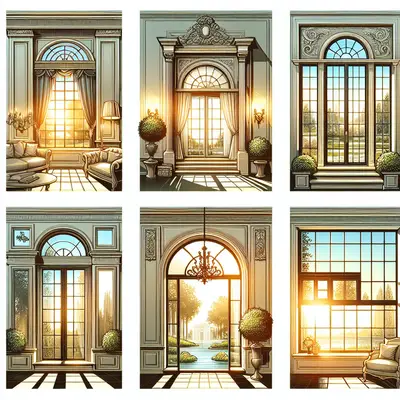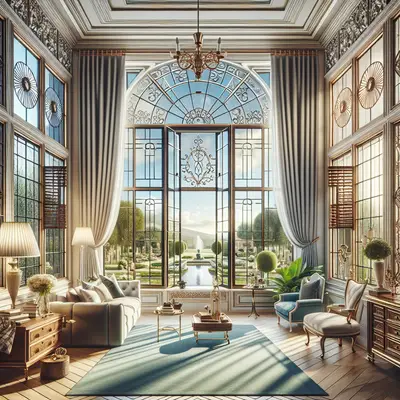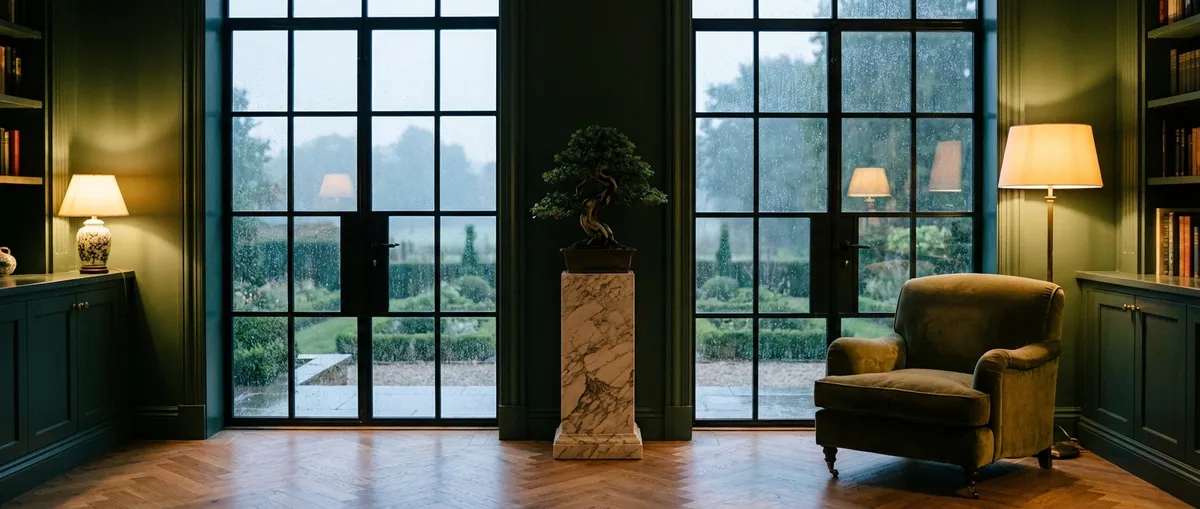
Windows do more than admit light; they curate how you experience your home, your garden, and the world beyond. For the discerning homeowner, selecting window types is less a technical decision and more an exercise in architectural editing—choosing which moments to frame, which spaces to quiet, and which vistas to celebrate. The right combination of window forms, proportions, and operations can transform an ordinary elevation into a composed façade and a standard room into a considered retreat.
Below, we explore key window types through a refined lens—beyond the basic “pros and cons”—and highlight five exclusive insights that are often missed in conventional upgrade conversations.
Reading a Room Through Its Windows
Every room has an inherent “behavior”: some are contemplative, others social; some require privacy, others invite expansive views. Window types should harmonize with this behavior rather than fight it.
Casement windows, hinged at the side and opening like doors, excel in spaces where fresh air and precise control are paramount—think a kitchen where you want to purge cooking odors quickly, or a home office where gentle cross-ventilation supports focus. Their tight seal when closed and unobstructed glass surface lend a sense of tailored minimalism.
Double-hung windows, with two operable sashes, are quiet workhorses in traditional or transitional interiors. They allow warm air to escape through the top while drawing cool air in below, making them suited to bedrooms and living rooms where comfort, not drama, is the priority. Their visual rhythm—stacked horizontals within a vertical frame—can echo classic millwork and trim.
Picture windows, fixed and expansive, function as architectural punctuation. They do not simply “let in light”; they choreograph a singular, commanding view—over a tree canopy, a city skyline, or a sculpted courtyard. Their stillness pairs beautifully with adjacent operable windows (casement or awning) that support ventilation while the picture window acts as a pure viewing plane.
Exclusive Insight #1: Choose window types by “room posture,” not just style
Instead of asking, “What looks good here?” first ask, “How should this room behave?” Quiet, restorative rooms often benefit from fewer, larger fixed panes paired with subtle operable units; active rooms may favor multiple smaller, operable windows to modulate light, sound, and breeze throughout the day.
Modern Forms: Casement, Awning, and Tilt-Turn as Architectural Tools
While traditional sash windows carry nostalgia, contemporary forms offer a level of performance and precision ideal for a thoughtfully updated home.
Casement windows shine in modern envelopes for their sleek lines and superior air sealing. When opened, they can “scoop” breezes, particularly on elevations perpendicular to prevailing winds. For narrow side yards or long corridors, a sequence of tall, slim casements can create a gallery-like effect.
Awning windows, hinged at the top, are subtle yet luxurious in their utility. They can be left partially open during light rain, allowing for ventilation without compromising comfort. Positioned high on walls in bathrooms, walk-in wardrobes, or stairwells, awnings introduce private daylight and fresh air while preserving clean wall space for art or built-ins.
Tilt-turn windows, popular in European design, offer dual functionality: they tilt inward at the top for secure, gentle ventilation, or swing fully open from the side for maximum airflow and easy cleaning. In high-performance homes, tilt-turn units marry airtightness with operability, making them ideal for upper floors and spaces where flexible ventilation is a priority.
Exclusive Insight #2: Mix operability styles to fine-tune comfort
Instead of repeating a single window type, consider pairing fixed picture windows with operable casements or tilt-turns on the same wall. This creates a refined visual hierarchy: a primary view pane flanked by discreet “working” windows that manage air and comfort without cluttering the composition.
Heritage Forms Reimagined: Double-Hung, Bay, and Bow
Classic window types, when specified with intention, can feel remarkably current and elevated.
Double-hung windows have evolved significantly with modern balance systems and advanced glazing. Today’s premium models emulate the grace of historic sash profiles while delivering improved insulation, noise reduction, and easier maintenance. In period homes, they respect the architectural language while quietly elevating performance.
Bay and bow windows create three-dimensional interest—projecting outward to collect light and expand the perceived volume of a room. A bay, typically composed of three panels set at angles, can articulate a reading nook or dining banquette. A bow, with four or more gently curved panels, lends softness to an otherwise linear façade and produces a subtle panoramic effect inside.
When thoughtfully detailed—with integrated seating, concealed storage, or custom shades—these projecting window types become destinations within the home rather than mere eccentrics on the exterior.
Exclusive Insight #3: Use projecting windows to “borrow space” for constrained rooms
In smaller rooms or narrow footprint homes, a bay or bow window can create an illusion of greatly increased depth without extending the foundation. This is particularly effective in dining areas, libraries, or bedrooms where even a slight outward shift allows more generous furniture placement and movement.
Specialty Windows: Clerestory, Corner, and Floor-to-Ceiling
For homeowners seeking a more architectural statement, specialty window configurations can redefine how spaces are experienced.
Clerestory windows—placed high on the wall—deliver light deep into a room while keeping eye-level walls free for art or cabinetry. In living rooms, they create a sense of volume and daylight without sacrificing privacy. In corridors, they transform what might otherwise be a dim passage into a luminous gallery.
Corner windows, where glazing meets at or near a building corner, dissolve the boundary between interior and exterior. This detail is particularly powerful over sculpted landscapes, water features, or striking city views. The effect is luxurious not because of ostentation, but because of how effortlessly it extends the viewpoint.
Floor-to-ceiling windows or expansive sliding glass systems introduce a sense of hotel-level indulgence when used judiciously. In main living areas that flow onto a terrace or garden, this approach creates a seamless indoor-outdoor threshold. The key is disciplined framing and proportion—the glass should feel deliberate and composed, not simply oversized.
Exclusive Insight #4: Treat specialty windows as “moments,” not defaults
Rather than applying floor-to-ceiling or corner glazing broadly, reserve these gestures for one or two strategic locations where they will have maximum emotional and experiential impact—such as the end of a hallway, the head of a soaking tub, or the main living vista. This focus creates a sense of rarity and distinction.
Detailing for Distinction: Mullions, Sightlines, and Alignment
Beyond the basic selection of window types, the sophistication of a window upgrade is often determined by subtle details that most specification lists never mention.
Mullion width (the vertical and horizontal bars between panes) dramatically influences the perceived elegance of a window. Slim, well-engineered profiles allow more glass and a lighter aesthetic, particularly aligned with contemporary design. In more traditional homes, refined simulated divided lites can echo historic craftsmanship while maintaining modern thermal performance.
Sightlines—the lines your eye follows along frames, mullions, and adjacent architectural elements—are critical. Aligning the top of windows with door headers, or allowing transoms to march at a consistent height across a façade, creates calm visual order. Even mixing window types can feel cohesive when their critical lines are harmonized.
Interior finishes also matter: pairing a warm wood veneer on the interior face with a durable, low-maintenance exterior cladding can provide the tactile richness you feel daily with the durability you need outside.
Exclusive Insight #5: Design windows as part of a whole elevation, not room by room
Instead of selecting windows independently for each room, study the exterior elevations as a continuous composition. Ensure that varied window types—casement, picture, awning, or specialty units—share consistent sill heights, head heights, or mullion alignments where possible. This elevates the home’s overall presence and subtly signals a custom, considered build.
Conclusion
Selecting window types for an elevated home is less about matching catalogue images and more about orchestrating light, air, privacy, and view into a coherent narrative. Casement and awning windows offer precision and performance; double-hung, bay, and bow windows reinterpret heritage with quiet luxury; clerestory, corner, and floor-to-ceiling configurations provide moments of architectural theater.
By thinking in terms of room behavior, mixed operability, spatial “borrowing,” focused statement windows, and disciplined alignments, homeowners can move beyond functional upgrades to create a window composition that feels tailored, enduring, and unmistakably refined. In a truly considered home, windows do not simply fill openings—they define how you live.
Sources
- [U.S. Department of Energy – Energy-Efficient Window Types](https://www.energy.gov/energysaver/types-windows) - Overview of common window types and their performance characteristics
- [Efficient Windows Collaborative – Window Selection Guidance](https://www.efficientwindows.org/selection.php) - Detailed explanations of window operations, design considerations, and climate responsiveness
- [U.S. Environmental Protection Agency – ENERGY STAR Windows, Doors, and Skylights](https://www.energystar.gov/products/residential_windows_doors_and_skylights) - Criteria and benefits of high-performance, certified window products
- [Whole Building Design Guide (National Institute of Building Sciences) – Windows and Glazing](https://www.wbdg.org/design-objectives/sustainable/windows-glazing) - In-depth architectural guidance on window design, daylighting, and enclosure performance
- [University of Minnesota Extension – Window Replacement and Glazing Options](https://extension.umn.edu/windows-and-doors/window-replacement) - Practical, research-based discussion of window choices and their impacts on comfort and efficiency
Key Takeaway
The most important thing to remember from this article is that this information can change how you think about Window Types.