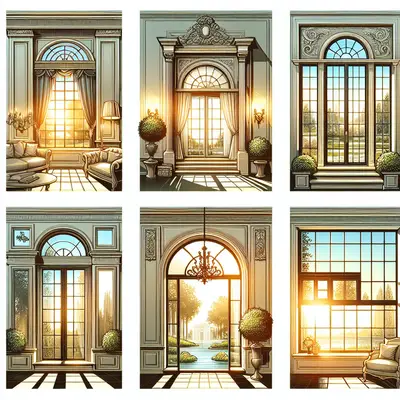
Choosing new windows is no longer a purely functional decision; it is a design statement, an energy strategy, and a long-term investment in how your home feels, sounds, and performs. For the discerning homeowner, the question is not simply which window, but which experience—how each window type frames light, manages comfort, and integrates with the architecture of a refined home.
Below, we explore the primary window types through a premium lens and uncover five exclusive insights that often escape even seasoned renovators, yet make all the difference in an elevated upgrade.
Understanding the Language of Window Types
Before comparing styles, it helps to read windows as an architect might: form, function, and frame.
Casement windows, hinged at the side and operated with a crank, deliver a clean, almost gallery-like presentation of glass with minimal framing. Their ability to open fully outward makes them a favorite for those who appreciate controlled ventilation and crisp sightlines.
Double-hung windows, with two operable sashes that slide vertically, remain the quiet classic of traditional homes. They harmonize beautifully with historic facades and are often favored where exterior projections (like casement sashes swinging out) might conflict with landscaping or walkways.
Sliding windows, operating horizontally, are the understated counterpart to double-hungs—ideal for wider openings and minimalist interiors where a low profile is preferred. Their simplicity often pairs well with modern or mid-century architecture.
Awning windows, hinged at the top, are subtle yet strategic. They shed rain while open, making them superb for maintaining airflow in damp or coastal climates. Their horizontal emphasis feels naturally at home above bathtubs, kitchen counters, or in clerestory applications.
Fixed and picture windows are pure framing devices: all view, no operation. Used thoughtfully, they become architectural punctuation marks—emphasizing a garden vista, a coastal horizon, or a favorite architectural line.
Bay and bow windows extend beyond the façade, capturing space, light, and drama. Bays, with their angular geometry, feel tailored and architectural; bows, with softer curves, lend a more romantic and European sensibility. Both create intimate seating or display zones that add experiential luxury without increasing the home’s footprint.
Specialty shapes—arched, circular, trapezoidal—function as design signatures. They are rarely chosen for utility, but for the way they elevate a façade or give a room a bespoke personality that feels custom-crafted rather than catalog-selected.
Insight 1: The Ventilation Signature of Each Window Type
Most homeowners consider how a window looks before they consider how it breathes. In reality, ventilation pattern is one of the most sophisticated differentiators between window types, and it can quietly transform comfort and air quality.
Casement windows excel at “scooping” breezes into the home, especially when hinged to catch prevailing winds. Open them partially, and the sash acts like a subtle airfoil, directing fresh air deeper into the room. In contrast, double-hung windows invite a more nuanced airflow: lower sash open for cool air in, upper sash open for warm air out. Used together, they create a gentle, self-regulating convection cycle that is particularly elegant in multi-story homes.
Sliding windows, while often efficient and low-maintenance, ventilate only across a portion of the opening. In rooms where cross-ventilation is a priority, they benefit from being paired with operable windows on an opposite or adjacent wall.
Awning windows introduce a different virtue: resilient ventilation. In a light rain, they can remain open, allowing a space to breathe when other windows must close. This makes them a compelling choice for spa-like bathrooms, laundry rooms, and coastal retreats where humidity management is part of daily comfort.
Fixed windows, of course, do not ventilate—but when placed in dialogue with operable counterparts (for example, a large central picture window flanked by casements), they support a composed façade while still enabling healthy airflow. The key is to think in terms of ventilation zones rather than isolated units: how each window type contributes to an overall circulation strategy throughout your home.
Insight 2: How Different Window Types Shape Natural Light
Light is the true luxury feature in any home, and each window type handles it differently—not just in quantity, but in character.
Picture and fixed windows behave like curated apertures, delivering the maximum possible view and daylight with minimal interruption. In living rooms, stairwells, or dining areas, they become luminous focal points, particularly when paired with deep interior reveals or refined trim profiles that emphasize the thickness of the wall and the depth of the opening.
Casements and awnings, with their relatively slim frames, also perform well for daylighting. Their operability, however, introduces a functional overlay: they invite both light and fresh air, making them strong candidates for main living spaces where comfort and clarity must coexist.
Double-hung windows create a visually rhythmic pattern along a façade, their divided sash lines echoing traditional proportions. In interiors, this can subtly structure the light, breaking it into upper and lower zones that feel especially harmonious with classic millwork, wainscoting, and traditional ceiling heights.
Bay and bow windows, by projecting outward, admit light from multiple angles throughout the day. The effect is quietly dramatic: light wraps around the interior niche, softening shadows and creating an almost pavilion-like feel. In north-facing rooms that risk feeling flat, or in narrow urban spaces where light is precious, this kind of multi-directional illumination can be transformative.
Clerestory and high awning windows introduce a studio-like character, bringing in light from above the eye line while preserving privacy. This effect is particularly compelling in contemporary designs where walls are treated as art surfaces and light is layered from multiple levels, not just at standard window heights.
Insight 3: Architectural Integrity—Pairing Window Types with Home Style
The most refined window upgrades are those that feel inevitable, as though they were conceived with the original architecture. Different window types carry different historical and stylistic associations, and understanding these can preserve—and quietly elevate—your home’s identity.
Double-hung windows are foundational to Colonial, Georgian, Federal, and many Craftsman-era homes. In these contexts, replacing them with sliders or overly modern casements can create visual dissonance. Instead, subtle enhancements—slimmer frames, elevated hardware, discreet divided lite patterns—can refresh without erasing the home’s architectural memory.
Casement windows align naturally with European-inspired architecture (French country, Tudor, Mediterranean) and with clean-lined modern and contemporary designs. Their uninterrupted glass surfaces showcase modern finishes and refined interior detailing, from minimalist moldings to sculptural window treatments.
Sliding windows resonate with mid-century modern, ranch, and contemporary styles that prioritize horizontal lines and understated function. When paired with larger expanses of glass and low, extended rooflines, they feel authentically integrated rather than utilitarian.
Bay and bow windows complement Victorian and Edwardian homes, but they can also be reinterpreted in contemporary contexts with angular or crisp-lined bays that act as architectural statements. The key is proportion: overscaled bays can feel ostentatious, while too-small projections risk looking apologetic.
Specialty shapes, when used sparingly, become the architectural “jewelry” of a façade. A single arched window above an entry, a circular window in a stair tower, or a trapezoid window echoing a roofline can all provide a signature that looks bespoke rather than copy-pasted—especially when the rest of the window package remains disciplined and cohesive.
Insight 4: Operational Elegance—How Use Patterns Should Guide Type Selection
Beyond aesthetics, the most successful window projects respect everyday rituals: how you cook, entertain, work, and rest. Different window types offer different operational advantages that can make daily life feel more effortless.
In kitchens, reach and clearance are paramount. Over a deep farmhouse sink or wide countertop, double-hung windows can be awkward to operate. Casement and awning windows—with crank or push-out hardware—allow for easy opening without leaning uncomfortably. When chosen with premium hardware, the motion itself can feel tactile and satisfying, akin to a well-engineered cabinet hinge or door closer.
In bedrooms, tilt-in double-hungs or tilt-and-turn windows (a European style that opens inward in two modes) provide easy cleaning from the interior—especially valuable on upper floors in urban settings where exterior access is limited. This detail, while minor in the showroom, becomes a significant quality-of-life feature over years of use.
Sliding windows shine in secondary spaces where simplicity and durability are paramount: home gyms, utility rooms, lower-level family rooms. Their straightforward motion and fewer mechanical parts often translate to a quiet robustness that rewards frequent opening and closing.
For larger glass expanses—such as in living rooms that open to terraces or gardens—consider how window types coordinate with doors. A large fixed or picture window adjacent to a sliding or multi-panel door system can provide a sense of continuity: panoramic views when closed, and a compelling indoor-outdoor connection when open. The goal is to orchestrate glass surfaces that shift between framing the outside world and dissolving into it.
Finally, think seasonally. In climates with dramatic differences between winter and summer, operable window types near heat sources or high ceilings can assist in passive temperature regulation. A high awning or operable clerestory, for example, can quietly vent hot air that collects at the ceiling, reducing reliance on mechanical systems on temperate days.
Insight 5: Subtle Luxury—Details That Distinguish Elevated Window Solutions
For homeowners pursuing a truly elevated experience, the distinction between standard and exceptional often lies in quiet details rather than obvious flourishes. Many of these are intertwined with window type and can be chosen strategically.
Casement and awning windows, by virtue of their design, tend to seal more tightly when closed, offering exceptional air and water resistance. Paired with high-spec weatherstripping and quality hardware, they deliver a satisfying sense of closure—a gentle yet decisive final turn of the handle that signals both security and refinement.
Fixed and picture windows, especially in large formats, offer a unique opportunity for ultra-clear, low-iron glass that removes the subtle green tint seen in standard glass. For homes overlooking water, sculptural landscaping, or city skylines, this seemingly modest upgrade can have a striking visual impact.
Bay and bow windows invite refined interior finishing: custom cushions, integrated storage, or tailored millwork that turns a simple projection into a signature experience. Treated thoughtfully, they transcend “window” status and become a destination within the home—a place for morning coffee, evening reading, or quiet conversation.
Hardware selection is another discreet marker of luxury. Satin nickel, burnished bronze, or blackened finishes; low-profile locks and hinges; or European-style handles can unify the visual language of doors and windows throughout the home. Matching or deliberately contrasting these with interior door hardware creates a sense of continuity that feels designed, not improvised.
Lastly, consider how window types interact with shading solutions—both interior and exterior. Deep overhangs above large fixed or casement units, integrated pockets for motorized shades above tall windows, or exterior shading devices aligned with awning windows can all refine both the aesthetics and the thermal performance of your envelope. True luxury lies not just in the window itself, but in the way it collaborates with light, landscape, and lifestyle.
Conclusion
Selecting window types is not a matter of picking from a grid of options; it is a process of composing views, light, airflow, and daily rituals into a coherent whole. Casements, double-hungs, sliders, awnings, fixed units, bays, and specialty shapes each bring distinct strengths—and when chosen thoughtfully, they can elevate a home far beyond basic replacement.
By looking beyond surface style and considering ventilation patterns, light quality, architectural integrity, operational elegance, and subtle luxury details, homeowners can transform a necessary upgrade into a curated enhancement of how their home is lived in and experienced every day.
Sources
- U.S. Department of Energy – Energy-Efficient Windows – Overview of window types, performance considerations, and energy-related guidance
- Efficient Windows Collaborative – Window Types – Detailed explanations of common window operating styles and their characteristics
- National Park Service – Preservation Brief 9: The Repair of Historic Wooden Windows – Insight into traditional window forms and how they relate to historic architectural styles
- Lawrence Berkeley National Laboratory – Residential Windows – Research-based information on window performance, glazing, and comfort factors
- Marvin Windows & Doors – Window Types – Manufacturer’s catalog of modern window types with visual and functional descriptions
Key Takeaway
The most important thing to remember from this article is that this information can change how you think about Window Types.