The most memorable homes are not defined by square footage, but by the way they hold light, frame views, and choreograph privacy. Windows are not merely apertures in a wall; they are architectural instruments that shape mood, comfort, and the quiet luxury of everyday living. Selecting the right window types is less a technical decision and more a form of curation—an alignment of performance, aesthetics, and long‑term value.
This guide explores how discerning homeowners can think strategically about window types, beyond the usual checklists. At the heart of it: five exclusive insights that rarely make it into standard renovation advice, yet profoundly influence how your home will feel and function for decades.
Reading the Room: Matching Window Types to Spatial Intent
Before comparing styles, begin with intent. Each room in a refined home has a distinct emotional brief: retreat, conviviality, spectacle, or work. The window type should serve that brief, not generic catalog images.
In formal living spaces that function as “view galleries,” expansive picture windows or slim‑profile casements can create a cinematic effect, prioritizing uninterrupted glass over operability. In contrast, bedrooms benefit from windows that support nuanced control of light and airflow—tilt‑and‑turn or carefully proportioned double‑hung options that permit discreet ventilation without sacrificing privacy.
In kitchens and utility spaces, practicality and ergonomics reign. Awning windows above counters allow ventilation even during light rain and minimize interference with faucets, while a large fixed window paired with one or two operable sidelights can provide both drama and function. In stairwells and transitional spaces, slender vertical windows (sometimes called “slot” or “puncture” windows) can turn circulation zones into quietly theatrical light wells.
The key is to define the role of each room—then assign window types as if casting actors for specific roles, rather than choosing a one‑size‑fits‑all solution.
Beyond Operable vs. Fixed: Composing Window Ensembles
Most guidance divides windows into simple categories—fixed, sliding, casement, double‑hung. Sophisticated design, however, emerges from ensembles: intentional compositions of multiple window types in a single elevation or room.
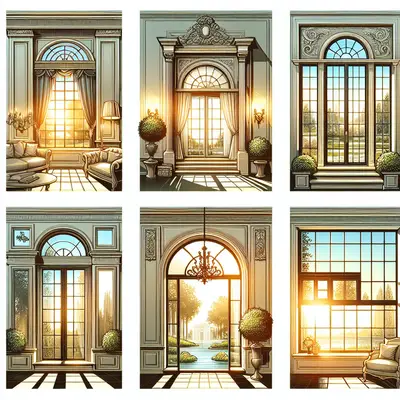
For example, a dramatic fixed window can anchor a wall, with slim casement windows flanking it for invisible ventilation. In a primary suite, a combination of high clerestory windows (for soft daylight and privacy) and larger operable units at eye level can deliver both sanctuary and connection to the landscape. In contemporary homes, pairing floor‑to‑ceiling fixed panes with narrow, operable vents along the jambs or transoms preserves minimalist lines while still enabling fresh air.
Even traditional façades can benefit from thoughtful mixing. Classically proportioned double‑hung windows on the primary elevation might be discretely supported by casements or awnings on less visible sides of the home—quietly improving performance and ease of operation where aesthetics are less strictly dictated.
Thinking in ensembles, rather than isolated window units, allows you to balance visual coherence, performance, and everyday convenience in a way that feels deeply considered rather than merely installed.
Five Exclusive Insights for the Discerning Window Upgrade
Beneath style names and frame finishes lies a subtler layer of decision‑making that often distinguishes exceptional window projects from merely adequate ones. These five insights rarely appear in mainstream advice, yet they can dramatically elevate the outcome.
1. Orientation Should Dictate Type—Not Just Glass Specifications
Many homeowners focus on low‑E coatings and solar heat gain coefficients for sun‑exposed façades, but overlook the influence of window type itself. On south‑ and west‑facing elevations (in the Northern Hemisphere), operable windows that open fully—such as casements or tilt‑and‑turn units—can support passive cooling strategies by catching prevailing breezes and promoting cross‑ventilation.
On north‑facing façades, where glare is lower and light is softer, larger fixed windows can be deployed generously to bring in diffuse daylight without overheating. On east‑facing elevations, where morning light is welcome but can be intense, tall, narrower windows or combinations of clerestories and operable units can temper brightness while still delivering a serene, luminous start to the day.
Choosing window types with orientation in mind creates a home that feels intuitively comfortable—cooler where it should be, brighter where it matters—rather than relying solely on mechanical systems to correct avoidable compromises.
2. Frame Profiles and Sightlines Are as Important as Style Names
Two windows labeled “casement” can behave and feel entirely different. The refinement often lies in frame profiles and sightlines: how much of your view is glass, and how much is framing.
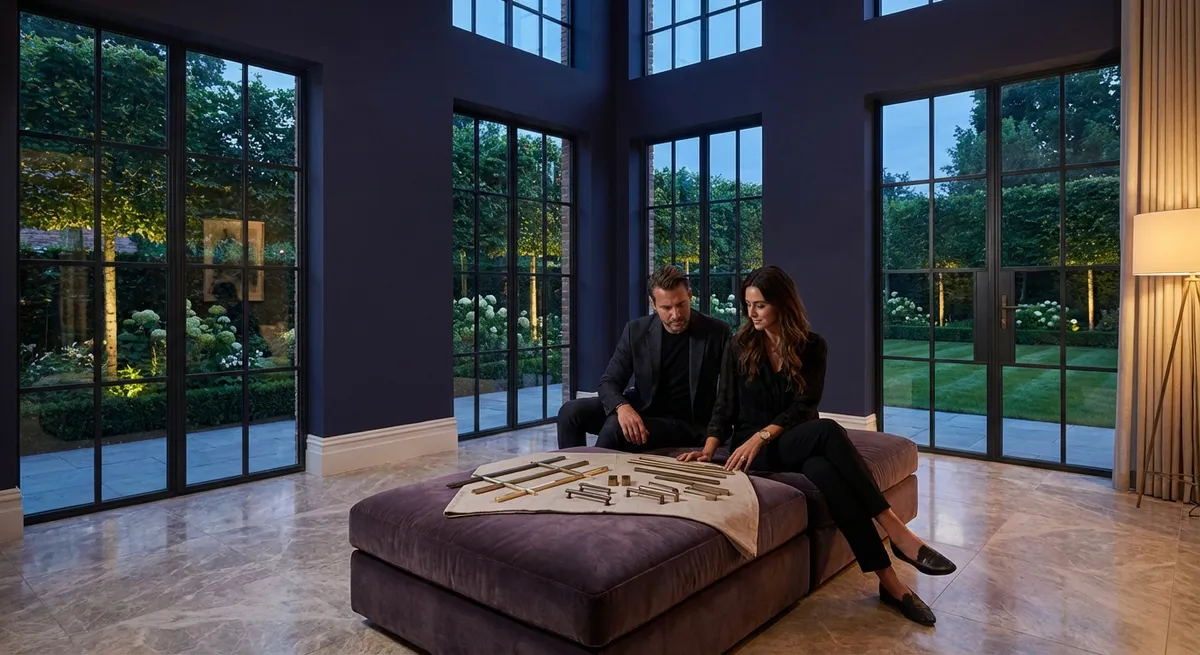
Slim‑profile aluminum, fiberglass, or engineered composite frames can offer a more gallery‑like experience, especially for picture windows and large glazed areas. In more traditional or transitional homes, carefully scaled wood or aluminum‑clad wood windows can provide a sense of depth and craftsmanship—shadow lines, reveals, and mullion proportions that feel deliberate rather than generic.
When reviewing options, request sightline drawings or full‑size corner samples. Evaluate how mullion thickness, sash depth, and frame massing will influence both interior views and exterior composition. The most luxurious solutions often combine technical performance with a visual lightness that makes the architecture feel more open, curated, and calm.
3. Ventilation Strategy Should Be Designed, Not Assumed
Operable windows are frequently chosen by habit rather than intent. A more elevated approach treats ventilation as a strategy: where, when, and how fresh air should move through the home.
Casement windows, which hinge at the side, can scoop breezes and direct air into the room—particularly effective on façades exposed to prevailing winds. Awning windows, hinged at the top, can be placed higher on the wall to release warm air and allow for secure, rain‑tolerant ventilation even when you are away. Tilt‑and‑turn windows can operate in two modes, offering subtle, top‑vented airflow in tilt mode for nighttime or privacy‑sensitive settings.
By specifying different window types to support a planned airflow pattern—perhaps pairing low operable windows on the windward side with higher vents on the leeward side—you can reduce dependence on mechanical cooling and create an air quality experience that feels fresher, quieter, and more controlled.
4. Sound and Serenity Depend on More Than Glass Thickness
Acoustic comfort is increasingly a hallmark of sophisticated residential design, especially in urban or dense suburban environments. While double‑ or triple‑glazing helps, the window type and construction details can be just as decisive.
Casement and tilt‑and‑turn windows typically compress against the frame when closed, creating a more continuous seal than many sliding or traditional double‑hung units. When combined with laminated glass (which uses an interlayer to dampen sound), these window types can dramatically reduce traffic noise, aircraft disturbances, or neighbor activity—turning even city settings into private sanctuaries.
Separately, larger fixed units, if well‑specified, can offer exceptional sound attenuation because they lack operable joints altogether. A strategic mix of fixed and high‑performance operable units can deliver both quiet and flexibility, particularly along noise‑exposed façades.
5. Window Types Can Future‑Proof Your Home’s Flexibility
Resale value is often discussed in broad terms—energy efficiency, curb appeal—but window type selection also influences how future occupants can adapt the home.
Generously sized, operable casements or tilt‑and‑turn windows can later accommodate trickle vents, integrated blinds, or smart controls. Oversized fixed windows designed with adequate structure and access can be retrofitted with shading systems or upgraded glazing as technology improves. In multi‑story homes, choosing window types that allow interior cleaning of exterior panes simplifies long‑term maintenance, a feature that quietly impresses future buyers who recognize its importance.
Architecturally, more “timeless” window organizations—well‑proportioned vertical openings, consistent head heights, and coherent alignment—age better than trend‑driven shapes. Within that timeless framework, mixing fixed and operable elements gives subsequent owners flexibility to adapt shading, privacy, and automation in ways that keep the home feeling current without invasive changes.
Material Matters: Aligning Window Types with Frame Choices
Certain window types naturally harmonize with specific frame materials, both visually and technically. Understanding these pairings can narrow your choices to those that feel cohesive and enduring.
Casement and tilt‑and‑turn windows, for example, often excel in high‑performance aluminum, fiberglass, or aluminum‑clad wood systems that can handle the weight of larger sashes without warping. Their clean edges and compression seals pair well with contemporary and European‑influenced designs. Traditional double‑hung windows tend to feel most authentic in wood or wood‑clad frames, where the tactile quality and depth of the material complement classic detailing and trim.
For picture windows and expansive fixed glazing, thermally broken aluminum or high‑end fiberglass can offer slender profiles and excellent structural capacity while maintaining energy efficiency. When evaluating material options, consider how they will weather, how their finishes will age, and how they support the chosen window types at the scales you envision.
A truly refined outcome emerges when type, material, and scale are resolved as a single design decision rather than a sequence of isolated selections.
Inside–Out Harmony: Coordinating Interior Experience and Exterior Character
Exceptional window schemes reconcile two sometimes competing priorities: the interior experience of light and view, and the exterior composition of the façade.
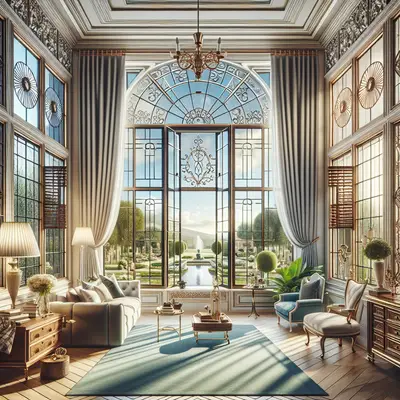
Inside, different window types create different emotional registers. A low, wide window near a reading nook feels intimate and grounded. A tall, narrow casement in a corridor can feel almost like a painting, revealing curated vertical slices of landscape. A wall‑to‑wall picture window in a dining space might turn meals into a ritual of watching dusk settle over the garden.
Outside, these decisions must still produce a façade that feels coherent and intentional. Head heights should align where possible; window rhythms should complement the massing of the home rather than fight it. Skillful design teams will sometimes use the same exterior frame module (for visual unity) while varying the internal configuration—fixed panes, venting panels, and mullions—to support interior needs.
By viewing window types as a bridge between interior life and exterior character, you avoid the common trap of optimizing one at the expense of the other.
Conclusion
Curating window types for a distinguished home is less about choosing “the best” style and more about orchestrating the right types, in the right places, for the right reasons. When you align window selection with spatial intent, orientation, ventilation strategy, acoustic comfort, and long‑term adaptability, the result is a home that feels composed rather than compiled.
The most satisfying window upgrades are the ones you stop noticing as products and start experiencing as qualities: quiet, clarity, balanced light, and an elegantly framed relationship to the world beyond your walls. With thoughtful selection and an appreciation for subtle details, windows become not just components of a building, but instruments of daily comfort and understated luxury.
Sources
- [U.S. Department of Energy – Windows, Doors, and Skylights](https://www.energy.gov/energysaver/windows-doors-and-skylights) - Overview of window types, energy performance, and design considerations by orientation
- [Efficient Windows Collaborative (National Fenestration Rating Council)](https://www.efficientwindows.org/types.php) - Detailed descriptions of common window types and their performance implications
- [University of Minnesota – Cold Climate Housing Program: Window Selection](https://www.housing.umn.edu/sites/housing.umn.edu/files/windowselection.pdf) - In‑depth guidance on matching window types and materials to climate and comfort goals
- [NYU Langone Health – Noise and Health](https://nyulangone.org/news/how-noise-pollution-can-affect-your-heart-brain-more) - Explains how noise exposure affects wellness, underscoring the value of acoustic window strategies
- [American Institute of Architects – Residential Design Best Practices](https://www.aia.org/resources/6077661-residential-design) - High‑level design principles, including façade composition and fenestration harmony
Key Takeaway
The most important thing to remember from this article is that this information can change how you think about Window Types.