The internet is quietly obsessed with introverts right now. Viral threads like Bored Panda’s “Introvert Problems” compilation are racking up millions of views as people share how they crave calm, controlled spaces in an overstimulating world. It’s a culture-wide confession: we’re exhausted by noise, glare, and constant exposure—and we’re curating our environments more intentionally than ever.
For homeowners, that conversation isn’t just about personalities and parties. It’s a masterclass in something deeply architectural: how the right window types can either overwhelm a room or create a sanctuary. As “introvert aesthetics” and “quiet luxury” dominate social media, your choice of casement, picture, tilt-turn, or awning window has never been more relevant to how you live—and how your home feels, hour by hour.
Below are five refined, often-overlooked insights that translate today’s introvert zeitgeist into smarter, more luxurious window type decisions.
1. The “Social Battery” of a Room: Matching Window Types to How You Actually Use the Space
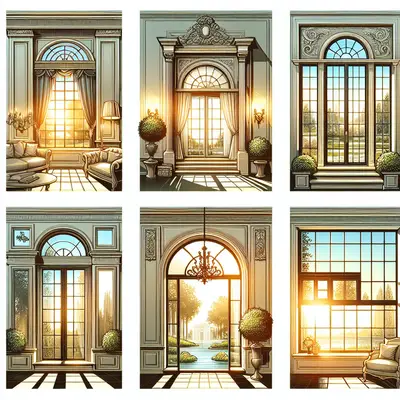
Just as introverts are careful about where they spend their social energy, a well-designed home is deliberate about where it spends its daylight and views. Different window types have strikingly different “social energy profiles”:
- Picture windows are the extroverts of the window world—always on display, always inviting the outside in. They’re stunning in living rooms with a curated view but can feel overexposed in bedrooms or home offices where you crave focus and privacy.
- Casement windows (side-hinged, crank-out) are more intentional: they open when you invite fresh air in, then seal tightly when you want quiet and insulation.
- Tilt-turn windows, increasingly popular in high-end European-inspired builds, offer a dual personality—tilt at the top for gentle ventilation, or swing fully inward to embrace the outdoors on your terms.
For “introverted rooms” (primary bedrooms, libraries, studies, wellness spaces), consider using operable, controlled window types rather than expansive, fixed glass. A mix of smaller casements, awnings, or tilt-turns allows you to decide when the room is open, when it’s contemplative, and when it’s completely sealed off.
Exclusive insight: Instead of defaulting to “as much glass as possible,” design each elevation like a social calendar—reserve picture windows for spaces that thrive on activity and conversation, and use more adjustable window types where you want a sense of retreat.
2. Quiet Luxury Starts with Quiet Glass: Pairing Window Types with Advanced Glazing
The same feeds that love “Introvert Problems” also love “quiet luxury” interiors—muted palettes, soft textiles, and, crucially, acoustic calm. But many homeowners unknowingly sabotage this aesthetic with the wrong combination of window type and glazing.
- Sliding and single-hung windows often have more potential air gaps and moving parts, making true acoustic sealing harder to achieve.
- Casement and tilt-turn windows, by design, compress their seals when closed, allowing for tighter acoustic performance and better integration with laminated, sound-dampening glass.
- In urban infill projects—where noise complaints trend alongside rent prices—premium developers increasingly specify fixed picture windows plus strategically placed casements or tilt-turns to control both sound and ventilation.
Exclusive insight: If you’re investing in acoustic or laminated glass, you will feel the benefit most dramatically in compression-seal window types (casement, awning, tilt-turn). The synergy between hardware, frame design, and glazing is where you genuinely achieve that hushed, gallery-like interior so many “introvert aesthetic” posts romanticize.
3. The Introvert’s Daylight: Using Window Types to Soften, Not Blast, Natural Light
One of the recurring themes in the viral introvert threads is “overstimulation”—too bright, too loud, too much. Yet many window upgrades are still sold as “more light, more openness” with little nuance. The truth: the type and operation of a window can be as important as its size for how daylight actually feels.
Consider the following combinations:
- High awning windows (hinged at the top) near the ceiling are exquisite in east- and west-facing rooms where direct sun can be harsh. They admit a soft, upward wash of light while maintaining privacy below.
- Tall casement windows can be subdivided with mullions or transoms, visually calming the façade and diffusing sun patterns inside, preventing the stark “spotlight” effect of single, expansive panes.
- Fixed clerestory windows paired with operable windows below give you gentle, continuous daylight above eye level while letting you control air and privacy at human scale.
Exclusive insight: When planning upgrades, think of daylight not as a quantity to be maximized but a texture to be curated. Use fixed windows higher on walls and smaller operable units at seated or standing eye level to create introvert-friendly light—bright enough to feel alive, soft enough to read, think, or rest without squinting.
4. Privacy Without Withdrawal: Layering Window Types for Elegant Seclusion
Introverts, as the trending posts keep reminding us, don’t actually hate people—they just want selective access. The same nuance applies to privacy in your home. You don’t need to live behind blackout shades; you need the right geometry of glass and operation.
Consider these layered strategies:
- In street-facing rooms, pair taller fixed windows above eye level with smaller operable awnings or casements lower down. You preserve sky and tree views while minimizing direct sightlines from the sidewalk.
- For corner rooms, mixing one picture window (facing a private view) with one narrower casement or tilt-turn (facing the street or neighbor) allows you to “edit” what’s visible at any moment.
- In bathrooms and dressing areas, a composition of narrow vertical windows—some fixed, some operable at the top—can bring in layered, spa-like light with almost zero exposure risk.
Exclusive insight: Treat privacy as a 3D design problem, not just a curtain problem. The most sophisticated solutions come from blending different window types on the same wall—some fixed for curated views, some operable for air, all arranged to keep you connected to the outdoors without feeling watched.
5. Future-Proof Comfort: How Window Types Prepare Your Home for Quieter, Hybrid Lives
The introvert boom is also a remote-work boom. As more people admit that open-plan offices, endless commutes, and constant meetings drain them, homes are evolving into multifunctional retreats—workplaces, sanctuaries, and social spaces in one.
Window types quietly determine how well your home can adapt:
- Tilt-turn windows are particularly compelling for hybrid living: tilt mode offers safe, gentle ventilation during long work calls, while full-turn mode creates maximum airflow when you need an afternoon reset.
- Casements placed strategically in cross-ventilation pairs can reduce your reliance on mechanical cooling during shoulder seasons, an understated but valuable luxury as energy prices fluctuate.
- Large fixed windows in home offices or studios can be emotionally grounding—framing a single lush tree or skyline—while subtle adjacent operable units prevent stuffiness during extended workdays.
More developers of high-end, wellness-focused residences are quietly shifting away from the old formula of “sliders everywhere” and embracing curated window type mixes that support long-term hybrid living: one façade might feature floor-to-ceiling fixed glass punctuated with casements, while another relies on a rhythm of tilt-turns to orchestrate air, sound, and light.
Exclusive insight: When planning upgrades, don’t just ask, “What looks good today?” Ask, “Can this window type support a life that includes more time at home, more focused work, and more intentional rest?” The answer is almost always yes—if you prioritize window types that offer genuine control over air, sound, and exposure.
Conclusion
The global fascination with introvert life isn’t just entertainment; it’s a mirror held up to how we want to feel in our own spaces: protected, calm, selectively open to the world. Window types are the architectural expression of that desire.
By choosing compression-sealed casements and tilt-turns for acoustic calm, pairing them with intelligent glazing, choreographing daylight instead of flooding it, layering fixed and operable windows for nuanced privacy, and planning for a quieter, hybrid future, you create more than a renovation. You create a home that understands you—much like the best of today’s introvert stories do.
And in an age where the most shared posts celebrate comfort, authenticity, and thoughtfully protected energy, a well-composed elevation of glass isn’t just a design choice. It’s your home’s most elegant, enduring response to a world that rarely stops talking.
Key Takeaway
The most important thing to remember from this article is that this information can change how you think about Window Types.