Windows are no longer mere building components; they are curatorial decisions that frame how you experience light, landscape, and quiet. For homeowners investing in a considered upgrade, the choice of window type becomes an essential design instrument—altering sightlines, acoustics, thermal comfort, and even the perceived architecture of a room. Selecting the right window is less about “new versus old” and more about orchestrating a cohesive, elevated environment.
Below, we explore how different window types perform in sophisticated homes, and weave in five exclusive insights that matter deeply when the goal is not just replacement, but refinement.
Understanding Window Types as Architectural Tools
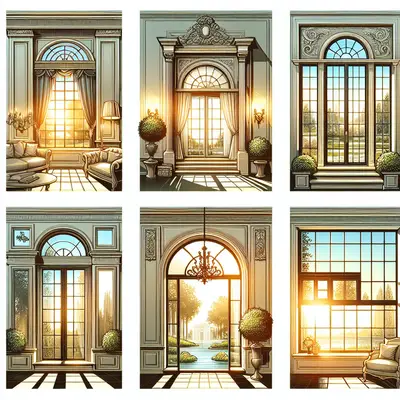
Beyond their functional purpose, window types shape the visual rhythm of a façade and the character of interior spaces. Casement, awning, fixed, sliding, double-hung, tilt‑turn, bay, and specialty shapes each imply a different design language—ranging from restrained minimalism to expressive architectural statements.
Casement windows, hinged at the side, excel when a clean, uninterrupted pane of glass and maximal ventilation are priorities. Awning windows, hinged at the top, extend this clarity of view while shedding rain, allowing controlled ventilation even during light weather. Fixed (picture) windows serve as pure frames for the view, often paired with operable units nearby to balance aesthetics with fresh air. Sliding and double-hung windows, while more traditional in North America, can be specified with slim profiles and premium finishes to avoid the utilitarian look of commodity products. At the luxury end, European-style tilt‑turn windows offer dual functionality—tilting inwards for subtle ventilation or swinging open for full access—blending technical sophistication with understated elegance.
Recognizing each type as an architectural tool rather than a catalog choice allows you to articulate different design intentions for different rooms, ultimately leading to a more coherent and refined home.
Insight 1: Ventilation Patterns Are as Important as View
One of the most overlooked considerations when comparing window types is how they introduce air, not just if they open. The way a window channels breezes affects comfort, indoor air quality, and even how a room is furnished.
Casement windows, when opened outward, can act like subtle scoops, catching cross-breezes and redirecting them into the home—especially effective on façades that face prevailing winds. Awning windows, positioned higher on a wall, encourage warm, stale air to escape, making them ideal above bathtubs, kitchen counters, or in tight side yards where outward swing is still possible. Tilt‑turn windows, when tilted inward from the top, deliver gentle, secure ventilation without creating disruptive drafts at seating level.
Homeowners planning refined upgrades should walk each room and consider: where does the air need to move, and at what height? Window types can then be paired to create layered ventilation strategies—low-level breezes near floor height in living rooms, high-level release in stairwells, and adjustable ventilation in bedrooms. When this is done intentionally, windows become quiet contributors to everyday comfort rather than simply transparent surfaces.
Insight 2: Frame Proportions Quietly Dictate the Luxury Feel
In premium interiors, the difference between “nice” and “exceptional” often lies in proportion and profile depth—the subtle geometry of frames, sashes, and mullions. Two homes can use similar glass, yet one will feel effortlessly sophisticated because the sightlines are slender, consistent, and well-aligned with the architecture.
Fixed and casement windows typically allow for narrower frames than sliding or double-hung units, which need additional structure to support their movement. This slenderness leads to more glass, more daylight, and a visually lighter appearance that pairs beautifully with contemporary or transitional design. In heritage or traditional homes, however, carefully proportioned divided lites and subtly profiled sash details can evoke craftsmanship without descending into pastiche.
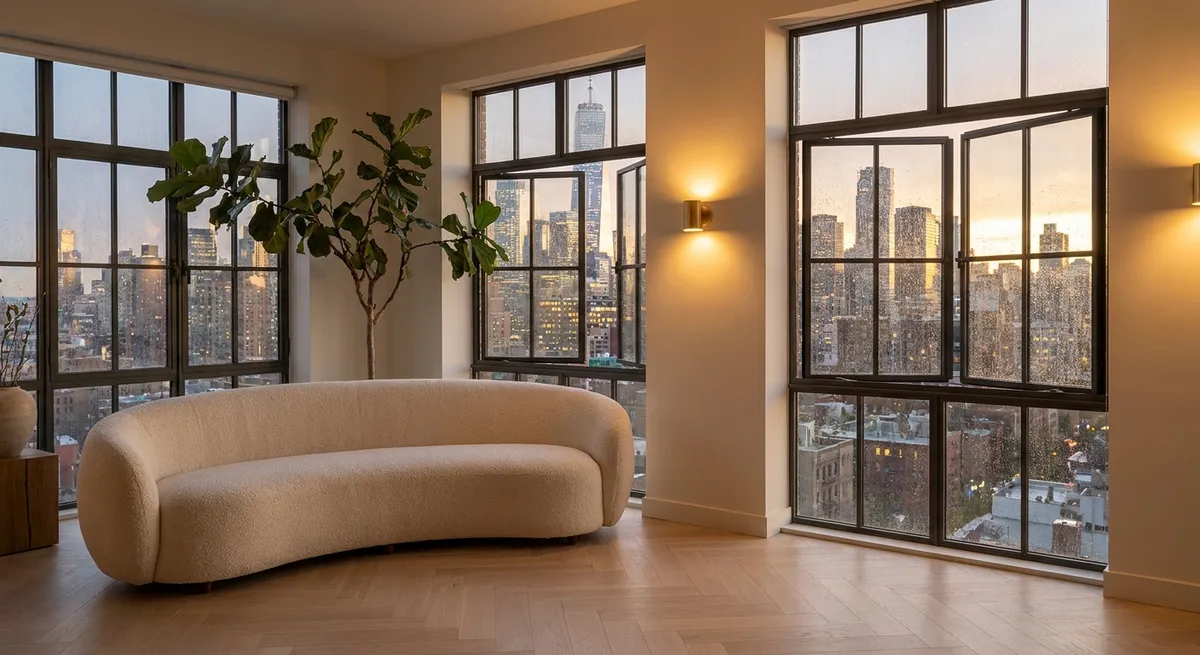
The most elevated solutions consider frame color and depth as part of the room’s material palette. Dark, minimal frames can compress into the background, turning the exterior view into a living artwork; warm-toned wood interiors lend gravitas to libraries, dining rooms, and principal suites. By thoughtfully selecting window types that enable the desired profile and finish, you create a visual continuity between millwork, flooring, and openings—one of the hallmarks of high-end design.
Insight 3: Operational Elegance Matters More Than You Expect
In discerning homes, how a window feels in the hand is as important as how it looks from across the room. The tactile experience—weight, resistance, the sound of a latch finding its seat—signals quality every time you open a sash or tilt a panel for air.
Casement and tilt‑turn windows, when manufactured to high standards, offer a decisive, reassuring action: handles turn smoothly, hardware engages with a quiet solidity, and the sash closes into multi-point locks that gently compress weather seals. By contrast, a poorly specified sliding unit can rattle, stick, or track dirt; an inferior double-hung can feel wobbly and imprecise.
When upgrading, homeowners should not hesitate to test full‑size showroom samples. Slide, tilt, and swing them repeatedly. Consider whether a tall casement might be heavy for everyday use, or if a large tilt‑turn’s inward swing could conflict with drapery or furniture. Operational elegance is where window types intersect with daily rituals—opening the bedroom to morning air, quietly venting a kitchen after guests depart—and is a key differentiator between a simple replacement and a truly elevated solution.
Insight 4: Different Window Types Shape Acoustic Comfort in Distinct Ways
Acoustic performance is often discussed in terms of glass thickness and laminates, yet the type of window significantly influences how well that performance is realized. Street-facing principal rooms and bedrooms, in particular, benefit from careful pairing of window type with sound control strategies.
Fixed windows, having no operable seals, can be exceptionally quiet when combined with laminated or thicker glass and properly insulated frames. For spaces where ventilation is needed without compromising acoustic calm—think home offices, nurseries, or primary suites—casement and tilt‑turn windows often outperform sliders and double-hung units because their compression seals close more uniformly against the frame.
Additionally, certain types—like tilt‑turn and high-mounted awning windows—enable controlled ventilation without requiring large, fully open apertures that let in urban noise. This allows homeowners to enjoy fresh air while preserving a cocoon-like interior ambiance. If your home borders a busy road, rail line, or active neighborhood, working with window types that support strong sound seals becomes as crucial as choosing the right glass.
Insight 5: Layered Window Typologies Can Refine the Entire Façade
While many homeowners default to repeating the same window type across the entire home, the most considered designs use a curated mix of types to articulate the architecture. The key is not randomness, but a well-composed hierarchy.
For example, front façades may pair tall, slender casement or tilt‑turn windows in formal rooms with more discreet awning or fixed units in secondary spaces. On garden-facing elevations, large fixed “picture” windows can frame views, flanked by operable casements or tilt‑turns that provide airflow without visually interrupting the main opening. On upper levels, slightly smaller proportions or grouped vertical units can subtly signal a change in function while maintaining alignment with openings below.
Even bay and bow windows—often associated with more traditional aesthetics—can be reinterpreted with clean-lined casement or fixed panels, extending interior space and drawing in light at multiple angles. By thoughtfully combining window types and repeating certain dimensions or mullion alignments, you achieve a façade that feels bespoke and composed rather than pieced together from a catalog.
Matching Window Types to Room Intentions
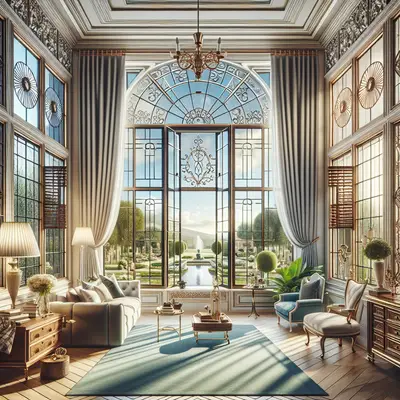
A refined window upgrade begins by asking what each room must do, not simply what fits the opening. In a kitchen, you might privilege practical ventilation and easy operation, choosing awning windows above counters and slim casements over a sink. In a formal living space, large fixed windows—paired discreetly with operable units—can deliver expansive views and a gallery-like ambience.
Bedrooms often benefit from window types that offer both security and flexibility: tilt‑turn units that allow night ventilation without fully opening, or double-hung windows with limiters where traditional aesthetics are desired. Bathrooms require privacy and moisture management; obscure or textured glass in awning windows placed higher in the wall offers both, without sacrificing daylight. Hallways and stairwells, frequently overlooked, can become luminous vertical galleries with tall, narrow fixed windows punctuated by the occasional operable unit for air exchange.
When you match the window type to the room’s purpose and mood, each opening contributes to a cohesive narrative of how the home is used—quiet mornings, convivial evenings, contemplative corners—rather than existing as an afterthought.
Thoughtful Integration of Shades, Screens, and Hardware
For a truly premium result, consider from the outset how window types will interact with shading, insect screens, and interior hardware. Certain types lend themselves better to concealed solutions that protect the clean lines of the architecture.
Casement, awning, and tilt‑turn windows can often be paired with retractable or integrated screens that disappear when not in use, preserving uninterrupted views. Slim-profile interior blinds or shades can be recessed into wall or ceiling pockets above large fixed windows to avoid visual clutter. Hardware finishes—blackened metal, brushed nickel, brass—should be coordinated with interior door hardware and cabinetry to establish a consistent language of touchpoints throughout the home.
The more thought given to these details at the specification stage, the more seamless the final installation appears—creating the sense that windows, treatments, and furnishings were conceived together rather than layered over time.
Conclusion
Choosing window types for a sophisticated home is ultimately an exercise in intentionality. When you look beyond basic operability and lean into ventilation patterns, frame proportions, operational feel, acoustic performance, and façade composition, windows step into their rightful role as central design elements. They orchestrate how light enters, how air moves, how quiet feels, and how each room reveals itself from within and from the street.
For homeowners pursuing an elevated upgrade, the question is no longer “Which replacement window?” but “What experience should this opening create?” With that lens, window types transform from a technical requirement into an essential part of your home’s most refined moments.
Sources
- U.S. Department of Energy – Windows, Doors, and Skylights – Overview of window types, energy performance, and selection considerations
- Efficient Windows Collaborative – Window Types – Detailed comparison of common window operating styles and their performance implications
- Forest Stewardship Council – Why Forest Stewardship Council? – Guidance on responsible wood sourcing for high-end window frames and interior finishes
- National Renewable Energy Laboratory – Daylighting and Windows – Research-based discussion of how window design influences daylight quality and interior comfort
- American Architectural Manufacturers Association (now FGIA) – Understanding Sound Control in Fenestration – Technical insights into how window construction and types affect acoustic performance
Key Takeaway
The most important thing to remember from this article is that this information can change how you think about Window Types.