Replacing your windows is not just a line item in a renovation budget; it is a long‑horizon financial decision that reshapes comfort, aesthetics, and operating costs for decades. Yet most homeowners are handed only a crude price-per-opening quote and a vague promise of “energy savings.” A more nuanced, investment‑grade perspective reveals where the real value is created—and where money quietly evaporates.
This guide steps beyond basic price comparisons to examine window cost through a more refined, strategic lens. Below are five exclusive, often-overlooked insights that elevate window budgeting from guesswork to curated capital allocation.
Understanding the Full Cost Curve, Not Just the Invoice
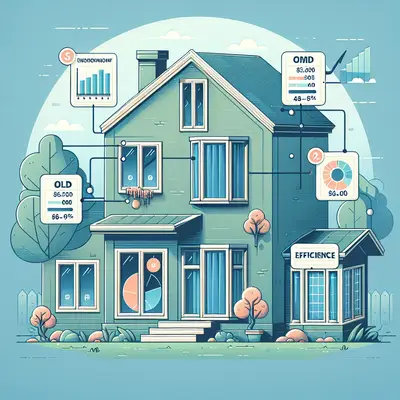
The number on your contractor’s proposal is only the opening chapter of your window’s cost story. Every window has a “cost curve” over its life: purchase, installation, operation, maintenance, and eventual replacement or resale impact.
A premium, well‑specified window may cost 20–40% more upfront yet deliver lower heating and cooling expenses, reduced maintenance, and stronger resale appeal. Frames that resist warping and insulated glass units with long warranties reduce the likelihood of mid‑life failures that force early replacement—one of the most expensive mistakes in window planning.
A thoughtful cost analysis also accounts for your local climate and energy rates. In a cold region with high utility costs, the operational savings from low‑U-factor, high‑performance glazing can be materially higher than in a mild climate. That means “over‑investing” in performance may be rational in Minneapolis but unnecessary in San Diego. When the lifespan of a quality window is measured in decades, mapping out 15–25 years of ownership costs provides a far more accurate sense of value than comparing the lowest bids.
Exclusive Insight 1: The “Comfort Premium” Has Financial Weight
Most cost discussions focus on measurable metrics—U-factors, R‑values, payback periods. Yet one of the most underappreciated economic levers is the “comfort premium”: the tangible and intangible value of a quieter, draft‑free, better‑daylit home.
From a financial perspective, comfort manifests in several ways:
- Thermostat behavior: Occupants of drafty homes often raise heating or lower cooling as a form of compensation. Tight, well‑insulated windows narrow room temperature swings, reducing the urge to “override” your system.
- Space utilization: Rooms that were previously too hot, too cold, or too noisy become usable square footage. That can defer the perceived need for an addition or major reconfiguration—substantial capital savings.
- Perceived quality at resale: Buyers do not itemize energy ratings; they react to how a house feels. Quiet interiors and even temperatures communicate “well maintained” and “high quality,” often supporting stronger offers and faster sales.
While comfort is difficult to quantify line by line, it is a real economic driver. When comparing a mid‑tier and a premium solution, consider not only the spreadsheet payback but the daily experience you are curating—and how that experience shapes long‑term satisfaction and market appeal.
Exclusive Insight 2: Glass Selection Quietly Redefines Operating Costs
Most quotes will reference “double‑pane” or “triple‑pane,” perhaps with a casual mention of low‑E. For a cost‑conscious yet discerning homeowner, that shorthand is insufficient. Glass specification—coatings, gas fill, spacers, and pane count—subtly dictates your monthly cost of ownership.
Low‑emissivity (low‑E) coatings can be tuned for climate and orientation. In northern climates, a high solar heat gain low‑E on south‑facing windows can use winter sun to warm the home, reducing heating demand. In hot climates, a low solar heat gain low‑E coating helps keep solar heat outside, easing cooling loads. The same square foot of glass can either quietly trim your utility bill or burden your mechanical system, depending on how it is specified.
Triple‑pane glazing adds weight and cost, but often delivers notable gains in cold climates and noisy urban settings. However, if you live in a temperate region with modest noise concerns, a carefully chosen double‑pane, argon‑filled low‑E unit may deliver 80–90% of the performance at a materially lower cost. The refined approach is not “always choose the most advanced glass,” but rather “match glass complexity to climate, orientation, and noise context,” so each dollar spent is working strategically.
Exclusive Insight 3: Frame Material Drives Hidden Lifetime Expenses
Frame material is one of the most visible design decisions—and one of the least understood cost drivers over time. Vinyl, fiberglass, aluminum, wood, and wood-clad each create a distinct cost profile that stretches far beyond the initial quote.
- Vinyl: Typically the most budget‑friendly, with strong thermal performance and low maintenance. However, lower‑grade vinyl can discolor or warp, especially in intense sun, compromising both performance and aesthetics and leading to early replacement.
- Fiberglass and composite: Often more expensive upfront, but exceptionally stable, paintable, and long‑lived. Their resistance to warping and swelling can preserve the integrity of sealed units and weatherstripping, reducing air leaks over time.
- Aluminum (especially thermally broken): Favored in modern, large‑span designs. Excellent structural strength, but can be less thermally efficient if not properly specified. In some climates, the added HVAC load offsets the elegant minimalism unless energy-enhancing measures are applied.
- Wood and wood‑clad: Visually exquisite, especially in premium homes, but the lifetime cost hinges on maintenance discipline. Unprotected or neglected wood can deteriorate and require periodic refinishing or partial replacement.
An elevated cost analysis compares not just the price per unit but the expected life, maintenance cadence, and potential for early failure. A seemingly “expensive” fiberglass or high‑quality clad window can become the most economical option once repainting, re‑caulking, and premature replacement are realistically factored in.
Exclusive Insight 4: Installation Quality Can Make or Break Every Line Item
Two identical windows can perform very differently depending on how they are installed. Yet installation is frequently reduced to a single line in the estimate. This is where hidden costs either accumulate quietly or are avoided entirely.
Poorly integrated flashing, compressed or missing insulation around frames, and improperly sealed gaps allow water and air infiltration—issues that manifest years later as rot, mold, drafts, or fogged glass. Correcting these problems frequently involves invasive repair work that dwarfs any savings achieved by choosing the lowest installation bid.
A refined cost perspective evaluates:
- The installer’s training and certifications
- Their approach to air and water management (flashing systems, tapes, sealants)
- How they handle existing conditions (out‑of‑square openings, damaged framing, or failed headers)
- Whether their warranty meaningfully addresses both product and installation
Paying more for a skilled installation team is not a luxury; it is a risk‑management strategy that protects your entire window investment and the adjacent building envelope.
Exclusive Insight 5: Incentives, Codes, and Timing Can Reshape the Budget
Window upgrades exist within a broader regulatory and incentive landscape that can dramatically shift the real cost—especially for homeowners who plan ahead.
Governments, utilities, and even some manufacturers offer rebates or tax incentives for energy‑efficient windows that meet specific performance thresholds. Aligning your specification with qualifying criteria can recapture a portion of your investment, shortening payback periods without compromising aesthetics.
Building codes also matter. In regions with strict energy codes or hurricane/impact requirements, certain performance levels are not optional. In these contexts, the cost of “doing it right” should be viewed as part of regulatory compliance and resilience, not an upgrade. Homeowners who proactively plan window replacements alongside other envelope work (such as insulation or HVAC upgrades) can sequence projects to minimize disruption, leverage shared labor costs, and capture overlapping incentives.
Timing—financial, regulatory, and seasonal—can subtly influence pricing. Off‑peak installation periods may yield more favorable labor costs, while waiting until after a major code change or product redesign can either raise or lower your material prices. A sophisticated cost analysis treats these elements as levers to be managed, not background noise to be ignored.
Conclusion
A window upgrade is not merely a purchase; it is a curated reconfiguration of how your home spends and saves money, year after year. When you look beyond sticker prices and dive into comfort value, glass specification, frame longevity, installation rigor, and the incentive landscape, the true contours of cost—and opportunity—come into focus.
The most successful projects are not those that pursue “cheap” or even simply “efficient,” but those that intelligently align performance, aesthetics, and lifespan with your climate, lifestyle, and long‑term plans for the home. By approaching window upgrades with this elevated cost analysis, you transform a routine replacement into a strategic, enduring improvement to both your living environment and your financial ledger.
Sources
- [U.S. Department of Energy – Energy-Efficient Windows](https://www.energy.gov/energysaver/design/energy-efficient-windows) - Explains window performance metrics, climate considerations, and potential energy savings
- [Efficient Windows Collaborative – Window Selection Guidance](https://www.efficientwindows.org/selection.php) - Offers detailed guidance on choosing windows by climate, frame, and glazing type
- [ENERGY STAR – Residential Windows, Doors and Skylights](https://www.energystar.gov/products/building_products/residential_windows_doors_and_skylights) - Outlines performance criteria and potential incentives for high‑efficiency products
- [Lawrence Berkeley National Laboratory – Windows & Daylighting](https://windows.lbl.gov/) - Provides research and technical resources on window performance, comfort, and energy use
- [National Association of Realtors – 2023 Remodeling Impact Report](https://www.nar.realtor/research-and-statistics/research-reports/remodeling-impact) - Discusses resale value and homeowner satisfaction associated with major home upgrades, including windows
Key Takeaway
The most important thing to remember from this article is that this information can change how you think about Cost Analysis.