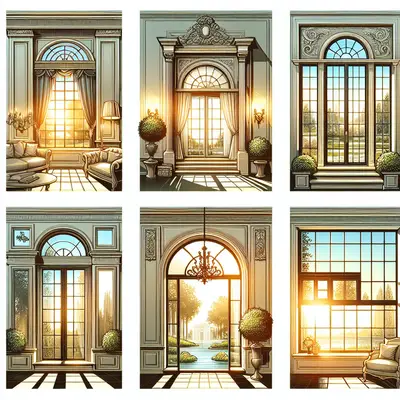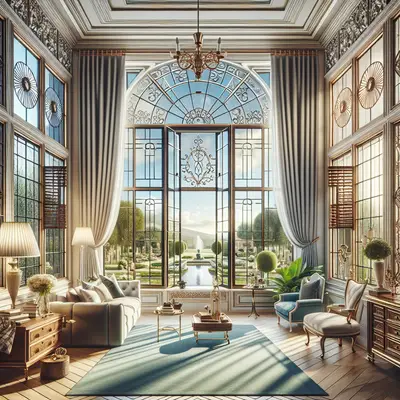
Windows are not mere openings; they are curated vistas that choreograph light, frame landscape, and quietly govern comfort. For the design-conscious homeowner, the choice of window type is as consequential as a statement staircase or bespoke millwork. Done well, it feels inevitable—as if the house could never have been conceived any other way.
This guide explores how to select and combine window types with intent, and offers five exclusive insights that elevate an ordinary upgrade into a considered architectural decision.
Reading the Architecture: Let the Envelope Lead
Before comparing casements to sliders, begin with the architecture itself. The building envelope will often “suggest” the most harmonious window type when you look closely at its lines, proportions, and rhythms.
In homes with strong vertical expression—tall gables, pronounced chimneys, narrow bays—casement and double-hung windows often feel most at home. Their vertical orientation echoes the façade’s upward momentum. In low, horizontal architectures—ranch, mid-century modern, contemporary pavilions—picture windows, sliders, and ribbon-like clerestories typically sit more naturally.
Window mullion patterns should also converse with other elements: door lites, interior glass partitions, cabinet doors, and even stair balusters. If everything else in the home is quiet and monolithic, an overly busy grille pattern may feel fussy. Conversely, in a traditional or transitional home, unbroken sheets of glass can feel visually abrupt. Let the architecture set the vocabulary, and allow your window type selection to “speak” in the same language.
Understanding the Core Window Typologies
While manufacturers offer endless variations, most residential windows fall into a handful of fundamental typologies, each with distinct advantages and aesthetic signatures.
Casement windows are side-hinged and swing outward (or inward in some European systems). They provide excellent ventilation and a clean, modern sightline because the sash can sit flush with the frame. When closed, their compression seals can offer strong energy performance and airtightness.
Double-hung and single-hung windows are vertically sliding units with either two movable sashes (double-hung) or one fixed and one operable sash (single-hung). They are archetypal in historic and traditional homes, and the ability to open both top and bottom sash in double-hungs can encourage effective natural convection.
Sliding windows move horizontally on tracks and offer an unfussy, streamlined profile. They are well-suited for modern and contemporary façades, especially in wide openings. While often seen as more utilitarian, high-quality sliders with refined hardware and narrow frames can read as elegantly minimal.
Awning windows are top-hinged and swing outward from the bottom. They excel in locations where ventilation is needed even during light rain—bathrooms, over kitchen counters, or combined in rows beneath larger fixed units for controlled airflow.
Picture and fixed windows do not open; they exist to frame views and harvest daylight with the thinnest possible profiles. As part of a composition—flanked by operable units or stacked with transoms—fixed windows can deliver dramatic visual impact with minimal thermal interruption when properly specified.
The most successful schemes rarely rely on a single type. Instead, they orchestrate complementary typologies across the home, repeating key shapes and proportions to build coherence.
Exclusive Insight #1: Compose with “Window Families,” Not One-Offs
Many homeowners think in terms of rooms: “What’s the right window for this bedroom?” A more elevated approach is to design window families—cohesive groupings of window types and proportions that repeat strategically across the home.
Begin by defining two or three “primary frames”: for example, a tall, narrow casement; a wider picture window; and a square awning. These become your building blocks. You might use tall casements in formal spaces, wide picture windows in living and dining areas, and square awnings in secondary rooms and bathrooms. By repeating dimensions, sightlines, and mullion patterns, the house gains a visual rhythm that feels intentional from every angle.
Where many projects falter is in ad hoc substitutions—changing types mid-project or mixing inconsistent shapes and grille layouts. Treat your window package like a coordinated furniture collection rather than assorted standalone pieces. This family-based thinking prevents visual clutter and makes even modest homes read as meticulously designed.
Exclusive Insight #2: Match Window Types to the Way Rooms Are Actually Used
Window selection often fixates on facades and elevations, but life happens inside the floor plan. Different window types subtly influence how a room is lived in, long after the contractors have left.
In living rooms that double as quiet reading spaces, operable casements or awnings placed at seating height can create gentle cross-breezes without forcing you to reposition furniture. In a primary suite, a combination of low awnings for ventilation and taller fixed units for view can maintain privacy while preserving a sense of openness.
In children’s rooms, double-hungs with robust locking hardware—or casements with restricted-opening hardware—can deliver safety without sacrificing air. In kitchens, awning windows above counters are often preferable to sliders, whose tracks can collect debris and are more awkward to operate from a distance.
Aligning window type with patterns of use yields a home that feels intuitive: windows open where you naturally stand or sit, frames align with eye level, and airflow supports how you sleep, work, and relax.
Exclusive Insight #3: Use Window Types to Curate Privacy Instead of Relying on Shades
Window upgrades are frequently followed by a rush to add blinds, drapes, and shades. A more refined strategy is to bake privacy into the architecture through thoughtful combinations of type, placement, and glazing.
In bathrooms, awning or casement windows installed higher on the wall can admit daylight and ventilation while minimizing sightlines from outdoors. If you prefer a view, consider pairing a tall fixed panel at eye level with a narrow, operable unit above or beside it; obscure or frosted glass can be reserved for only the most sensitive zones.
Along side yards and urban lot lines, consider slender vertical windows—either fixed or with limited operability—that admit daylight while reducing the sense of being on display. Alternatively, clerestory windows near the ceiling, often in an awning format, can provide generous light and air without direct views into adjacent properties.
By selecting window types that inherently manage views, you can often reduce dependency on heavy window treatments, preserving cleaner lines and a more gallery-like interior ambiance.
Exclusive Insight #4: Think in Terms of “Light Performance,” Not Just Energy Ratings
Most homeowners scrutinize U-factor, solar heat gain coefficient (SHGC), and visible transmittance (VT). These metrics matter, but the more nuanced question is: how will each window type perform as a light instrument throughout the day and year?
Tall, narrow casements and double-hungs draw the eye vertically, accentuating height and allowing light to graze walls, revealing texture in plaster, stone, or wood paneling. Large picture windows flood spaces but can create flat, uniform illumination that feels less sculpted. Awning windows set high on the wall can bounce daylight deeper into a room without creating glare at eye level.
In north-facing rooms, large fixed panels can capture soft, painterly light ideal for workspaces, studios, or reading nooks. On the south and west, consider combining picture windows with operable awnings or casements below so that you can modulate both light and heat gain by adjusting airflow rather than relying solely on mechanical cooling.
This “light performance” lens encourages you to select window types not just for energy metrics, but for the quality of atmosphere they produce at 8 a.m. in January and 6 p.m. in July.
Exclusive Insight #5: Elevate Transitions with Specialty Window Types
Beyond the usual typologies lies a category of transition-focused windows that blur the boundary between inside and out—and they deserve careful, intentional use.
Lift-and-slide doors and expansive folding glass walls can transform a dining room into a pavilion during temperate months, but they need fixed and operable companions that match their scale. Flanking a large multi-panel door with tall fixed sidelites or operable casements creates a sense of continuity when the system is closed, so the opening feels generous year-round rather than only in high summer.
Corner windows—either two abutting fixed units or a structural “glass corner” with no visible post—are especially potent in primary suites and living areas. They expand views dramatically and alter the perception of room size. Pairing a glass corner with a discreet operable awning or casement just outside the main view band maintains functionality without diluting the drama.
Used judiciously, these specialty window types become focal points in the architecture—moments of deliberate generosity that anchor the entire composition.
Coordinating Materials and Profiles Across Types
Once you have a clear typology strategy, the next layer of refinement is material and profile selection. High-end window systems typically come in wood (often with extruded aluminum cladding on the exterior), fiberglass, aluminum, or advanced composites.
Interior profiles should complement your trim strategy. Slim, squared-off frames naturally align with contemporary casing or drywall returns. More sculpted, profiled frames suit homes with traditional baseboards, wainscoting, and crown. Maintaining the same interior finish—such as a clear-stained white oak or a painted warm white—across all window types helps unify the experience, even as casements give way to sliders or fixed panels in different zones.
Exteriorly, consistency in frame color and sightline thickness is vital. Combining a bulky double-hung system on the front elevation with ultra-slim modern sliders at the rear can feel jarring unless carefully handled. If mixing product lines, pay attention to frame depths, muntin widths, and corner details so they read as part of a single, coherent specification.
Balancing Function, Maintenance, and Longevity
The luxury of a window is not only how it looks on day one, but how it lives and ages over decades. Different types demand different maintenance rhythms.
Casement hardware should be robust and smoothly operable; in coastal or high-humidity environments, consider corrosion-resistant components and finishes. Sliding windows require meticulous track detailing to minimize debris buildup, especially in dusty or wooded settings. Double-hungs benefit from quality balances and tilt mechanisms that make cleaning both sashes from the interior practical.
Tilt-and-turn windows—common in European systems—offer dual operation modes and excellent sealing, but they require thoughtful user education in households unfamiliar with them. In every case, selecting types whose operation feels intuitive to all occupants will reduce misuse and extend performance.
Thoughtful homeowners also consider serviceability. Working with manufacturers who support replacement parts and long-term warranties ensures that your curated vista remains clear and precise, rather than becoming a patchwork of inconsistent repairs.
Conclusion
Choosing window types for a refined home is less about catalog shopping and more about authorship—composing light, views, and movement in a deliberate way. When you think in families rather than one-offs, align types with real patterns of use, integrate privacy architecturally, evaluate light performance, and elevate transitions with specialty pieces, your windows evolve from background elements to orchestrating forces.
In the end, the most successful window upgrades feel inevitable: the right forms, in the right places, doing precisely what they should—quietly and beautifully—every day.
Sources
- Efficient Windows Collaborative – Window Types - U.S. National Renewable Energy Laboratory guide explaining common residential window types and performance considerations
- U.S. Department of Energy – Selecting Windows for Energy Efficiency - Federal guidance on choosing window configurations with attention to climate and performance
- Architectural Digest – How to Choose the Right Windows for Your Home - Design-focused overview of window styles and aesthetic integration in high-end homes
- Marvin Windows & Doors – Window Basics - Manufacturer resource illustrating different window operations, materials, and design applications
- University of Minnesota Extension – Choosing Windows and Doors - Educational overview of window types, functionality, and selection criteria for residential projects
Key Takeaway
The most important thing to remember from this article is that this information can change how you think about Window Types.