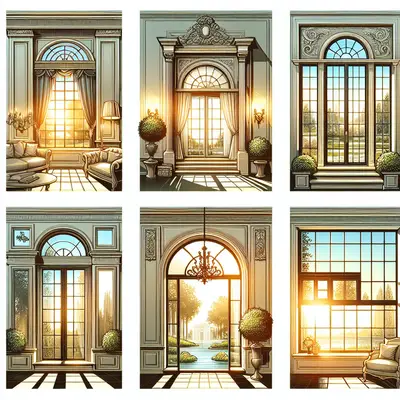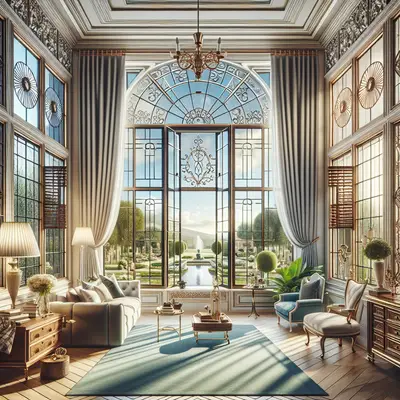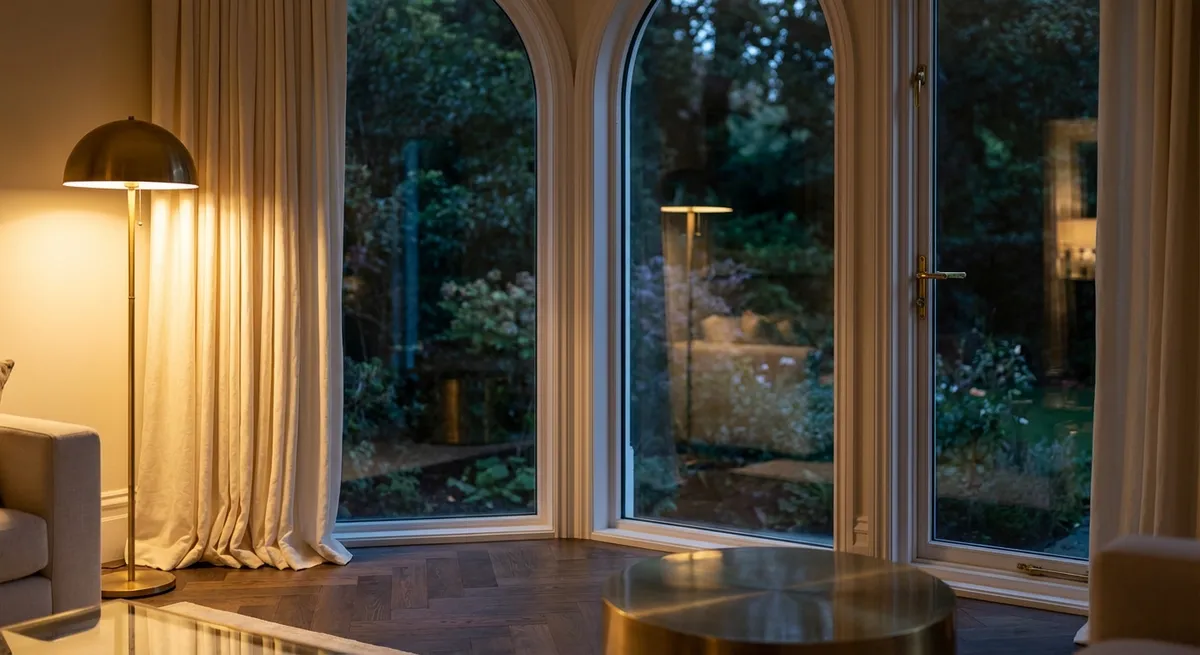
There is a quiet confidence in a home whose windows have been chosen, not merely installed. The right window types do more than admit light; they frame the landscape, choreograph privacy, and refine the way a space feels at every hour of the day. For the homeowner with a cultivated eye, window selection becomes less about “standard sizes” and more about architectural dialogue, performance nuance, and long-term comfort.
This guide explores how different window types can be orchestrated into a cohesive, elevated whole—along with five exclusive insights that experienced renovators and architects rarely say aloud, but always consider.
Reading Your Architecture Before Choosing a Window Type
Before comparing casement versus double-hung, the most sophisticated projects begin with a simple question: what story is your home already telling?
Each architectural style carries inherent lines and rhythms that certain window types either honor or disrupt. A traditional brick Georgian, for instance, tends to favor vertically oriented double-hung or single-hung units, sometimes with divided lites, to maintain a structured, formal façade. In contrast, a mid-century or contemporary home often benefits from larger, minimally framed fixed and casement windows that preserve a low, horizontal profile and celebrate uninterrupted glass.
The proportions of your walls also matter. Tall ceilings with generous wall height can beautifully accommodate floor-to-ceiling fixed panels paired with operable casements or awnings for ventilation. More compact rooms might feel better balanced with a series of smaller, regularly spaced openings rather than a single oversized expanse. When window types are selected in concert with roof pitch, façade symmetry, and material palette, the result is a home that feels innately “correct,” even to the untrained eye.
Crucially, consistency does not mean monotony. A refined scheme often repeats two or three main window types across the home, adjusting scale and configuration while maintaining a coherent language. Think of it as a tailored wardrobe: varied outfits, same impeccable cut.
How Different Window Types Shape Daily Life
Each window type carries a distinctive “behavior” that will influence how you actually live in the space, long after the contractor has left.
Casement windows open like a door on side hinges, allowing the sash to swing outward. Because they seal tightly against the frame when closed, they often deliver excellent air sealing and are particularly effective in catching breezes when oriented toward prevailing winds. Double-hung windows, with two independently moving sashes, offer flexible ventilation from the top, bottom, or both—useful in rooms that need subtle airflow without a strong draft.
Awning windows, hinged at the top and opening outward, excel in bathrooms, above kitchen counters, and in spaces where privacy must coexist with ventilation. Their ability to remain partially open in light rain extends their usefulness beyond fair-weather days. Sliding windows (horizontal gliders) reward homeowners with a very simple operation and wide, easily accessible openings, particularly desirable in more casual or contemporary interiors.
Fixed windows, often overlooked in favor of operable units, play a different but equally critical role. They allow you to expand glass area, minimize framing interruptions, and enhance thermal performance where ventilation is unnecessary or can be supplied by adjacent operable units. Used strategically, fixed units become the visual “anchors” of a room, framing views and admitting light while allowing neighboring windows to focus on airflow.
The most successful window upgrades rarely rely on a single type. Instead, they orchestrate fixed, operable, and specialty shapes into an arrangement that balances ventilation, light, privacy, and aesthetics for each specific room.
Performance Quietly Dictates Form
A truly elevated window plan is never just a matter of shapes and sightlines; it is also an exercise in performance discipline. Different window types lend themselves naturally to higher performance in certain climates and orientations.
Casements and awnings, which close by pressing the sash deeper into the frame, typically offer better air sealing than sliders or older double-hungs. In windy regions, this tighter seal can substantially reduce drafts and improve comfort near large glass areas. Fixed units, by definition, eliminate operable hardware and associated air leaks, allowing you to maximize efficiency where you do not need an opening element.
Orientation—north, south, east, west—further refines which types make sense. On southern façades in cooler climates, larger fixed expanses paired with high-performance glass can capture passive solar gains while neighboring operable units fine-tune ventilation. On western exposures prone to harsh afternoon sun, more modest openings with deep overhangs or operable shading can preserve comfort without sacrificing all natural light.
The interplay between frame material (wood, fiberglass, composite, aluminum-clad) and window type also matters. Some frame systems excel in slim, contemporary fixed and casement profiles, ideal for view-centric spaces; others prioritize the timeless detailing expected in more traditional double-hung assemblies. A thoughtful homeowner evaluates not just the catalog images, but the performance data: U-factor, solar heat gain coefficient (SHGC), visible transmittance, and air leakage. Over time, these quiet numbers shape how the home feels on a January morning or a July afternoon.
Five Exclusive Insights for the Attentive Window Upgrader
Beyond the brochures and showroom samples, there are subtler considerations that seasoned architects and high-end builders rely on when pairing homes with window types. These five insights can help you approach your project with the same level of refinement.
1. Treat window types as “zones,” not isolated units.
Rather than choosing a different window type for every opening, consider grouping your home into zones—formal front façade, private rear elevation, service areas, upper-level retreats. Within each zone, limit yourself to one or two primary types to maintain visual harmony. For example, the street-facing façade may rely on double-hung units with carefully scaled muntin patterns, while the garden-facing elevation uses broader fixed and casement combinations to celebrate the landscape. This zoning approach yields a home that looks intentional from every angle.
2. Ventilation strategy should drive operable window selection.
Many homeowners default to “every window should open,” which can lead to unnecessary expense and visual clutter. A more sophisticated strategy begins by mapping how air should move through the house: where cross-ventilation is most useful, which rooms tend to overheat, and where privacy must be preserved. Fixed units can dominate where views are paramount, while a smaller number of well-placed casements, awnings, or double-hungs provide targeted, controllable airflow. You may discover that fewer, better-placed operable windows serve you far more gracefully than a house full of seldom-used sashes.
3. Sightlines and mullion alignment are as important as the window type itself.
When upgrading, it is tempting to focus on glass size and operability while neglecting how heads, sills, and mullions align from room to room. Yet this alignment—and the consistency of sightlines—often separates ordinary projects from truly distinguished ones. As you choose window types, consider where horizontal lines can be shared across different styles: a fixed picture window and a neighboring awning can share the same head height, for instance, creating a calm horizon even as the operations differ. Ask your window professional to show interior and exterior elevation drawings, not just individual unit diagrams.
4. Think in layers: glass, frame, and dressing.
The window type is only the first layer of expression. Your glass selection (clear vs. tinted, low-iron vs. standard, decorative vs. minimalist) and frame profile (chunky and traditional vs. slim and modern) significantly influence how each type reads in the space. Then comes the dressing—if any: refined shades recessed into the ceiling, interior shutters in key rooms, or sleek exterior shading on sun-exposed elevations. Planning these layers in concert often allows you to choose more minimal, performance-driven window types while still achieving the level of softness or privacy you desire.
5. Anticipate future adaptability, not just immediate needs.
An often-overlooked dimension of window type selection is how easily the configuration can evolve as your life changes. Children grow, work-from-home patterns shift, and accessibility needs can emerge unexpectedly. Casement and awning units, for example, may be easier to operate for those with mobility challenges than heavier double-hung sashes. Larger fixed panels, flanked by operable units, can remain timeless while allowing you to upgrade glass coatings or interior shading later without rethinking the entire wall. Choosing versatile window types and groupings now creates a quiet resilience in your home’s design.
Elevating Comfort Through Cohesive Window Type Choices
At a distance, window types register as part of your home’s architecture—a composition of glass and frame. Up close, they govern the way air moves, how sounds filter in or out, and how light lands on floors and furnishings. The most satisfying window upgrades are those where these layers—architecture, performance, daily ritual—have been considered together.
By reading your home’s style, understanding the behavioral character of each window type, and applying the kind of nuanced thinking professionals use—zoned design, deliberate ventilation, precise sightlines, layered expression, and future adaptability—you move beyond “new windows” into a curated envelope that feels deeply aligned with how you live.
In the end, the luxury is not merely in the specification or the brand name, but in the calm, composed way your windows support you: mornings that feel brighter yet controlled, evenings that are private yet airy, and views that feel purposefully framed rather than casually cut. That is the quiet refinement of choosing your window types well.
Sources
- [Window Types and Technologies – U.S. Department of Energy](https://www.energy.gov/energysaver/window-types-and-technologies) - Technical overview of common window types, their operation, and efficiency characteristics
- [Efficient Windows Collaborative – Window Selection Guidance](https://www.efficientwindows.org/selection.cfm) - Detailed guidance on choosing efficient windows based on climate, orientation, and performance metrics
- [Whole-House Ventilation Strategies – U.S. EPA](https://www.epa.gov/indoor-air-quality-iaq/ventilation-and-indoor-air-quality) - Explains how window use and ventilation strategies influence indoor air quality and comfort
- [National Institute of Building Sciences – Fenestration Performance](https://www.wbdg.org/guides-specifications/building-envelope-design-guide/fenestration) - In-depth discussion of fenestration design, performance, and integration with the building envelope
- [American Institute of Architects – Residential Design Best Practices](https://www.aia.org/resources) - Broad architectural resources, including considerations for residential openings, proportionality, and elevation harmony
Key Takeaway
The most important thing to remember from this article is that this information can change how you think about Window Types.